Muutke küpsiste eelistusi

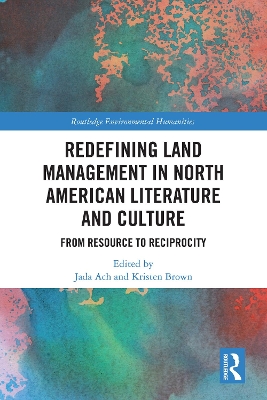
Redefining Land Management in North American Literature and Culture: From Resource to Reciprocity [Kõva köide]

Edited by , Edited by
  • Formaat: Hardback, 266 pages, kõrgus x laius: 234x156 mm, 1 Line drawings, black and white; 12 Halftones, black and white; 13 Illustrations, black and white
  • Sari: Routledge Environmental Humanities
  • Ilmumisaeg: 24-Jun-2026
  • Kirjastus: Routledge
  • ISBN-10: 103294675X
  • ISBN-13: 9781032946757
  • Kõva köide
  • Hind: 159,19 €*
  • * hind on lõplik, st. muud allahindlused enam ei rakendu
  • Tavahind: 212,25 €
  • Säästad 25%
  • See raamat ei ole veel ilmunud. Raamatu kohalejõudmiseks kulub orienteeruvalt 3-4 nädalat peale raamatu väljaandmist.
  • Kogus:
  • Lisa ostukorvi
  • Tasuta tarne
  • Tellimisaeg 2-4 nädalat
  • Lisa soovinimekirja
  • Formaat: Hardback, 266 pages, kõrgus x laius: 234x156 mm, 1 Line drawings, black and white; 12 Halftones, black and white; 13 Illustrations, black and white
  • Sari: Routledge Environmental Humanities
  • Ilmumisaeg: 24-Jun-2026
  • Kirjastus: Routledge
  • ISBN-10: 103294675X
  • ISBN-13: 9781032946757

Exploring the ongoing histories of human-centered ecosystem management in North America, this book tracks the diverse ways in which human-environmental relations have been presented across different forms of media and highlights the potential in Indigenous ecological approaches to living with lands and waters.


Exploring the ongoing histories of human-centered ecosystem management in the lands and waters that comprise what is now known as North America, this book tracks the diverse ways in which human-environmental relations have been presented across different forms of media.

Including literature, film, visual arts, performing arts, park interpretive materials, and more, the book analyzes the many ways in which human-environmental relations have been articulated, experienced, understood, represented, and regulated. The collection encourages a reimagining of what it means to manage environmental elements beyond the limits of utility, commodification, and control. To that end, the contributions interrogate the concept of "management" itself, arguing instead for a more expansive conception of reciprocal relations among humans and the more-than-human world. These relations embrace many kinds of human-environmental engagements, ranging from constructing dams and rating trails, to gathering pollen and cultivating grass for memorial sites. In particular, the book highlights the potential in Indigenous ecological approaches to living with lands and waters, underscoring the need to lovingly engage with the world that sustains us. In the spirit of inquiry and reorientation, this interdisciplinary book begins with a “Keywords” section. Entries for key terms, such as wilderness, allotment, reclamation, fugitive sand, and reciprocity, detail the word’s history, outline its role in various discourses, and/or suggest possibilities for future research.

This book will be of value to a wide range of readers, including researchers and students in environmental humanities, literature, ecocritical theory, history, Indigenous studies, legal studies, natural resources, sociology, environmental studies, and anthropology.

Foreword Introduction: Resourcing Love in Land Management Part 1: The
Language of Management
1. Badlands Management
2. Relationality
3. Reclamation
4. Allotment
5. Islandness
6. Aridity
7. (Un)documented Ecologies
8. Fugitive
Sand
9. Rural/Wilderness Part 2: Representations of Management: Histories of
Claim & Control
10. Violence against the Land is Violence against the People:
Land Management Tactics in Linda Hogans Solar Storms
11. Deuter-agonies: The
Unmanageable Life of Alice Sakaguchi in Hiroshi Nakamura's Treadmill
12.
Trail Reviews: Further Commodification of Wilderness Part 3: Webs of Caring
Relations: Cultivating Ecorelational Literacies in the Environmental
Humanities
13. Wastelands of Decolonial Resurgence: Managing Land and
Refuse/al in Gerald Vizenors and Leanne Betasamosake Simpsons Indigenous
Narratives
14. Resistant Infrastructure: Relational Responses to Ecological
Punishment in Contemporary Multi-Ethnic Narrative Practices
15. Soil Futures:
Environmental Management as Care in Mary Ann Shadd Carys A Plea for
Emigration
16. Back to Belonging: Sound, Ceremony, and Resonance in
Re-membered Communities of Care Part 4: Resourcing Love to Actualize
Otherwise Worlds
17. Grassing Gettysburg: Management, Memory, and Meaning
18.
Exploring Traditional Ecological Knowledges in the Classroom: Indigenous
Ecostudies
19. For sheer joy in wild terrain: Rock Climbing Literature and
Public Lands
20. Hueco Tanks: Envisioning Indigenous Space and Public Lands
Jada Ach is Associate Teaching Professor of Applied Humanities and Interdisciplinary Studies at Arizona State University where she teaches courses in literature, film, and environmental humanities. Her research combines insights from literary studies, the desert humanities, and land management history. She is the author of Sand, Water, Salt: Managing the Elements in Literature of the American West, 1880-1925 (Texas Tech University Press, 2021) and co-editor of Reading Aridity in Western American Literature (Lexington Books, 2020).

Kristen Brown is Assistant Professor of English at Northern State University in South Dakota, where she teaches environmentally themed composition and literature courses. Her teaching and research center Indigenous authors and perspectives with attention to the sensoryespecially soniccontours of being and belonging. In addition to her chapter on pedagogical approaches to the works of Charles Eastman/Ohiyesa (Santee Dakota) in the award-winning collection Race in the Multiethnic Literature Classroom (University of Illinois, 2024), her articles appear in Western American Literature and Resonance: The Journal of Sound and Culture.