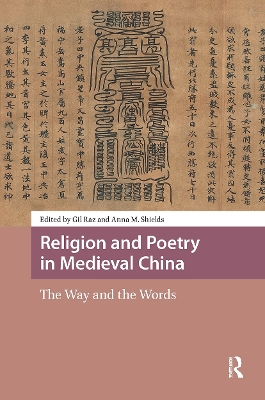
This volume of interdisciplinary essays examines the intersection of religion and literature in medieval China, focusing on the impact of Buddhism and Daoism on a wide range of elite and popular literary texts and religious practices in the 3rd-11th centuries CE. Drawing on the work of the interdisciplinary scholar Stephen Bokenkamp, the essays weave together the many cross-currents of religious, intellectual, and literary traditions in medieval China to provide vivid pictures of medieval Chinese religion and culture as it was lived and practiced. The contributors to the volume are all highly regarded experts in the fields of Chinese poetry, Daoism, Buddhism, popular religion, and literature. Their research papers cut across imagined disciplinary boundaries to show that the culture of medieval China can only be understood by close reading of texts from multiple genres, traditions, and approaches.
This volume of interdisciplinary essays examines the intersection of religion and literature in medieval China, focusing on the impact of Buddhism and Daoism on a wide range of elite and popular literary texts and religious practices in the 3rd-11th centuries CE.
Arvustused
The interdisciplinary nature of this volume allows for a more holistic understanding of medieval Chinese cultural practices. By exploring the confluence of poetry and religion, particularly Daoism and Buddhism, Raz and Shields provide new insights into how these traditions intersected and shaped each other in unexpected ways.,- Richard G. Wang, Journal of Chinese History, issue 681, 2024
Introduction (Gil Raz and Anna M. Shields), Part 1: Poetry,
1. Brushing
Past Rainbows: Religion and Poetry in the Xu Mi Stele (Jonathan Pettit), 2.Li
Bo and Hu Ziyang: Companions of the Way (Paul W. Kroll), 3.Gao Pian: Poet and
Patron (Franciscus Verellen), 4.Traces of the Way: The Poetry of Divine
Transcendence in the Northern Song Anthology Literature's Finest (Anna M.
Shields), Part II: Visuality and Materiality,
1. A Reexamination of the
Second
Chapter of the Array of the Five Talismans (Wang Zongyu),
2. True
Forms and True Faces: Daoist and Buddhist Discourse on Images (Gil Raz), Part
III: Texts and Contexts,
1. After the Apocalypse: The Evolving Ethos of the
Celestial Master Daoists (Terry Kleeman),
2. Shangqing Scriptures as
Performative Texts (Robert Ford Company),
3. The Sutra in Forty-Two
Chapters:
Beyond the Buddhist Canon (James Robson), 4.Taking Stock: The Scholarship of
Daoism in Recent Decades (John Lagerwey),Epilogue,Traversing the Golden
Porte: Problems with Daoist Studies (Stephen R. Bokenkamp)
Gil Raz is Associate Professor of Religion at Dartmouth College specializing in the study of medieval Chinese religion. His book The Emergence of Daoism: Creation of Tradition (2012) and many publications examine Daoist notions of space and time, sexual practices, and religious interactions in medieval China. Anna M. Shields, Gordon Wu 58 Professor of Chinese Studies, Princeton University, specializes in the literary history of the Tang through Northern Song. Her most recent book is One Who Knows Me: Friendship and Literary Culture in Mid-Tang China (2015); current research examines the reception of Tang literature, 10th-11th centuries.