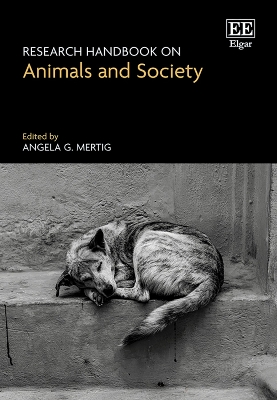
This multidisciplinary book provides an overview of past, current and emerging research in human-animal studies. International experts explore this dynamic and expanding field in ways that challenge established thought about the interactions between non-human animals and human societies.
This multidisciplinary book provides an overview of past, current and emerging research in human-animal studies. International experts explore this dynamic and expanding field in ways that challenge established thought about the interactions between non-human animals and human societies.
Chapters discuss the ‘animal turn’, in which disciplines that have traditionally ignored, or not seriously considered non-human animals, have begun to consider the ‘animal question’. The contributing authors examine how societies have thought about animals and our connection to them over time. They address the different ways in which nonhuman animals have interacted with human society, including as food, in products, as pets, as workers, as entertainers and as targets of wildlife management concern. The Research Handbook on Animals and Society emphasises that the consideration, treatment and welfare of animals is a crucial and fast-developing social justice issue.
This is an essential resource for students and academics across the social sciences interested in human-animal studies and social justice. It is also a beneficial guide to research on animals and society for activists and practitioners involved in animal rights.
Arvustused
Mertigs new Handbook sets out to provide an overview of the field as it exists today and offers professors an invaluable new teaching resource, with its easy-to-follow structure and up-to-date material. This book, unlike many, also ends with a section on activism, making clear the ongoing connection between the field and the broader animal protection movement. I highly recommend this book, especially for those teaching undergraduate classes in HAS. -- Margo DeMello, Carroll College, USA Nonhuman animals (animals) need all the help they can get in an era called the Anthropocene, the so-called age of humanity that is more correctly cashed out as the rage of inhumanity. This excellent Handbook, centering on the transdisciplinary area of humananimal relationships, is a must-read for anyone who wants to improve the ways in which we interact with other animals and offer them the respect and dignity they fully deserve. -- Marc Bekoff, University of Colorado, USA
Contents
PART I INTRODUCTION
1 Introduction: animals and society (humananimal studies) and the
Research Handbook on Animals and Society 2
Angela G. Mertig
2 Animals in academia 13
Angela G. Mertig, Sophia Mae Roberts, Lillian Reid, Briana Grove,
Emme Akers and Meghan Pittenger
PART II EVOLUTIONARY AND (PRE) HISTORICAL CONNECTIONS
3 Humans as animals 51
Maria Botero
4 Animals and humans in the paleolithic 66
Shumon T. Hussain
5 Domestication: a turning point in the history of humananimal
relationships 90
Nerissa Russell
6 Animals in (Western) historical thinking 107
Thomas Aiello
PART III THINKING ABOUT ANIMALS
7 Animals as symbols 126
Ann-Sofie Lönngren
8 Anthropomorphism: the challenge of representing animals 141
Jenny R. Vermilya
9 Philosophy and animals 153
Matthew Calarco
10 Public opinion and attitudes toward animals 170
Angela G. Mertig
PART IV ANIMAL ROLES IN CONTEMPORARY SOCIETY
11 Animals as products I: consuming animals as food 201
Annie Potts and Eilish Espiner
12 Animals as products II: rethinking the consumption of animals in fashion
and non-food products tracing the evolution of a social phenomenon 220
Rachel Lamarche-Beauchesne and Naomi Bailey-Cooper
13 Animals as pets 242
Leslie Irvine
14 Animals at work I: becoming familiar with the nonhuman organizational
stranger 259
Linda Tallberg and Lindsay Hamilton
15 Animals at work II: recognizing workers across species 275
Tiamat Warda
16 Animals in tourism and entertainment 292
Jordan R. McNeillie and David A. Fennell
17 Managing wild and liminal animals: perspectives from different
disciplines 313
Susan Boonman-Berson and Tanja M. Straka
PART V SOCIAL JUSTICE ISSUES AND ACTIVISM
18 Animals in green criminology 332
Amy Fitzgerald, Jennifer Halliday, Bridget Nicholls and Alex Painter
19 Towards a vegan standpoint: the epistemological and methodological
repercussions of The Animatrix 351
Matthew Melsa, Kate Stewart and Lynda Korimboccus
20 Social movements regarding animals 367
Elizabeth Cherry
Edited by Angela G. Mertig, Professor of Sociology, Department of Sociology and Anthropology, Middle Tennessee State University, USA