Muutke küpsiste eelistusi

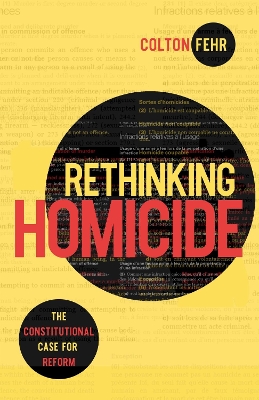
Rethinking Homicide: The Constitutional Case for Reform [Kõva köide]

  • Formaat: Hardback, 294 pages, kõrgus x laius: 229x152 mm
  • Ilmumisaeg: 23-Jun-2026
  • Kirjastus: McGill-Queen's University Press
  • ISBN-10: 0228027756
  • ISBN-13: 9780228027751
  • Kõva köide
  • Hind: 34,65 €*
  • * hind on lõplik, st. muud allahindlused enam ei rakendu
  • Tavahind: 46,20 €
  • Säästad 25%
  • See raamat ei ole veel ilmunud. Raamatu kohalejõudmiseks kulub orienteeruvalt 3-4 nädalat peale raamatu väljaandmist.
  • Kogus:
  • Lisa ostukorvi
  • Tasuta tarne
  • Tellimisaeg 2-4 nädalat
  • Lisa soovinimekirja
  • Formaat: Hardback, 294 pages, kõrgus x laius: 229x152 mm
  • Ilmumisaeg: 23-Jun-2026
  • Kirjastus: McGill-Queen's University Press
  • ISBN-10: 0228027756
  • ISBN-13: 9780228027751
Critics describe homicide law in Canada as outdated and unprincipled in application. While early jurisprudence compelled limited reform, constitutional challenges subsided near the turn of the twentieth century, and legislative amendments have been rare and piecemeal.

Rethinking Homicide makes a compelling case for constitutionally restructuring homicide law and considers how Parliament might respond. Colton Fehr contends that the distinctions between first- and second-degree murder and manslaughter unfairly label some offenders, challenges the infanticide provision, and explains why the provocation defence has no constitutional status and should be repealed. He also argues that murders exclusion from the duress defence is inconsistent with the principle prohibiting conviction for morally involuntary conduct. From that principle, Fehr develops a broader constitutional structure for substantive defences implicated by homicide offences. He further contends that the minimum sentences applicable to homicide constitute cruel and unusual punishment. In response, Parliament will have to choose between a sentencing safety valve and a diminished responsibility defence, with the former option being the preferable policy.

The arguments offered in Rethinking Homicide provide a timely and important contribution to criminal law. Scholars, judges, and lawyers alike will appreciate its much-needed contemplation of the Charter within this core area of criminal law.

Arvustused

Fehr is a superior scholar of criminal law, combining insightful analysis with an encyclopedic knowledge of doctrine. This will become a leading book on the law of homicide in Canada, read by scholars, students, lawyers, judges, and policymakers. Andrew Botterell, University of Western Ontario

This book makes a remarkable contribution to Canadian scholarship and thinking about constitutionalism, criminal law, and the law of homicide. Lisa Kelly, Queens University Fehrs analysis is highly relevant to current debates, and his arguments are persuasive and well supported, particularly in demonstrating how constitutional principles can be applied to criminal law reform. Richard Jochelson, University of Manitoba

Introduction 3

1 Codifying Homicide 13

2 Fault and Fundamental Justice 43

3 Infanticide and Equality 57

4 Repealing Provocation 71

5 Duress as a Defence to Murder 94

6 Constitutionalizing Self-Defence 112

7 Mandatory Minimum Sentences for Homicide 130

8 Sentencing Safety Valve or Diminished Responsibility? 154

Conclusion 168

Notes 173
Bibliography 231
Index 255
Colton Fehr is assistant professor at the University of Saskatchewans College of Law.