Muutke küpsiste eelistusi

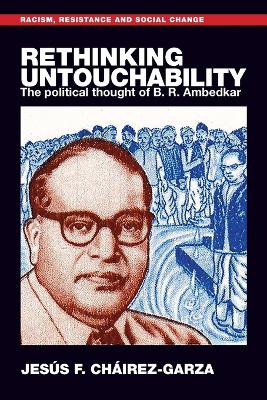
Rethinking untouchability: The political thought of B. R. Ambedkar [Pehme köide]

  • Formaat: Paperback / softback, 256 pages, kõrgus x laius x paksus: 234x156x14 mm, kaal: 362 g
  • Sari: Racism, Resistance and Social Change
  • Ilmumisaeg: 23-Jun-2026
  • Kirjastus: Manchester University Press
  • ISBN-10: 1526197847
  • ISBN-13: 9781526197849
Teised raamatud teemal:
  • Pehme köide
  • Hind: 29,40 €*
  • * hind on lõplik, st. muud allahindlused enam ei rakendu
  • Tavahind: 36,75 €
  • Säästad 20%
  • See raamat ei ole veel ilmunud. Raamatu kohalejõudmiseks kulub orienteeruvalt 3-4 nädalat peale raamatu väljaandmist.
  • Kogus:
  • Lisa ostukorvi
  • Tasuta tarne
  • Tellimisaeg 2-4 nädalat
  • Lisa soovinimekirja
  • Formaat: Paperback / softback, 256 pages, kõrgus x laius x paksus: 234x156x14 mm, kaal: 362 g
  • Sari: Racism, Resistance and Social Change
  • Ilmumisaeg: 23-Jun-2026
  • Kirjastus: Manchester University Press
  • ISBN-10: 1526197847
  • ISBN-13: 9781526197849
Teised raamatud teemal:
This book examines the transformation of untouchability into a political idea in India during the first half of the twentieth century. At its heart is Ambedkars role and the concepts he used to champion untouchability as a political problem. Ambedkars main objective was to comprehend the numerous avatars of untouchability in order to eradicate this practice. Ambedkar understood untouchability beyond aspects of ritual purity and pollution by stressing its complex nature and uncovering the political, historical, racial, spatial and emotional characteristics contained in this concept. Ambedkar believed the abolition of untouchability depended on a widespread alteration of Indias political, economic and cultural systems. Ambedkar reframed the problem of untouchability by linking it to larger concepts floating in the political environment of late colonial India such as representation, slavery, race, the Indian village, internationalism and even the creation of Pakistan. -- .

Arvustused

CHOICE: Recommended

'Jesus F. Cháirez-Garzas extraordinary study of B R Ambedkar is the first extended work situating his oeuvre and career in the context early 20th Century political thought. Rethinking Untouchability gives us a clear sense of how and why Ambedkars thought should be taken seriously not just in India, but in relation to a range of other contexts. Rather than simply examining Ambedkars work in terms of advocacy for Indias most oppressed communities, Cháirez-Garza shows how his development of the category of untouchability related to frameworks of race, space and debates with Indias political left. Connecting to a range of political, anthropological and sociological theorists including Boas and Dewey, Cháirez-Garza shows how Ambedkar framed his followers oppression as contingent and adaptable. As a history of political thought, Rethinking Untouchability is a tour de force, requiring us to take Ambedkar seriously in explorations of inequality and injustice both within India and beyond.' Professor William Gould, University of Leeds -- .

Introduction
1 A politics of ventriloquism: The politicisation of untouchability in late
colonial India circa 1900-1930
2 Fighting inferiority: Ambedkar, Franz Boas and the rejection of racial
theories of untouchability
3 Touching freedom: Ambedkar, untouchability and liberty in late colonial
India
4 Touching space: The village, the nation and the spatial features of
untouchability
5 Ambedkar and the Left: Theory and praxis
6 Nobodys people: Pakistan and the erasure of untouchable politics
7 The Internationalisation of untouchability circa 1939-47
Conclusion
Index -- .
Jesús F. Cháirez-Garza is a Senior Lecturer of the History of Race and Ethnicity at the University of Manchester -- .