Muutke küpsiste eelistusi

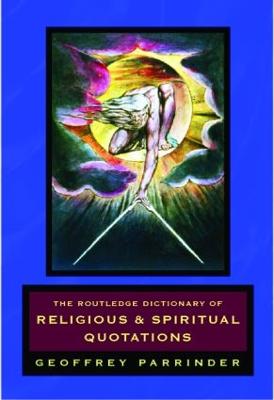
Routledge Dictionary of Religious and Spiritual Quotations 2nd edition [Pehme köide]

  • Formaat: Paperback / softback, 234 pages, kõrgus x laius: 234x156 mm, kaal: 440 g
  • Ilmumisaeg: 28-Sep-2000
  • Kirjastus: Routledge
  • ISBN-10: 0415233933
  • ISBN-13: 9780415233934
Teised raamatud teemal:
  • Pehme köide
  • Hind: 32,61 €*
  • * hind on lõplik, st. muud allahindlused enam ei rakendu
  • Tavahind: 43,49 €
  • Säästad 25%
  • Raamatu kohalejõudmiseks kirjastusest kulub orienteeruvalt 3-4 nädalat
  • Kogus:
  • Lisa ostukorvi
  • Tasuta tarne
  • Tellimisaeg 2-4 nädalat
  • Lisa soovinimekirja
  • Raamatukogudele
  • Formaat: Paperback / softback, 234 pages, kõrgus x laius: 234x156 mm, kaal: 440 g
  • Ilmumisaeg: 28-Sep-2000
  • Kirjastus: Routledge
  • ISBN-10: 0415233933
  • ISBN-13: 9780415233934
Teised raamatud teemal:
In some 3,000 quotations, Parrinder (comparative religion, U. of London) has tried to be comprehensive and selective, ancient and modern. In each topical section, he includes only one quotation each from the Old and New Testaments so the Bible doesn't overwhelm all else. Then he turns to such sources as the Koran, Zoroastrian Gathas, Hindo Vedas, Buddhist Dhammapada, and the Chinese Tao Te Ching. The 1990 original was published as A Dictionary of Religious and Spiritual Quotations . Annotation c. Book News, Inc., Portland, OR (booknews.com)

How did the universe come to exist? What is the nature of its creator? Is there a purpose to human existence? What is it to live a good life?
The Routledge Dictionary of Religious and Spiritual Quotations offers not just one, but many, answers to these questions. Geoffrey Parrinder has drawn on all the great books of world religions - the Bible, the Qur'an, Zoroastrian Gathas, Hindu Vedas, Bhagavad Gita, Jewish Mishnah, Sikh Adi Granth and Chinese Tao Te Ching - in this collection of over 3000 quotations. Discover the words of prophets, scholars and mystics on matters spiritual and moral, as well as Plato on sexuality, Freud on religion and Gandhi on violence.
Originally published in 1990, The Routledge Dictionary of Religious Quotations is now reissued with a new preface by Geoffrey Parrinder.

Arvustused

'Religious and Spiritual Quotations can be dipped into or used as a research aid to source unknown quotations. It would also be a useful companion to trace out a particular subject or theme...' - Caroline Hancock, Trinity College, Camarthen, Journal of Beliefs and Values 'Religious and Spiritual Quotations can be dipped into or used as a research aid to source unknown quotations. It would also be a useful companion to trace out a particular subject or theme...' - Caroline Hancock, Trinity College, Camarthen, Journal of Beliefs and Values

'... contains a wealth of resources ...' - Mark D. Chapman, Rippon College, Modern Believing

'... as a taster of titbits from unfamiliar sources it might whet the appetite of some.' - Paul Nicholson, The Way

Foreword
Preface
Introduction 1(1)
What is Religion?
1(1)
The Origins of Religion
2(3)
I. Religious Forms
Non-Scriptural Religions
5(1)
Historical Religions
6(1)
Monotheism
7(1)
Polytheism
8(1)
Dualism --- Twin Gods
8(1)
Pantheism --- Monism
9(2)
Animism --- Mana
11(1)
Totemism
12(1)
Taboo
13(1)
Magic
14(1)
Witchcraft
15(1)
Superstition
16(1)
Atheism and Irreligion
17(1)
Agnosticism and Humanism
18(2)
Dogmatism
20(1)
Syncretism --- Mingling
20(2)
Relations between Religions
22(3)
II. The Supernatural
God
25(1)
Gods
26(2)
Goddesses
28(1)
Angels
29(1)
Spirits
29(1)
Demons and Devils
30(1)
Spirit-Possession and Exorcism
31(2)
III. The Nature of God
Being
33(1)
Transcendence
34(1)
Immanence
35(1)
Incarnation --- Avatar
36(1)
Triads and Trinity
37(1)
Creator
38(1)
Parent
39(1)
Spirit
40(1)
Light
40(1)
Almighty
41(1)
Omniscience
41(1)
Goodness and Grace
42(1)
Compassion and Mercy
43(1)
Divine Love
44(1)
Providence
45(1)
Predestination and Fate
46(2)
IV. The Universe
In the Beginning
48(1)
Creation
49(1)
Nature
50(2)
The First Human Beings
52(1)
Primeval Flood
53(1)
The Last Days
54(1)
New Worlds
55(2)
V. Humanity
Human Nature
57(1)
The Human Body
58(2)
Soul and Spirit
60(2)
VI. The Sacred
Places
62(1)
Symbols and Images
63(1)
Relics
63(1)
Holy Days
64(1)
Festivals
65(1)
Iconoclasm
66(1)
VII. Sacred Persons
Charisma
67(1)
Prophets
68(1)
Shamans
69(1)
Teachers and Gurus
70(1)
Saints
71(1)
Martyrs
72(1)
Priests and Clergy
73(1)
Preachers
74(1)
Monks and Nuns
74(2)
VIII. Sacred Words
Myths and Legends
76(1)
Revelation
77(1)
Scriptures
78(1)
Belief
79(1)
Creeds
80(2)
IX. Sacred Actions
Worship
82(1)
Liturgy and Ritual
83(1)
Sacrifice and Sacrament
84(1)
Music
85(3)
X. Spirituality
Religious Experience
88(1)
Mysticism
89(1)
Salvation and Conversion
90(1)
Piety and Holiness
91(1)
Devotion and Communion
92(1)
Miracles
93(1)
Visions
94(2)
Dreams
96(2)
XI. Spiritual Exercises
Prayer
98(1)
Prayer for the Dead
99(1)
Meditation
100(2)
Yoga and Zen
102(1)
Asceticism and World-Denial
102(1)
Fasting
103(1)
Pilgrimage
104(2)
XII. Religious Community
People
106(1)
Church
107(1)
Orthodoxy and Establishment
108(2)
Schism, Sects and Reform
110(2)
Persecution
112(1)
Toleration
113(1)
Proselytization and Missions
114(2)
Unity and Ecumenism
116(1)
Decline of Religion
117(1)
Renewal of Religion
118(1)
Education and Teaching
119(1)
Care of the Sick
120(2)
XIII. Religious Philosophy
Philosophy
122(1)
Reason and Mind
123(1)
Questions and Speculation
124(2)
Science
126(1)
Suffering
127(1)
Freewill
128(1)
Doubt
129(1)
Proofs of God
130(2)
XIV. Virtue and the Good
Lists of Virtues
132(1)
The Right
133(1)
Duty
134(1)
Truth and Wisdom
135(1)
Beauty and Art
136(1)
Justice
137(1)
Goodness and Mercy
138(1)
Faith
139(1)
Hope
140(1)
Charity
141(1)
Love
142(2)
XV. Morality
The Way
144(1)
The Golden Rule
145(1)
Commandments
145(1)
Conscience
146(1)
Individual Behaviour
147(1)
Karma
148(1)
Evil and Sin
148(1)
Falsehood
149(1)
Oaths
150(1)
Pride, Envy and Theft
151(1)
Drunkenness and Gambling
152(1)
Killing
153(1)
Suicide
153(1)
Repentance and Confession
154(1)
Forgiveness
155(1)
Reconciliation and Atonement
155(2)
XVI. Men and Women
Parents and Children
157(1)
Widows and Orphans
158(1)
Man
158(1)
Woman
159(1)
Marriage
160(1)
Polygamy
161(1)
Divorce
162(1)
Sex
162(2)
Contraception
164(1)
Infidelity and Adultery
164(1)
Prostitution
165(1)
Celibacy
166(1)
Homosexuality
166(2)
XVII. Society
Social Behaviour
168(1)
The State and Rulers
169(2)
Capital Punishment
171(1)
War
172(2)
Peace
174(1)
Property
175(1)
Riches
175(2)
Poverty
177(1)
Usury and Trade
178(1)
Slavery
179(2)
Class and Race
181(1)
Almsgiving
182(1)
Strangers
182(1)
Animals
183(2)
XVIII. Last Things
Death
185(2)
Judgement
187(1)
Purgatory
188(1)
Heaven
189(1)
Hell
190(1)
The Dead
191(2)
Ghosts and Apparitions
193(1)
Life after Death and Immortality
194(2)
Rebirth, Reincarnation and Transmigration
196(1)
Resurrection
197(1)
Nirvana, Negation
198(1)
Eternity
199(2)
Text and Author Index 201(5)
Subject Index 206
Geoffrey Parrinder is Emeritus Professor of the Comparative Study of Religions at the University of London. He is the author of over 30 books on world religions, which have been translated into many languages.