Muutke küpsiste eelistusi

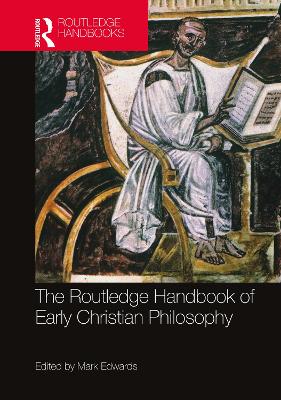
Routledge Handbook of Early Christian Philosophy [Pehme köide]

Edited by (University of Oxford, UK)
  • Formaat: Paperback / softback, 656 pages, kõrgus x laius: 246x174 mm, kaal: 1280 g
  • Ilmumisaeg: 29-Jan-2024
  • Kirjastus: Routledge
  • ISBN-10: 0367619121
  • ISBN-13: 9780367619121
  • Pehme köide
  • Hind: 49,83 €*
  • * hind on lõplik, st. muud allahindlused enam ei rakendu
  • Tavahind: 66,44 €
  • Säästad 25%
  • Raamatu kohalejõudmiseks kirjastusest kulub orienteeruvalt 3-4 nädalat
  • Kogus:
  • Lisa ostukorvi
  • Tasuta tarne
  • Tellimisaeg 2-4 nädalat
  • Lisa soovinimekirja
  • Raamatukogudele
  • Formaat: Paperback / softback, 656 pages, kõrgus x laius: 246x174 mm, kaal: 1280 g
  • Ilmumisaeg: 29-Jan-2024
  • Kirjastus: Routledge
  • ISBN-10: 0367619121
  • ISBN-13: 9780367619121

This volume offers the most comprehensive survey available of the philosophical background to the works of early Christian writers and the development of early Christian doctrine.

It examines how the same philosophical questions were approached by Christian and pagan thinkers; the philosophical element in Christian doctrines; the interaction of particular philosophies with Christian thought; and the constructive use of existing philosophies by all Christian thinkers of late antiquity. While most studies of ancient Christian writers and the development of early Christian doctrine make some reference to the philosophic background, this is often of an anecdotal character, and does not enable the reader to determine whether the likenesses are deep or superficial, or how pervasively one particular philosopher may have influenced Christian thought. This volume is designed to provide not only a body of facts more compendious than can be found elsewhere, but the contextual information which will enable readers to judge or clarify the statements that they encounter in works of more limited scope.

With contributions by an international group of experts in both philosophy and Christian thought, this is an invaluable resource for scholars of early Christianity, Late Antiquity and ancient philosophy alike.


This volume offers the most comprehensive survey available of the philosophical background to the works of early Christian writers and the development of early Christian doctrine.

Arvustused

"For a modern intellectual culture that distrusts trust and prefers analysis to exegesis, the very notion of early Christian philosophy is apt to be an uncomfortable stretch. But Mark Edwards and company do not retreat to the safe, if vacuous, conjunction: early Christianity and philosophy, as if one were a prosthesis for the other. This volumes concise forays into a still surprisingly unfamiliar intellectual landscape bring ancient philosophy into the heart of early Christian exegesis. The introduction by Edwards brilliantly articulates the stakes of following along." - James Wetzel, Villanova University, USA

"This well-conceived collection of studies makes a powerful case that ancient Christians took philosophy seriously and historians of ancient philosophy need to take Christians seriously." George Boys-Stones, University of Toronto, Canada

"The Routledge Handbook of Early Christian Philosophy is a much welcome tool for students and researchers alike. Thanks to the excellent work of an international scholarly team of the highest calibre, the volume rightly moves away from the simplistic dualism of 'reason versus faith' that still hinders a sophisticated understanding of Early Christianitys complex ties to pagan philosophy, and it showcases, in a truly comprehensive fashion, their substantial areas of intersection in the first centuries of our era. The contributors demonstrate that the Christians engagement with the tools, tropes, and themes of pagan philosophy was not just considerably more constructive and dynamic than is often recognized, but that this very engagement was also a necessary enterprise for Christians." - Alberto Rigolio, University of Durham, UK

"This handbook is an important contribution to scholarship on early Christian thought. But that is only half its contribution. It is in equal measure a formidable argument for situating what is usually called early Christian theology within the larger domain of ancient philosophy, most broadly conceived... Edwards is to be commended for bringing together such a substantial collection (in both size and importance) and for producing an edited handbook that sustains a particular (and much needed) thesis about Christianity and ancient philosophy across the whole of the volume." - The Classical Review

1. Introduction Section 1: Themes
2. Sources of Divine Knowledge
3.
Nature
4. Time and Eternity
5. Creation in Early Christianity
6. Providence
and Evil
7. Logic and Religious Language
8. Ethics
9. The Mystical Element
Section 2: Doctrines
10. The Trinity
11. The Philosophy of the Incarnation
12. The Philosophy of the Resurrection in Early Christianity
13. Biblical
Hermeneutics Section
3. Schools
14. The Presocratics
15. Socrates and Plato
16. Aristotle and his School
17. Stoics and Christians
18. Epicureans
19.
Cynics and Christians
20. Sceptics
21. Philo of Alexandria
22. Orpheus,
Mithras, Hermes
23. Middle Platonists and Pythagoreans
24. Pagan and
Christian Philosophy: Plotinus, Iamblichus and Christian Philosophical
Practice
25. The Philosophy of the Later Neoplatonists: An Interaction with
Christian Thought Section
4. Individuals
26. Justin and Athenagoras
27.
Tatian, Theophilus and Irenaeus of Lyon
28. Clement of Alexandria
29.
Tertullian and Cyprian
30. "Hippolytus" and Epiphanius of Salamis
31. Origen
and Philosophy
32. The Sethians and the Gnostics of Plotinus
33. Arnobius and
Lactantius
34. Philosophy in Eusebius and Marcellus
35. Arius and Athanasius
36. Marius Victorinus
37. Philosophy in Hilary of Poitiers and Ambrose of
Milan
38. Eunomius of Cyzicus and Gregory of Nyssa
39. Didymus the Blind and
Evagrius of Pontus
40. Synesius of Cyrene: Philosophy and Poetry "Sharing the
same Temple"
41. Augustine of Hippo
42. Cyril of Alexandria
42. Theodoret of
Cyrrhus
43. Boethius: The First Christian Philosopher in the Latin West?
44.
John Philoponus
45. Dionysius the Areopagite
46. Christian Philosophynin
Severus of Antioch and Leontius of Byzantium
Mark Edwards has been Tutor in Theology at Christ Church, Oxford, and University Lecturer/Associate Professor in Patristics in the Faculty of Theology and Religion in the University of Oxford since 1993. Since 2014, he has held the title of Professor of Early Christian Studies. His books include Origen against Plato (2002), Catholicity and Heresy in the Early Church (2009), Image, Word and God in the Early Christian Centuries (2012), Religions of the Constantinian Empire (2015), and Aristotle and Early Christian Thought (2019).