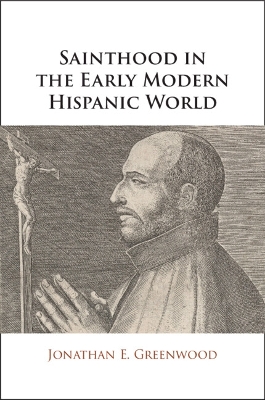
The sixteenth century witnessed the expansion of Spain's empire on a global scale. Catholicism played a critical role in the Spanish colonization campaign, with the cult of saints at the centre of an expansionist agenda. In this study, Jonathan Greenwood offers an interdisciplinary study of the recognition and veneration of sainthood through the case study of the canonization of Ignatius of Loyola, the founder of the Jesuits. Integral to this phenomenon were the miracles and devotional objects that navigated through the official canonization process conducted in Europe, which was overseen by the Church hierarchy and its oftentimes unsanctioned counterparts. Greenwood demonstrates how non-European cultic devotions to Ignatius were made manifest through images, relics, and reports of intercessions. Although the Pope's role in the naming of a saint was paramount, the uninhibited practices of colonial subjects proved to be equally important and worthy of consideration, culminating in the canonization of Ignatius.
Muu info
This book book synthesize the intricacies of the canonization of Ignatius of Loyola from global and interdisciplinary perspectives.
Introduction;
1. To portray a founder, 15401593;
2. The miracle
collector of Madrid, 15931601;
3. News from Guadiana and Lima, 16021610;
4.
Engraving a thaumaturge in Antwerp, 1610;
5. Infants and impressions in
transpacific New Spain, 16101622; Conclusion; Appendix 1: Ribadeneyra's
inventory of miracles in his Flos Sanctorum (1601); Appendix 2: Miracles and
images of Ignatius in the viceroyalty of New Spain, 15991622; Bibliography.
Jonathan E. Greenwood is an archivist in the ATIP Branch at Library and Archives Canada. He has held academic positions in North American and European departments of history and art history and has published widely on the early modern Hispanic World.