Muutke küpsiste eelistusi

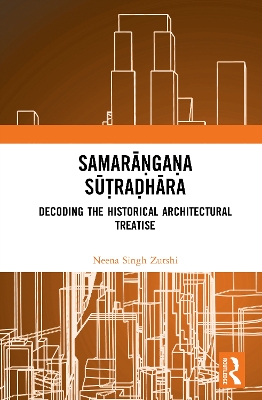
Samrgastradhr: Decoding the Historical Architectural Treatise [Kõva köide]

  • Formaat: Hardback, 244 pages, kõrgus x laius: 234x156 mm, kaal: 630 g, 31 Tables, black and white; 57 Halftones, black and white; 57 Illustrations, black and white
  • Ilmumisaeg: 25-Aug-2025
  • Kirjastus: Routledge India
  • ISBN-10: 1032222751
  • ISBN-13: 9781032222752
  • Kõva köide
  • Hind: 159,19 €*
  • * hind on lõplik, st. muud allahindlused enam ei rakendu
  • Tavahind: 212,25 €
  • Säästad 25%
  • Raamatu kohalejõudmiseks kirjastusest kulub orienteeruvalt 3-4 nädalat
  • Kogus:
  • Lisa ostukorvi
  • Tasuta tarne
  • Tellimisaeg 2-4 nädalat
  • Lisa soovinimekirja
  • Raamatukogudele
  • Formaat: Hardback, 244 pages, kõrgus x laius: 234x156 mm, kaal: 630 g, 31 Tables, black and white; 57 Halftones, black and white; 57 Illustrations, black and white
  • Ilmumisaeg: 25-Aug-2025
  • Kirjastus: Routledge India
  • ISBN-10: 1032222751
  • ISBN-13: 9781032222752

This book presents an interpretive architectural analysis of select content of the Samara ga a Su ra hara, explores the design process to generate temples, palaces and dwelling units and discusses its correlation with contemporary architectural paradigms.


The Samara ga a Su ra hara, compiled around the 11th century by Bhoj, is a significant treatise on architecture from pre-colonial India. This book presents an interpretive architectural analysis of select content of the Samara ga a Su ra hara, explores the design process to generate temples, palaces and dwelling units and discusses its correlation with contemporary architectural paradigms. The book also looks at contemporary issues of identity and culture, as well as critical issues in the historiography of architecture in the postcolonial Indian subcontinent while unveiling layers of the traditional knowledge systems informing the popular idiom of the Vastu Shastra.

Strongly rooted in archival resources, this book will be indispensable for scholars of history of Indian architecture, heritage studies, South Asian history, conservation, architectural design processes, computational architecture and postcolonial studies.

1. Introduction
2. Scholarship
3. Samrgastradhr 3.1 Context 3.2
Content
4. Architecture 4.1 Theoretical concerns 4.2 Practical implications
5. Analytical ruminations
6. Associative discussion
Neena Singh Zutshi is an architect with a keen interest in the intersections of theory, practice, and history.