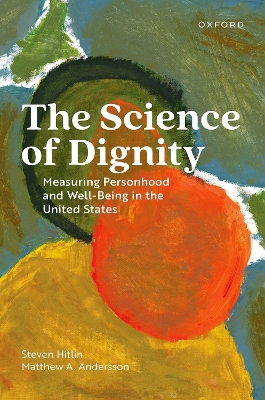
This book provides original evidence arguing for dignity as an indicator of public health, by offering a scientific framework for measuring dignity and its social determinants. Hitlin and Andersson show that dignity can be efficiently measured by using simple survey items that ask individuals whether there is "dignity" in their life or in how they are treated by others. National survey data show that unhappiness, sadness, anger, and lower general health are far more common for those reporting undignified lives. These differences in reported dignity come from inequalities in social and economic resources and from experiences of disrespect, threat, or life stress. Social groups with less power generally report lower levels of dignity linked to these multifaceted resource and stress inequalities, which are examined throughout the book. Hitlin and Andersson show that dignity possesses universal value for health and well-being in America, providing a scientific basis for collective
consensus and social inspiration.
Arvustused
This wide ranging and important book brings careful empirics to the crucial topic of dignity, including by showing its impact on health. The authors move our understanding of dignity to a whole new level, with a focus on the impact of resources on dignity, and more. I learned tons from them and so will you. * Michčle Lamont, Author of Seeing Others: How Recognition Works and How It Can Heal a Divided World * Hitlin and Andersson's book is a tour de force exploration of dignity- what it is, how and why it varies in populations, and why it is so important for human well being and health. * Bruce Link, University of California * The Science of Dignity: Measuring Personhood and Well-Being in the United States defines dignity as a public health concern. While editors Hitlin and Andersson offer no specific solutions, they propose a scientistic framework examining the relationship of resources as processes to dignity. Hitlin and Andersson observe that dignity maybe a birthright but, in practice, is socially fragile. They invite a social dialogue of processes to our shared realities of education, debt, and earning a living. * Choice *
Muu info
Winner of Winner, Distinguished Book Award, American Sociological Association's Section on Altruism Morality and Social Solidarity.
Acknowledgments
Introduction
More than a Feeling: Dignity and Health Inequalities in America
Chapter One
A Wide-Ranging Tour of Perspectives on Dignity
Chapter Two
Seeing Circles: Dignity as a Public Health Issue
Chapter Three
Beyond Reason: Finding Dignity in Social Relations
Chapter Four
American Capitalism and its Multifaceted Links to Dignity
Chapter Five
Measuring Dignity Subjectively: Methodology for 2017 and 2021 Gallup Data
Chapter Six
Dignity as an Efficient Indicator of Social and Moral Integration
Chapter Seven
Is a Dignified Life a Healthier Life?
Chapter Eight
A Resource-Based Framework for Analyzing Levels of Dignity
Chapter Nine
Inequality and Stress: Charting Dignity During Social Adversity
Chapter Ten
One Polarized Nation: Dignity Across Political Ideologies
Conclusion
Moving Forward: Dignity's Role in Collective Consensus and Social Inspiration
References
Index
Steven Hitlin is a sociological social psychologist whose work spans morality, self and identity, the life course, and social theory. Before his faculty position at Iowa, he was a postdoctoral fellow at the University of North Carolina at Chapel Hill and received his PhD from the University of Wisconsin-Madison. He is author or co-author for several books and academic articles including Unequal Foundations: Inequality, Morality and Emotions Across Cultures (Oxford) and Moral Selves, Evil Selves: The Social Psychology of Conscience (Palgrave Macmillan).
Matthew A. Andersson is a sociologist who studies health inequalities across the life course. His research has been published in numerous publications in leading journals in the social and population health sciences. Previously, he was a postdoctoral fellow at Yale University and a Presidential Graduate Research Fellow at The University of Iowa. He serves on the editorial boards of Society and Mental Health and Journal of
Gerontology: Social Sciences.