Muutke küpsiste eelistusi

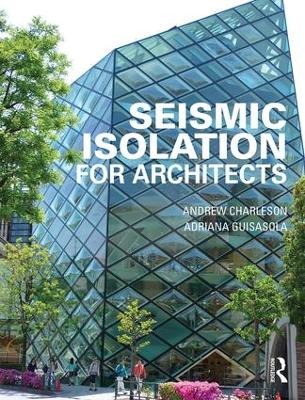
Seismic Isolation for Architects [Pehme köide]

(Associate Professor, Mendoza University, Argentina), (Victoria University of Wellington, New Zealand)
  • Formaat: Paperback / softback, 204 pages, kõrgus x laius: 246x189 mm, kaal: 589 g, 3 Tables, black and white; 40 Line drawings, color; 134 Halftones, color; 174 Illustrations, color
  • Ilmumisaeg: 14-Jul-2016
  • Kirjastus: Routledge
  • ISBN-10: 1138813214
  • ISBN-13: 9781138813212
  • Pehme köide
  • Hind: 69,06 €*
  • * hind on lõplik, st. muud allahindlused enam ei rakendu
  • Tavahind: 92,09 €
  • Säästad 25%
  • Raamatu kohalejõudmiseks kirjastusest kulub orienteeruvalt 3-4 nädalat
  • Kogus:
  • Lisa ostukorvi
  • Tasuta tarne
  • Tellimisaeg 2-4 nädalat
  • Lisa soovinimekirja
  • Formaat: Paperback / softback, 204 pages, kõrgus x laius: 246x189 mm, kaal: 589 g, 3 Tables, black and white; 40 Line drawings, color; 134 Halftones, color; 174 Illustrations, color
  • Ilmumisaeg: 14-Jul-2016
  • Kirjastus: Routledge
  • ISBN-10: 1138813214
  • ISBN-13: 9781138813212
Seismic isolation offers the highest degree of earthquake protection to buildings and their inhabitants. Modern applications of the technology are less than 50 years old and uptake in seismically active regions continues to soar.Seismic Isolation of Buildings is a comprehensive introduction to the theory and practice in this field. Based on the latest research findings and the authors’ extensive experience, coverage includes the application, effectiveness, benefits, and limitations of seismic isolation, as well as the architectural form, design aspects, retrofitting, economics, construction, and maintenance related to this method.The book is written for an international audience: the authors review codes and practices from a number of countries and draw on examples from eleven territories including the US, Chile, Argentina, Italy, Japan, China, and New Zealand. Aimed at readers without prior knowledge of structural engineering, the book provides an accessible, non-technical approach without using equations or calculations: instead, over 200 drawings, diagrams and images are used to support the text. Key reading for students on architecture and civil engineering courses looking for a clear introduction to seismic-resistant design, as well as architects and engineers working in seismically active regions.

Arvustused

"I believe that this very well written and documented book will be very useful to architects worldwide. In fact, it explains the features and advantages of seismic isolation in a very useful way to architects, by stressing the fact that, thanks to this technique, it is possible not only to make buildings much safer at limited additional construction costs (if any), but also to allow for adopting architectural solutions that could never be applicable to conventionally founded buildings." - Alessandro Martelli, President of the Italian Association GLIS, Founding President and present Vice-President of the Anti-Seismic Systems International Society (ASSISi), and former Professor of "Constructions in Seismic Areas" at the Faculty of Architecture of the University of Ferrara, Italy

Acknowledgements ix
1 Introduction
1(14)
Purpose and timing of the book
1(1)
Current approaches to the seismic design of buildings
2(2)
Introducing seismic isolation
4(7)
Tale of two hospitals
11(2)
Reality check
13(2)
2 History, requirements and principles of seismic isolation
15(20)
Brief history
15(9)
Requirements of seismic isolation
24(6)
Movement capability
25(1)
Vertical support
25(4)
Re-centring
29(1)
Restraint
30(1)
Damping
30(1)
Reduction of earthquake response
30(2)
Generic isolation hardware
32(3)
3 Seismic isolation systems and hardware
35(20)
Introduction
35(1)
Elastomeric systems and dampers
36(5)
Sliding devices
41(5)
Other systems and devices
46(6)
Active systems
52(3)
4 Effectiveness of seismic isolation
55(10)
Introduction
55(1)
Computer modelling
55(1)
Physical testing
56(2)
Measurements and observations during earthquakes
58(7)
5 Benefits and limitations of seismic isolation
65(19)
Introduction
65(1)
Pre-earthquake benefits
65(4)
Benefits during an earthquake and post-earthquake
69(3)
Limitations of seismic isolation
72(12)
Geological conditions
73(2)
Building height
75(2)
Adjacent buildings
77(2)
Site coverage
79(2)
Potential cost
81(1)
Maintenance
82(1)
Reduced effectiveness in small earthquakes
83(1)
6 Seismic isolation and architectural form
84(30)
Introduction
84(1)
Grounded -- floating
84(10)
Stability -- instability
94(1)
Heavy -- lightweight
94(13)
Simple -- complex
107(7)
7 Retrofitting
114(27)
Introduction
114(2)
Location of the isolation plane
116(10)
Case studies of retrofitted unreinforced masonry buildings
120(1)
International Library of Children's Literature, Tokyo
120(4)
Iasi City Hall, Romania
124(2)
Case-studies of retrofitting reinforced concrete frame buildings
126(11)
Rockwell International Building 80
126(1)
Rankine Brown Building
127(3)
National Museum of Western Art, Tokyo
130(5)
China Basin Landing, San Francisco
135(2)
Limitations
137(4)
8 Design aspects
141(37)
Introduction
141(1)
Design team
141(1)
Structural engineering design
142(2)
Architectural design
144(34)
Moat area (rattle-space) and horizontal cover plates
151(2)
Other movement joint coverings
153(4)
Other movement details
157(21)
9 Economics of seismic isolation
178(7)
Introduction
178(1)
Additional and reduced isolation construction costs
179(3)
Pre-earthquake economics
182(1)
Post-earthquake economics
182(1)
Life-cycle analyses
183(2)
10 Construction and maintenance
185(5)
Introduction
185(1)
Construction
185(1)
Maintenance
186(4)
11 Conclusions
190(3)
Confidence in seismic isolation
190(1)
Benefits of seismic isolation
190(1)
Design freedom and limitations
190(1)
Uncertainties
191(1)
Savings and additional costs of seismic isolation
191(1)
Looking ahead
191(2)
Index 193
Andrew Charleson is an Associate Professor at the School of Architecture, Victoria University of Wellington, New Zealand. A structural engineer with many years' earthquake engineering experience, he now teaches Structures. He has previously authored two books, Seismic Design for Architects and Structure as Architecture.

Adriana Guisasola is an architect and Associate Professor in Structures at the Faculty of Architecture, Urban Planning and Design, Mendoza University, Argentina. She is in the process of completing her doctoral thesis on "Architecture and Base Isolation". She has authored many papers for world conferences on earthquake engineering and seismic isolation, energy dissipation, and active vibration control of structures.

Between them, the authors have been actively involved in the design and construction of three seismically isolated buildings and have visited and studied over 60 more in 11 different countries.