Muutke küpsiste eelistusi

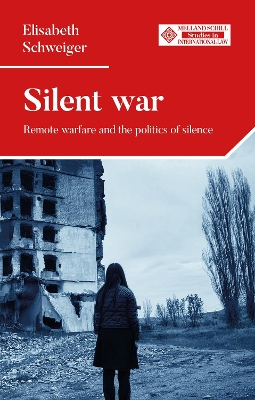
Silent war: Remote warfare and the politics of silence [Kõva köide]

  • Formaat: Hardback, 256 pages, kõrgus x laius x paksus: 216x138x16 mm, kaal: 441 g
  • Sari: Melland Schill Studies in International Law
  • Ilmumisaeg: 28-Apr-2026
  • Kirjastus: Manchester University Press
  • ISBN-10: 1526169533
  • ISBN-13: 9781526169532
  • Kõva köide
  • Hind: 94,20 €*
  • * hind on lõplik, st. muud allahindlused enam ei rakendu
  • Tavahind: 117,75 €
  • Säästad 20%
  • Raamatu kohalejõudmiseks kirjastusest kulub orienteeruvalt 3-4 nädalat
  • Kogus:
  • Lisa ostukorvi
  • Tasuta tarne
  • Tellimisaeg 2-4 nädalat
  • Lisa soovinimekirja
  • Formaat: Hardback, 256 pages, kõrgus x laius x paksus: 216x138x16 mm, kaal: 441 g
  • Sari: Melland Schill Studies in International Law
  • Ilmumisaeg: 28-Apr-2026
  • Kirjastus: Manchester University Press
  • ISBN-10: 1526169533
  • ISBN-13: 9781526169532
Silent war reveals how silence functions as a crucial but often overlooked force in enabling and sustaining military violence. While war propaganda and discursive justifications have received significant attention, this book argues that military operations also depend on a hidden infrastructure of silence through omission, secrecy, and tacit consent. Focusing on drone warfare and colonial counterinsurgency, it explores how regimes of (not) listening shape what can and cannot be heard. Drawing on a multidisciplinary framework and extensive empirical research including analysis of Western parliamentary debates, UN documents, media coverage, and archival records Silent war traces the enduring role of silence in legitimising imperial violence. It reframes silence not as absence but as a constitutive force in global power relations, offering critical tools for interrogating dominant frameworks of military violence and opening space for listening otherwise. -- .

Arvustused

'Interpretative disciplines such as law have a tendency to focus on what is being said or written. Much less attention is paid to the meaning of silence. Schweiger convincingly shows how silence is not the mere absence of speaking, but an intrinsic part of structures of meaning that enable the use of lethal violence. It is an original, critical and highly topical analysis of things left unsaid.' Professor Wouter Werner 'Silent war deftly demonstrates the significant role that silence plays in producing and sustaining imperial violence. By demonstrating who most often gets to speak and to be heard, by tracing what some silences reveal about deeply rooted assumptions about the value and valuation of different lives, and by highlighting how silences can be broken, opposed, and, importantly, reconfigured, the book lays bare the global economy of silence that makes up our world.' Professor Victoria Basham -- .

Introduction: Silent War
Kontrapunkt
1 Regimes of not listening
2 Unspoken assumptions
3 Neglect
4 Secrecy
5 Acquiescence
6 Resistance
Conclusion -- .
Elisabeth Schweiger is a Lecturer in International Politics at the University of Stirling -- .