Muutke küpsiste eelistusi

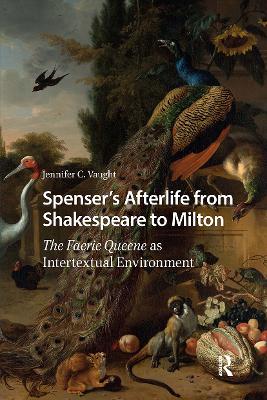
Spensers Afterlife from Shakespeare to Milton: The Faerie Queene as Intertextual Environment [Kõva köide]

  • Formaat: Hardback, 198 pages, kõrgus x laius: 234x156 mm, kaal: 440 g
  • Ilmumisaeg: 16-Dec-2024
  • Kirjastus: Pallas Publications
  • ISBN-10: 9048558298
  • ISBN-13: 9789048558292
  • Kõva köide
  • Hind: 123,75 €*
  • * hind on lõplik, st. muud allahindlused enam ei rakendu
  • Tavahind: 165,00 €
  • Säästad 25%
  • Raamatu kohalejõudmiseks kirjastusest kulub orienteeruvalt 3-4 nädalat
  • Kogus:
  • Lisa ostukorvi
  • Tasuta tarne
  • Tellimisaeg 2-4 nädalat
  • Lisa soovinimekirja
  • Raamatukogudele
  • Formaat: Hardback, 198 pages, kõrgus x laius: 234x156 mm, kaal: 440 g
  • Ilmumisaeg: 16-Dec-2024
  • Kirjastus: Pallas Publications
  • ISBN-10: 9048558298
  • ISBN-13: 9789048558292
Spenser’s Afterlives from Shakespeare to Milton: The Faerie Queene as Intertextual Environment examines Spenser’s longest poem from the fresh perspectives of reader-response criticism, ecocriticism, animal studies, and actor-network theory. Jennifer Vaught reveals how Spenser’s early readers from 1590-1660 were highly attentive to ecological features of The Faerie Queene such as animals, plants, landscapes, and the elements of earth, air, fire, and water. She illustrates that Spenser’s early readers not only interpreted Mother Hubberds Tale in The Complaints as beast satire but The Faerie Queene as satirical as well. This study explores how Shakespeare, Ben Jonson, Andrew Marvell, and Milton among many others appropriated Spenser’s long and shorter poems for creating comedy, parody, and satire. Their appropriations, which were widely influential on communities of readers, writers, and intertextual networks from 1590–1660, left an abiding impression of Spenser as a biting satirist. Spenser’s Afterlife from Shakespeare to Milton: The Faerie Queene as Intertextual Environment is the first study to combine the reception history of The Faerie Queene with ecocriticism, animal studies, and posthumanist tenets of vital materialism and the power of things. This poem functions as a powerful, nonhuman agent that transforms how readers respond to their environments. The Faerie Queene and its afterlives move readers to perceive flaws in political, social, and religious figureheads and institutions to envision better ones.
Introduction: Spenser's Afterlife from Shakespeare to Milton: The Faerie
Queene as Intertextual Environment,
1. The Phenomenology of Reading,
Ecological Awareness, and Making of Satire in The Faerie Queene 1.,
2.
Shakespeare's Memories of Spenser's Creations in the Elizabethan Playhouse:
Animals, Places, and Powerful Things,
3. Jonson's Spenser and the Political
Act of Satire in Elizabethan, Jacobean, and Caroline England,
4. Spenser's
The Faerie Queene in Republican and Royalist Networks: Marvell, Sir Thomas
Fairfax, and Milton, Bibliography, Index.
Jennifer C. Vaught is Professor of English at University of Louisiana at Lafayette. Most recently, she is the author of Architectural Rhetoric in Shakespeare and Spenser (2019) and coeditor with Judith H. Anderson of the essay collection Shakespeare and Donne: Generic Hybrids and the Cultural Imaginary (2013).