Muutke küpsiste eelistusi

Spirits of Empire: How Settler Colonialism Made American Religion [Kõva köide]

(Yale University)
  • Formaat: Hardback, 368 pages, kõrgus x laius x paksus: 235x25x155 mm, 14 illustrations - 14 halftones, 2 maps, notes, bibl., index - 14 Halftones, unspecified - 2 Maps - Index - Bibliography
  • Ilmumisaeg: 14-May-2026
  • Kirjastus: The University of North Carolina Press
  • ISBN-10: 1469693623
  • ISBN-13: 9781469693620
  • Kõva köide
  • Hind: 40,79 €
  • See raamat ei ole veel ilmunud. Raamatu kohalejõudmiseks kulub orienteeruvalt 3-4 nädalat peale raamatu väljaandmist.
  • Kogus:
  • Lisa ostukorvi
  • Tasuta tarne
  • Tellimisaeg 2-4 nädalat
  • Lisa soovinimekirja
  • Formaat: Hardback, 368 pages, kõrgus x laius x paksus: 235x25x155 mm, 14 illustrations - 14 halftones, 2 maps, notes, bibl., index - 14 Halftones, unspecified - 2 Maps - Index - Bibliography
  • Ilmumisaeg: 14-May-2026
  • Kirjastus: The University of North Carolina Press
  • ISBN-10: 1469693623
  • ISBN-13: 9781469693620
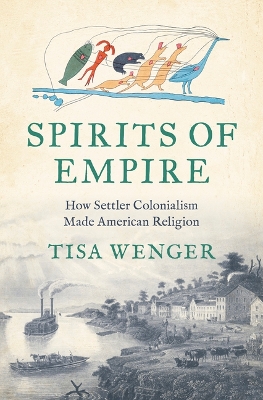
"The Declaration of Independence depicted Native Americans as bloodthirsty savages, and from its founding the United States aimed to expand westward by seizing Indigenous lands. While white settlers saw these conquests as victories for 'true religion,' native people invoked the spirits in their own defense. Some claimed the powers of Christianity, while others drew on the English-language concept of religion to redefine their own ancestral traditions. As all sorts of people struggled to make their way within this new empire, a broad variety of new religious movements emerged. In this groundbreaking book, historian Tisa Wenger shows how the history of American religion unfolded on these settler colonial foundations. The imperatives of US empire, she argues, shaped the category and traditions of what we know as religion. Wenger also introduces the concept of 'settler secularism' to explain how white settlers defined and managed religion in their own image, in order to facilitate their own rule. She shows how the concept of 'religion' - whether as a special thing that requires protection or a mark of the primitive that must be transcended - has most often served the interests of those in power. Ultimately, settler colonialism organized American religion andcreated religious hierarchies that still influence the United States today"-- Provided by publisher.

The Declaration of Independence depicted Native Americans as bloodthirsty savages, and from its founding the United States aimed to expand westward by seizing Indigenous lands. While white settlers saw these conquests as victories for “true religion,” native people invoked the spirits in their own defense. Some claimed the powers of Christianity, while others drew on the English-language concept of religion to redefine their own ancestral traditions. As all sorts of people struggled to make their way within this new empire, a broad variety of new religious movements emerged.

In this groundbreaking book, historian Tisa Wenger shows how the history of American religion unfolded on these settler colonial foundations. The imperatives of US empire, she argues, shaped the category and traditions of what we know as religion. Wenger also introduces the concept of “settler secularism” to explain how white settlers defined and managed religion in their own image, in order to facilitate their own rule. She shows how the concept of “religion”—whether as a special thing that requires protection or a mark of the primitive that must be transcended—has most often served the interests of those in power. Ultimately, settler colonialism organized American religion and created religious hierarchies that still influence the United States today.

Arvustused

Drawing on extensive research, [ Wenger] convincingly overturns the fiction of American religion as divorced from secular governance, framing it instead as a central part of the countrys structural and moral foundations and a site where power and resistance were negotiated. The result is a scrupulous look at the entanglement of empire, sovereignty, and belief in early America.Publishers Weekly

With her signature conceptual clarity and powerful storytelling, Tisa Wenger makes a profound contribution to the unsettling of religion in ways that matter for the past, present, and future. Pamela E. Klassen, author of The Story of Radio Mind: A Missionarys Journey on Indigenous Land

American religion will never look the same after this book. Wenger deftly shows how settler-colonial processes course through its capillaries and how the religions of Native peoples and settlers together created an American heartland.Michael McNally, author of Defend the Sacred: Native American Religious Freedom Beyond the First Amendment

Tisa Wengers lively study has the potential to recharge and reorient American religious history. Spirits of Empire gives a rich documentary account of the entanglements between secularism and settler colonialism.Tracy Fessenden, Arizona State University

"A compelling and convincing argument that shows us the many sizes and shapes of religious actors in American history."Kevin Bruyneel, Babson College

Tisa Wenger is professor of American religious history at Yale Divinity School.