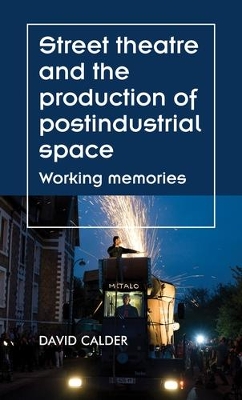
Working memories explores how street theatre transforms industrial space into postindustrial space. -- .
Deindustrialising communities have called upon street theatre companies to re-animate public space and commemorate industrial heritage. How have these companies converted derelict factories into spaces of theatrical production? How do they connect their work to the industrial work that once occurred there? How do those connections manifest in theatrical events, and how do such events give shape and meaning to ongoing redevelopment projects? This book develops an understanding of the relationship between theatre and redevelopment that goes beyond accusations of gentrification or celebrations of radical resistance. Ultimately, Calder argues that deindustrialisation and redevelopment depend on theatrical events and performative acts to make ongoing change intelligible and navigable. Working memories brings together some of current theatre scholarship's fundamental concerns while demonstrating the significance of those concerns to an interdisciplinary readership.
Arvustused
'Calders chapters invite us to attend to both the destructive and the creative ways that street theatre restages the industrial past, while reminding us how our work today is haunted, whether we embrace it or not, by the work of yesterday.' Theatre Journal -- .
List of figures
vi
Acknowledgements
viii
Introduction: working memory
1
(23)
1 Theatre in ruins: street and theatre at the end of Fordism
24
(35)
2 Reincorporation: putting the countryside back to work
59
(39)
3 Excavation: the imaginary archaeology of redevelopment
98
(37)
4 Resurfacing: continuous theatre for a creative city
135
(39)
5 Recuperation: alternative pasts, sustainable futures
174
(17)
Bibliography
191
(11)
Index
202
David Calder is Lecturer in Theatre and Performance Studies at the University of Manchester -- .