Muutke küpsiste eelistusi

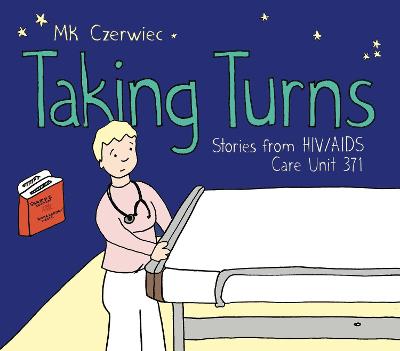
Taking Turns: Stories from HIV/AIDS Care Unit 371 [Pehme köide]

4.42/5 (1102 hinnangut Goodreads-ist)
(Columbia College Chicago / Northwestern University Feinberg School of Medicine), Preface by (Columbia College Chicago / Northwestern University Feinberg School of Medicine)
  • Formaat: Paperback / softback, 232 pages, kõrgus x laius x paksus: 184x210x16 mm, kaal: 726 g, 184 Halftones, color
  • Ilmumisaeg: 02-Nov-2021
  • Kirjastus: Graphic Mundi
  • ISBN-10: 1637790074
  • ISBN-13: 9781637790076
  • Pehme köide
  • Hind: 24,65 €*
  • * hind on lõplik, st. muud allahindlused enam ei rakendu
  • Tavahind: 29,00 €
  • Säästad 15%
  • Raamatu kohalejõudmiseks kirjastusest kulub orienteeruvalt 3-4 nädalat
  • Kogus:
  • Lisa ostukorvi
  • Tasuta tarne
  • Tellimisaeg 2-4 nädalat
  • Lisa soovinimekirja
  • Formaat: Paperback / softback, 232 pages, kõrgus x laius x paksus: 184x210x16 mm, kaal: 726 g, 184 Halftones, color
  • Ilmumisaeg: 02-Nov-2021
  • Kirjastus: Graphic Mundi
  • ISBN-10: 1637790074
  • ISBN-13: 9781637790076
"A graphic memoir and adapted oral history of Unit 371, an inpatient AIDS care hospital unit in Chicago that was in existence from 1985 to 2000. Examines the human costs of caregiving and the role art can play in the grieving process"--

A graphic memoir and adapted oral history of Unit 371, an inpatient AIDS care hospital unit in Chicago that was in existence from 1985 to 2000. Examines the human costs of caregiving and the role art can play in the grieving process.

In 1994, at the height of the AIDS epidemic in the United States, MK Czerwiec took her first nursing job, at Illinois Masonic Medical Center in Chicago, as part of the caregiving staff of HIV/AIDS Care Unit 371. Taking Turns pulls back the curtain on life in the ward.

A shining example of excellence in the treatment and care of patients, Unit 371 was a community for thousands of patients and families affected by HIV and AIDS and the people who cared for them. This graphic novel combines Czerwiec’s memories with the oral histories of patients, family members, and staff. It depicts life and death in the ward, the ways the unit affected and informed those who passed through it, and how many look back on their time there today. Czerwiec joined Unit 371 at a pivotal time in the history of AIDS: deaths from the syndrome in the Midwest peaked in 1995 and then dropped drastically in the following years, with the release of antiretroviral protease inhibitors. This positive turn of events led to a decline in patient populations and, ultimately, to the closure of Unit 371. Czerwiec’s restrained, inviting drawing style and carefully considered narrative examine individual, institutional, and community responses to the AIDS epidemic—as well as the role that art can play in the grieving process.

Deeply personal yet made up of many voices, this history of daily life in a unique AIDS care unit is an open, honest look at suffering, grief, and hope among a community of medical professionals and patients at the heart of the epidemic.

Fear of contagion, isolated patients, a surge of overwhelming and unpreventable deaths, and the frontline healthcare workers who shouldered the responsibility of seeing us through a deadly epidemic: as we emerge from the global pandemic caused by COVID-19, Taking Turns reminds us that we&;ve been through this before. Only a few decades ago, the world faced another terrifying and deadly health crisis: HIV/AIDS.

Nurse MK Czerwiec began working at the Illinois Masonic Medical Center&;s HIV/AIDS Care Unit 371 in the 1990s&;a pivotal time in the history of AIDS. Deaths from the disease in the United States peaked in 1995 and then dropped drastically in the following years, with the release of effective drug treatments. In this graphic memoir, Czerwiec provides an insider&;s view of the lives of healthcare workers, patients, and loved ones from Unit 371. With humor, insight, and emotion, MK shows how the patients and staff cared for one another, how the sick faced their deaths, and how the survivors looked for hope in what seemed, at times, like a hopeless situation.

Drawn in a restrained, inviting style, Taking Turns is an open, honest look at suffering, grief, and resilience among a community of medical professionals and patients at the heart of the AIDS epidemic.

Arvustused

MK Czerwiecs tales of her nursing work on an AIDS unit chart a remarkable episode in the history of medicine. Its a time of staggering loss but also remarkable change. Through the lives and deaths of individual patients, written and drawn in documentary detail, we see the power dynamic between doctor and patient begin to shift. When cure is not an option, care takes on a new meaning.

Alison Bechdel, author of Fun Home Rather than the usual medical tales of professional-minded strangers treating faceless victims, Czerwiecs vignettes become about bonding intimately over suffering and death, watching the community be decimated at the same time as mutual nursing was building connections. Some of the pages are heart-wrenching, and the story has the potential to be supremely depressing, but Czerwiec wrings hope from the honesty of her simple, cheerful cartooning style.

Publishers Weekly With simple, even amateur panels and wise words, Czerwiec reveals a hospital at the heart of the AIDS crisis. Working as a nurse on a unit for AIDS patients, she and her colleagues helped patients die, celebrated life, and strove to combat the poorly understood disease. Cathartic and clinical, often simultaneously.

Library Journal [ Czerwiecs] chronicle reminds us that the era was marked as much by courage and compassion as it was by the tragedy of lives lost too soon.

Booklist With first-person perspectives, simple line-drawings, and straight-forward language, the reader is able to place themselves within this important time of medical history and absorb what occurred, and in this sense it does not only [ prompt] the reader to empathise with HIV/AIDS patients but with the health professional narrator, making a contribution to the cultural role of graphic medicine as critique of the medical profession. It is not likely that one will ever cry with such empathy over a medical scientific publication, but far more likely that one will be brought to tears over four panels on a page in Czerwiecs book.

The Comics Grid The emotional honesty of the comic book is quintessential to the visceral experience of Taking Turnsfunny, terrifying and heartbreaking. As much as it informs the reader about the devastation of HIV/AIDS, the book allows the reader to see the disease through the eyes of a person who is literally on the front lines.

Windy City Times For health care providers, the years that followed [ the first official reporting of what would become the AIDS epidemic] were a time of tremendous loss, requiring a new type of caregiving in the face of a disease with no cure. MK Czerwiec, a nurse and the artist-in-residence at Northwestern Universitys Feinberg School of Medicine, captures this tragic time with great reverence and attention to detail.

Health Affairs Taking Turns chronicles [ Czerwiecs] experiences on the evening shift at Unit 371 with patients and other caregivers, often told through voices other than her own, some of the stories funny, some very touching, especially the stories about patients with whom she became close before they died.

AU Magazine: America's AIDS Magazine Among the takeaways one has after reading MK Czerwiecs graphic novel Taking Turns is that even in the form of sequential art, the story of the early days of the HIV epidemic is a visceral and heart wrenching experience.

The Advocate Czerwiecs role as a writer and illustrator of graphic medicine texts as well as one of the primary theorists and advocates of the genre, means that this, her first single-author entry into the form she helped establish is, like its author, doing the work of defining and practicing this new and compelling literary and artistic form.

Women's Review of Books Whatever role we play in the health care system, this moving memoir reminds us to look beyond our institutional affiliations and find our place in the wider human community.

JAMA All of the characters described in [ Taking Turns] serve as a reminder of the need for love, compassion, acceptance, and human connectivity when providing care to some of societys most vulnerable and often ostracized patient populations.

Doody's Review Service Czerwiecs work here serves as a valuable reflection on and historical portrait of the AIDS hysteria of the eighties and nineties in America. Combining her memories of that era with her contemporary perspective shows, and makes it seem unbelievable, that a group of people suffered so greatly because of their outsider status as patients with a transmittable, incurable, deadly disease. Taking Turns shows us the cost.

The Oral History Review Czerwiec . . . does much more than just provide younger readers with a history lesson. For example, she thoughtfully explores what it means to be a healthcare provider. Czerwiec also explores the role of boundaries between healthcare providers and their patients and the need for empathy. These topics, I believe, would resonate with and be useful to students interested in medical or allied health careers. Instructors can use the book as a way to begin these conversations.

Journal of Microbiology & Biology Education [ Czerwiecs] deft handling of the multiplicity of relationships involved in patient care is the strength of the book, and they are all represented throughout the narrative. Czerwiec does an excellent job of showing how Unit 371s commitment to care facilitated a depth of intimacy between provider and patient not often found in todays productivity-driven medical care.

Graphic Medicine

MK Czerwiec, RN, MA, is Artist-in-Residence at Northwestern Universitys Center for Bioethics and Medical Humanities and the cocurator of the Graphic Medicine website (graphicmedicine.org). She has served as a Senior Fellow of the George Washington School of Nursing Center for Health Policy and Media Engagement and as an Applied Cartooning Fellow of the Center for Cartoon Studies. She is a coauthor of Graphic Medicine Manifesto and the editor of Menopause: A Comic Treatment, both published by Penn State University Press. MK is also the comics editor for the journal Literature & Medicine.