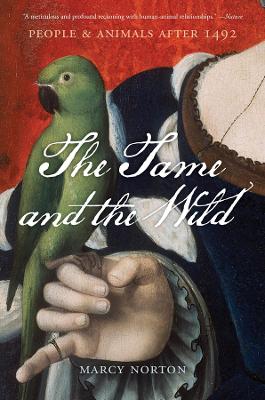
Relationshipsbetween animals and humans, and between humans and other humansare at the heart of Marcy Nortons original and ambitious The Tame and the Wild. -- Alexander Bevilacqua * London Review of Books * [ Norton] argues that biology cannot be separated from culture a stance that allows her to reconsider why animals were treated in a certain way in the past and how they could be treated in the future A fascinating book. -- Henry Mance * Financial Times * A meticulous and profound reckoning with humananimal relationships. Illuminating for anthropologists, ecologists, biologists and historians alike. -- Surekha Davies * Nature * [ An] erudite, interdisciplinary studyNorton rejects the anthropocentrism that separates humans from animals in the biblical myths; rather, she prefers indigenous epistemological systems in which animals and plants were relations, not resources. More radically, she would replace the divisive European categories of human and animal with indigenous understandings of wild and tame, which honor the personhood of all creatures. -- Richard Feinberg * Foreign Affairs * Through historical and anthropological scholarship, including close readings of indigenous American art and writing, Norton demonstrates that indigenous modes of relating to animals, including taming wild creatures and thereby transforming them into kin, had profound ramifications for European culture. -- Daniel Kraft * Hedgehog Review * [ An] ambitious and absorbing exploration of Indigenous American beliefs and practices with regard to animal life before European here exclusively Spanish colonisation[ this] is a capacious and richly rewarding book. -- Mathew Lyons * History Today * Impressivetransforms our understandings of contact and colonization in 1492 and beyond, rewriting that history as one in which differing understandings and practices of relating to animals played a key roleanimal history at its best. -- Adam Warren * William and Mary Quarterly * Offers a much-needed corrective to biological explanations of conquest that often strip Indigenous actors of power while downplaying the role of cultural practices and systematic violencewill feed scholarship on people and animals for years to come. -- John M. Soluri * H-Net Reviews * Exemplifies grounded and mindful interdisciplinary scholarshipan important milestone in ethnohistory, Atlantic history, intellectual history, human-animal studies, and more. -- Christopher Valesey * H-Net Reviews * Offers a new metaphysical account of the animals and humans that shaped encounters between the Indigenous nations of the Caribbean, Central America, and Greater Amazonia and Europeans since 1492a remarkable theoretical achievement. -- Chris Blakley * American Historical Review * Norton shows instead that humananimal relations are historically variable. No single form least of all the kind of industrialized animal husbandry that produces modern meat is natural, inevitable, or necessary for human flourishing. To insist otherwise is to normalize the interspecies relations that now push the planet toward anthropogenic catastrophe. The argument is clear, convincing, and timely[ this book] deserves a wide readership and deep consideration. It will surely receive both. -- Hugh Cagle * Isis * A fascinating, deeply researched, and multi-layered work that contends that human-animal relationships formed the crux of key historical processes of cultural and social exchange during the sixteenth century in the globalizing early modern worldwill be required reading for anyone interested in the histories of conquest and colonialism, environmental history, the history of empires and cultural change, and histories of science, ethnohistory, and human animal studies. -- Martha Few * Colonial Latin American Review * A powerhouse of ideas on historical transformations that are highly relevant todayan important contribution to history. -- Marcelo R. Sįnchez-Villagra * Evolutionary Anthropology * An important reminder that the world could have been very different to the one that came to dominate in the Americas. And the current climate crisis would seem to suggest that it should be too. -- Erica Fudge * International Journal of Maritime History * The Tame and the Wild reads like a revelation. Nortons groundbreaking work compellingly shows how the history of nonhuman animals in the Atlantic world, and their transformation from beings to things, is intrinsically entangled with the history of the early-modern European extractivist and genocidal colonial project in the Americas. At the same time, it luminously recovers and foregrounds early-modern American Indigenous ways of being in the world and knowing it that emphasize the shared nature of human and nonhuman flesh and subjectivity. Her book shows us new ways for writing both our histories and those of our fellow creatures. -- Pablo F. Gómez, author of The Experiential Caribbean: Creating Knowledge and Healing in the Early Modern Atlantic Marcy Norton offers an erudite and innovative perspective on the relationships between humankind and animals in the context of the European colonization of Mexico and South America. By analyzing the history of the clash between Indigenous and Western conceptions of hunting, domestication, and coexistence with pets, this book reveals the origins of consumption practices and objectification of the animal world, as well as the struggles to recognize animal rights. -- Guilhem Olivier, National Autonomous University of Mexico Norton revolutionizes our understanding of the world after 1492. Until now theories of ecological imperialism have conceived of animals a lot like diseases: as biological forces undermining colonized societies. She refutes that determinist story by showing animals as subjects in relationshipssometimes tender, sometimes violent, sometimes extractivistwith Indigenous people and Europeans in the Americas. The Tame and the Wild puts animals and human relationships at the center of the history of contact. -- Nancy J. Jacobs, author of Birders of Africa