Muutke küpsiste eelistusi

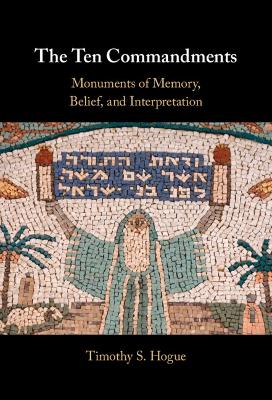
Ten Commandments: Monuments of Memory, Belief, and Interpretation [Kõva köide]

(University of Pennsylvania)
  • Formaat: Hardback, 340 pages, kõrgus x laius x paksus: 235x158x26 mm, kaal: 660 g, Worked examples or Exercises
  • Ilmumisaeg: 28-Sep-2023
  • Kirjastus: Cambridge University Press
  • ISBN-10: 1009366890
  • ISBN-13: 9781009366892
  • Kõva köide
  • Hind: 103,50 €*
  • * hind on lõplik, st. muud allahindlused enam ei rakendu
  • Tavahind: 138,00 €
  • Säästad 25%
  • Raamatu kohalejõudmiseks kirjastusest kulub orienteeruvalt 3-4 nädalat
  • Kogus:
  • Lisa ostukorvi
  • Tasuta tarne
  • Tellimisaeg 2-4 nädalat
  • Lisa soovinimekirja
  • Formaat: Hardback, 340 pages, kõrgus x laius x paksus: 235x158x26 mm, kaal: 660 g, Worked examples or Exercises
  • Ilmumisaeg: 28-Sep-2023
  • Kirjastus: Cambridge University Press
  • ISBN-10: 1009366890
  • ISBN-13: 9781009366892
"Connects monumentality and material culture to questions of textual authority and literary history. It includes a comprehensive comparative study of the Decalogue (including new translation and analysis) and Levantine monuments that will be of interest to scholars of Hebrew Bible, Jewish studies, religious studies, archaeology, and art history"--

Connects monumentality and material culture to questions of textual authority and literary history. It includes a comprehensive comparative study of the Decalogue (including new translation and analysis) and Levantine monuments that will be of interest to scholars of Hebrew Bible, Jewish studies, religious studies, archaeology, and art history.

The Decalogue, commonly known as the Ten Commandments, is usually analysed as a text. Within the Hebrew Bible, however, it is depicted as a monument– an artifact embedded in rituals that a community uses to define itself. Indeed, the phraseology, visual representations, and ritual practices of contemporary monuments used to describe the Ten Commandments imbue them with authority. In this volume, Timothy Hogue, presents a new translation, commentary, and literary analysis of the Decalogue through a comparative study of the commandments with inscribed monuments in the ancient Levant. Drawing on archaeological and art historical studies of monumentality, he grounds the Decalogue's composition and redaction in the material culture and political history of ancient Israel and ancient West Asia. Presenting a new inner-biblical reception history of the text, Hogue's book also provides a new model for dating biblical texts that is based on archaeological and historical evidence, rather than purely literary critical methods.

Arvustused

'I appreciated Hogue's careful exploration of the Levantine monumental tradition and found his reexamination of the Decalogue thought-provoking. Some of his observations will shift the way I think about the biblical text and its function, especially as it pertains to ritual interaction with monuments.' Carmen Joy Imes, Bulletin for Biblical Research 'Reading Hogue's eloquent prose is like witnessing the unveiling of a new discovery. in this moment when monumentalizing the Ten Commandments is of current import in the United States, Hogue's work invites us to reflect on our own interactions with the Decalogue in the context of a long and always historically situated chain of tradition.' Lauren Monroe, Biblical Archaeology Review 'This radical challenge to the interpretation and method of dating the Decalogue cannot be ignored.' Anthony Phillips, Journal for the Study of the Old Testament

Muu info

Presents a new translation, analysis, and history of the Decalogue based on a comparison to ancient Levantine monuments.
Introduction: monuments, monumentality, and the Decalogue;
1. Levantine 'I Am' monuments;
2. The Decalogue in the Book of Exodus;
3. The Decalogue in the Book of Deuteronomy;
4. The afterlife of the Decalogue in the postmonarchic period; Conclusion: the monumentality of the Decalogue.
Timothy Hogue is Assistant Professor of Hebrew Bible and Ancient Israelite History in the Department of Near Eastern Languages and Civilizations, University of Pennsylvania.