Muutke küpsiste eelistusi

Textual Genealogies and Shakespeare's History Plays [Pehme köide]

(Florida State University), (Florida State University)
  • Formaat: Paperback / softback, 75 pages, kaal: 250 g, Worked examples or Exercises
  • Sari: Elements in Shakespeare and Text
  • Ilmumisaeg: 31-May-2026
  • Kirjastus: Cambridge University Press
  • ISBN-10: 1009615688
  • ISBN-13: 9781009615686
  • Pehme köide
  • Hind: 27,30 €
  • See raamat ei ole veel ilmunud. Raamatu kohalejõudmiseks kulub orienteeruvalt 3-4 nädalat peale raamatu väljaandmist.
  • Kogus:
  • Lisa ostukorvi
  • Tasuta tarne
  • Tellimisaeg 2-4 nädalat
  • Lisa soovinimekirja
  • Formaat: Paperback / softback, 75 pages, kaal: 250 g, Worked examples or Exercises
  • Sari: Elements in Shakespeare and Text
  • Ilmumisaeg: 31-May-2026
  • Kirjastus: Cambridge University Press
  • ISBN-10: 1009615688
  • ISBN-13: 9781009615686
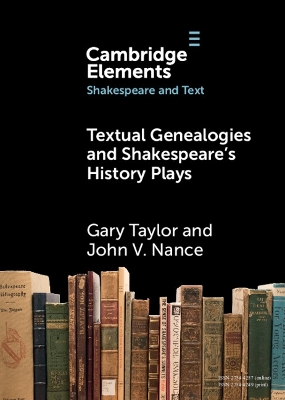
This Element reconsiders the historical, theoretical, racial, ableist, and editorial problem of genealogy by analyzing to-be-spoken genealogies in two plays in the 1623 Shakespeare First Folio: the 'Salic Law' speech in Henry V and the 'seven sons' scene in Henry VI, Part Two. Both passages also exist in a significantly variant version in The Chronicle history of Henry the fift (1600) and The First Part of the Contention (1594). The differences between the two versions of the biological/bloodline genealogy have been central to the long-dominant theory of 'bad quartos'. That theory assumes that early modern chroniclers and playwrights shared the values of modern archival historians: they assume that Shakespeare prioritized accuracy over acting. The authors offer an alternative reading of genealogies written to be performed onstage as 'documentary effects', adapted for changing audiences in a new multimedia entertainment industry. This title is also available as Open Access on Cambridge Core.

Muu info

Shakespeare's texts dramatize the genealogies of authority, and his documentary histories challenge our modes of editing and interpretation.
1. Introduction: biological and textual genealogies;
2. The law salic;
3. In terram salicam;
4. Contentious origins;
5. Starting points: Hall's
union and York's genealogies;
6. Holinshed's chronicles and York's
genealogies;
7. If my claim be good, why have I not justice?;
8. Editorial
investments and documentary effects in performance; Bibliography.