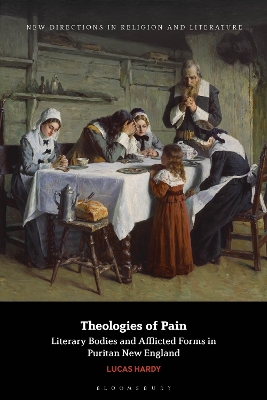
With the arrival of Puritan settlers in New England in the middle decades of the 17th-century, accounts of sickness, colonial violence, and painful religious transformation quickly emerged, enabling new forms of testimonial writing in prose and poetry. Investigating a broad transatlantic archive of religious literature, historical medical science, and philosophies of sensation, this book explores how Puritan America contemplated pain and ascribed meaning to it in writing.
By weaving the experience of pained bodies into popular public discourse, Hardy shows how Puritans imagined the pained Christian body, whilst simultaneously marginalizing and vilifying those who expressed suffering by different measures, including Indigenous Americans and unorthodox colonists. Focusing on pain as it emerged from spaces of inchoate settlement and colonial violence, he provides new understandings of early American nationalism and connected racial tropes which persist today.
Mining unexplored discourses of pain in New England literary texts, this book shows how pain was central in shaping New England culture, identity, early American nationalism and racial tropes.Arvustused
Hardy curates a compelling archive of writing about pain from antiquity to the present that creates a rich interpretive context for New England Puritan writing. His examination of discourses of pain offers a fresh approach to familiar Puritan authors, genres, and tropes. * Elisabeth Ceppi, Professor of English, Portland State University, USA * Lucas Hardys compelling book deepens our understanding of the epistemology of pain in the Puritan imagination It will be of use to both literary scholars and historiansor scholars of American studies more generally speakingbut also to readers interested in the social sciences, particularly in the fields of religious and (post)secular studies. * Transatlantica *
Muu info
Mining unexplored discourses of pain in New England literary texts, this book shows how pain was central in shaping New England culture, identity, early American nationalism and racial tropes.
Introduction: Puritan Pain and the Doctrine of Affliction
1. Afflicting the Massachusetts Bay Colony
2. Sublimated Womens Pain and the Puritan Public
3. Anne Bradstreets Poetics of Pain
4. Humoral Hunger and Comparative Melancholy in Mary Rowlandsons Sovereignty
and Goodness of God
5. Cotton Mathers Grammar of Pain
6. New England Evangelicalism and the Limits of Affliction
Bibliography
Index
Lucas Hardy is Associate Professor of English at Youngstown State University, USA.