Muutke küpsiste eelistusi

Thun-Hohenstein Album: Cultures of Remembrance in a Paper Armory [Kõva köide]

  • Formaat: Hardback, 392 pages, kõrgus x laius: 234x156 mm, kaal: 736 g, 8 colour, 161 b/w illus
  • Sari: Armour and Weapons
  • Ilmumisaeg: 06-Jun-2023
  • Kirjastus: Boydell & Brewer
  • ISBN-10: 1837650438
  • ISBN-13: 9781837650439
Teised raamatud teemal:
  • Kõva köide
  • Hind: 118,69 €*
  • * hind on lõplik, st. muud allahindlused enam ei rakendu
  • Tavahind: 158,25 €
  • Säästad 25%
  • Raamatu kohalejõudmiseks kirjastusest kulub orienteeruvalt 3-4 nädalat
  • Kogus:
  • Lisa ostukorvi
  • Tasuta tarne
  • Tellimisaeg 2-4 nädalat
  • Lisa soovinimekirja
  • Formaat: Hardback, 392 pages, kõrgus x laius: 234x156 mm, kaal: 736 g, 8 colour, 161 b/w illus
  • Sari: Armour and Weapons
  • Ilmumisaeg: 06-Jun-2023
  • Kirjastus: Boydell & Brewer
  • ISBN-10: 1837650438
  • ISBN-13: 9781837650439
Teised raamatud teemal:
The first extensive study of the depiction of the armour in the Thun-Hohenstein Album against the vibrant artistic and cultural contexts that created it.

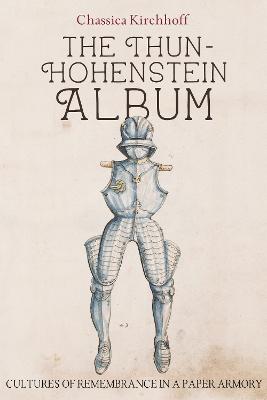
In late medieval and early modern Europe, armour was more than a defensive technology for war or knightly sport. Its diverse types formed a complex visual language. Luxury armour was fitted precisely to a wearer's body, and its memorable details declared his status. Empty armour could evoke an owner's physical presence, prompting recollection of knightly personae, glittering pageantry, and impressive feats of arms. Its mnemonic power persisted long after the battle had ended, the trumpets had gone silent, and the dust had settled in the tournament arena.

Previously believed to contain preliminary designs sketched by master armourers, the Thun-Hohenstein album is a bound collection of drawings by professional book painters depicting some of the most artistically and technologically innovative armours of the fifteenth and sixteenth centuries. Like a paper version of the princely armories that first formed during the 1500s, the album's images offered rich sites of meaning and memory. Their organization within the codex suggests the images' significance to their compiler. At the same time, the composition and details allow the reader to trace the transmission of recognizable armours, and the memories they embodied, from the anvil to the page.

This book is the first to examine the album, and the armor it depicts, in their vibrant artistic and cultural context. In five thematic chapters, it moves from case studies of these drawings to explore the album's complex intersections with the genres of martial history, material culture, and literature. It also reveals the album's participation in cultures of remembrance that carried mythic, knightly personae constructed around powerful Habsburg princes forward in time from the Middle Ages into the early modern era, from the courts of the Holy Roman Empire to emerging urban audiences.

The first extensive study of the depiction of the armour in the Thun-Hohenstein Album against the vibrant artistic and cultural contexts that created it.

Arvustused

Chassica Kirchhoff's book is a welcome original approach to a series of images, which, while very valuable for the study of armour, cannot be reduced to this simple documentary use. I recommend this book not only to armour scholars and enthusiasts, but also to anyone studying Renaissance art, where armour deserves to have its rightful place. * ARMS & ARMOUR * Kirchhoff's arguments are logical and clear, her points are strongly made, and her style of writing is lucid and accessible, utilizing the many images very well indeed. This book suggests many different avenues for study and provides an attractive way of engaging students in different areas of historical study. * SMART *

List of Illustrations
Preface
Acknowledgements
List of Abbreviations
About "Armors": A Note on Usage


1. (Re)Introducing the Thun-Hohenstein Album

2. Bodies of Knowledge: The Thun Album and Visualizations of Martial
Practice in the Fight Book Genre

3. Ritterspiele und Gedächtnis: Representations of Knightly Sport in the
Thun Album

4. "In this way . . . he graciously rode": Persistent Spectacles and
Recollections of Triumph

5. The Thun Album as a Virtual Armory of Heroes

Conclusion
Diagrams of Armor for Man & Horse
Glossary
Bibliography
Index
Chassica Kirchhoff is an art historian who explores the history, meaning, and representation of martial material culture in medieval and early modern Europe. She is a curator of European Sculpture and Decorative Arts at the Detroit Institute of Arts, Michigan, USA.