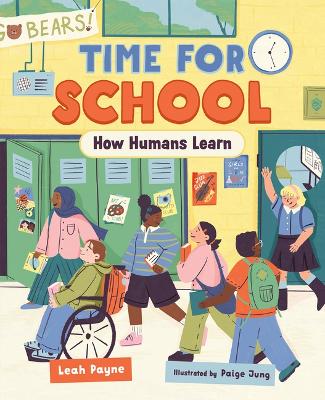
Part of the nonfiction Orca Timeline series for middle-grade readers, this illustrated book examines the past, present and future of schools around the world and the who, what, where, when and how we learn.
Do you go to school?
If you are reading this book, chances are you do. Education allows us to learn about the world, develop new skills and fulfill our dreams for the future. But school can be dramatically different for children depending on things like where they live, how much money their families make and even what they look like.
Grab your tablet for a day at school in Ancient Rome. Take a class in a 19th-century one-room schoolhouse in the United States. Discover how nature schools and Indigenous land-based education work. Find out how technology and artificial intelligence (AI) is changing curriculums and how teachers, librarians and students are fighting book bans in schools. Time for School explores who learns, what we learn, where we learn, when we learn and how we learn in the past, present and into the future.
Key Selling Points
- Explores the past, present and future of schools and who learns, why we learn, where we learn, when we learn and how we learn.
- Explores current topics including inclusivity and equity in access to education, cyberbullying, SOGI curriculum, book bans, technology and AI in the classroom, alternative schools, nature schools and Indigenous land-based education.
- Young readers will discover what it was like to go school around the world at different times in human history, including in Ancient Rome, a one-room schoolhouse in 19th-century North America and in secret schools during World War Two.
- Includes facts and statistics about kids and school. Boston Latin is the oldest public school in the United States and it opened in 1635. The COVID-19 pandemic meant 370 million children were at risk of missing free school meals. Most kids in North America get to school by vehicle, but others bike, walk or take a boat, subway, snowmobile, or gondola.
- Leah Payne is public librarian, writer and editor. She has written two books in the Orca Footprints series: Less is More: Join the Low-Waste Movement and Get Outside: How Humans Connect with Nature.