Muutke küpsiste eelistusi

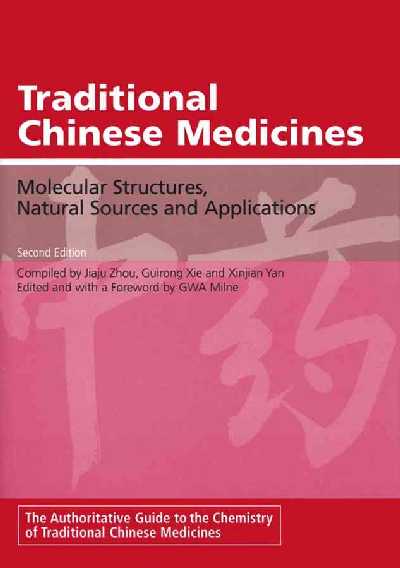
Traditional Chinese Medicines: Molecular Structures, Natural Sources and Applications 2nd Edition [Kõva köide]

Editorial coordination by , Editorial coordination by , Edited by , Editorial coordination by
  • Formaat: Hardback, 1424 pages, kõrgus x laius x paksus: 261x181x70 mm, kaal: 2381 g
  • Ilmumisaeg: 29-Oct-2004
  • Kirjastus: Gower Publishing Ltd
  • ISBN-10: 0566084279
  • ISBN-13: 9780566084270
Teised raamatud teemal:
  • Kõva köide
  • Hind: 577,00 €*
  • * saadame teile pakkumise kasutatud raamatule, mille hind võib erineda kodulehel olevast hinnast
  • See raamat on trükist otsas, kuid me saadame teile pakkumise kasutatud raamatule.
  • Kogus:
  • Lisa ostukorvi
  • Tasuta tarne
  • Lisa soovinimekirja
  • Formaat: Hardback, 1424 pages, kõrgus x laius x paksus: 261x181x70 mm, kaal: 2381 g
  • Ilmumisaeg: 29-Oct-2004
  • Kirjastus: Gower Publishing Ltd
  • ISBN-10: 0566084279
  • ISBN-13: 9780566084270
Teised raamatud teemal:
In this update of the 1999 edition (which appeared under coauthor X. Yan's name), Zhou (Chinese Academy of Sciences) introduces the long history of Traditional Chinese Medicine (TCM) with the aim of bridging Chinese and modern Western medicine. Part I provides information on 9,127 chemicals derived from natural sources. Cross-referenced entries include: the chemical name, synonyms, registry number, molecular formula, molecular weight, physico-chemical properties, pharmacological data, sources of the compound per Chinese references, and a chemical structure diagram. Part II discusses TCM effects, indications, and equivalent plant sources. Indexed by Latin name, English name, TCM effects, TCM indicators, chemical bioactivity, and molecular formula. Annotation (c) Book News, Inc., Portland, OR (booknews.com)

In laboratories around the world the active principles in traditional herbal medicines are being isolated and characterized. A systematic effort at the Chinese Academy of Sciences is underway to identify the structure-activity relationships that result from the link between chemistry and medicine that is permitted by this data. This book, which provides the only systematic English-language description of the chemical structures and pharmacological effects of compounds active in traditional Chinese medicines (TCMs), is now in its second edition. The new edition provides English-language monographs on over 9000 chemicals isolated from nearly 4000 natural sources used in Chinese medicine and features the addition of in-depth bioactivity data for many of the compounds. Effects and indications of the medicines are included. Extensive indexing permits cross-referencing among English, Chinese and Latin names for natural medicinal sources, effects and indications, and the chemical components of the medicines.

The second edition of Traditional Chinese Medicines includes 2300 new compounds, 2400 additional plant sources, more CAS Registry Numbers, and more pharmacological data. The structure of the book has been extensively reorganised to make cross referencing the data much simpler. This new edition is therefore a substantial improvement on the first edition of this important reference on the structural chemistry of traditional Chinese medicines.
Foreword vii
Acknowledgements viii
Introduction ix
How to Use This Book xv
Abbreviations and Symbols xxv
PART I: CHEMICAL COMPOUNDS 1(818)
Chemical Compounds in Traditional Chinese Medicines
3(780)
References for Part I
783(36)
PART II: TRADITIONAL CHINESE MEDICINES 819(240)
Natural Sources, Effects and Indications of Traditional Chinese Medicines
821(232)
Other Natural Sources with Biologically Active Components
1053(4)
References for Part II
1057(2)
PART III: INDEXES 1059
Latin Name Index
1061(84)
English Name Index
1145(74)
TCM Effects Index
1219(16)
TCM Indications Index
1235(32)
Chemical Bioactivity Index
1267(20)
Molecular Formula Index
1287


Jiaju Zhou, Professor, Institute of Process Engineering, Chinese Academy of Sciences, graduated from the Department of Chemistry (a six-year program), Peking University in 1963. He is an organic and computational chemist who has spent many years studying the chemical composition of plants used medicinally in China. He has worked for extended periods at the National Institute of Standards and Technology, USA, where he became expert in chemical data systems. He has worked as a visiting scholar at the University of British Columbia, Canada and Marseilles University, France. Guirong Xie graduated from the chemistry department of Shandong University, Jinan, China in 1965. Since then she has worked as a physical chemist in the Institute of Process Engineering, Chinese Academy of Sciences. As a visiting scholar, she worked for one year in the USA at the National Institute of Standards and Technology where she developed several metallurgic samples that were awarded certification as standard reference materials. Since 1990 she has focused on computer-aided molecular design and databases relating to the structure and activity of compounds. Xinjian Yan, graduated from the Department of Chemistry, Peking University in 1978, and received a PhD from the Institute of Process Engineering, Chinese Academy of Sciences in 1991. He conducted molecular modeling as postdoctoral fellow at the Institute of Cancer, National Institutes of Health from 1992 to 1995 and the Department of Chemistry and Biochemistry, University of Texas at Austin from 1995 to 1996. He studied traditional Chinese medicine at the Laboratory of Computer Chemistry, Chinese Academy of Sciences from 1996 to 1999. Since 1999, he has been working at Texas University at College Station. The Editor G W A Milne served 36 years as a research chemist at the National Institutes of Health in Bethesda, MD, USA. Here he worked on the use of spectroscopy for structure determination of organic compounds, and on molecular modeling in the design of drugs for the treatment of cancer and AIDS. He has been active for many years in the fields of chemical information and chemical computation, and is the Editor of the American Chemical Society's Journal of Chemical Information and Computer Sciences and Gardner's Chemical Synonyms and Trade Names, Eleventh Edition (Ashgate). In 1999, jointly with Stephen Heller, Dr Milne was awarded the Skolnik Award of the Chemical Information Division of the American Chemical Society.