Muutke küpsiste eelistusi

Tragic Coleridge [Kõva köide]

(Freelance Writer, UK)
  • Formaat: Hardback, 200 pages, kõrgus x laius: 234x156 mm, kaal: 498 g
  • Ilmumisaeg: 14-Jun-2013
  • Kirjastus: Routledge
  • ISBN-10: 1409447545
  • ISBN-13: 9781409447542
Teised raamatud teemal:
  • Kõva köide
  • Hind: 164,25 €*
  • * hind on lõplik, st. muud allahindlused enam ei rakendu
  • Tavahind: 219,00 €
  • Säästad 25%
  • Raamatu kohalejõudmiseks kirjastusest kulub orienteeruvalt 3-4 nädalat
  • Kogus:
  • Lisa ostukorvi
  • Tasuta tarne
  • Tellimisaeg 2-4 nädalat
  • Lisa soovinimekirja
  • Formaat: Hardback, 200 pages, kõrgus x laius: 234x156 mm, kaal: 498 g
  • Ilmumisaeg: 14-Jun-2013
  • Kirjastus: Routledge
  • ISBN-10: 1409447545
  • ISBN-13: 9781409447542
Teised raamatud teemal:
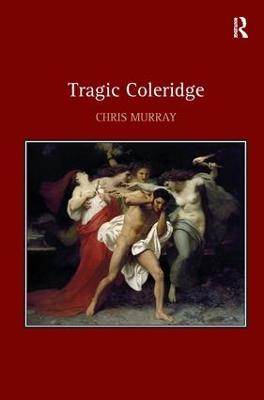
To Samuel Taylor Coleridge, tragedy was not solely a literary mode, but a philosophy to interpret the history that unfolded around him. Tragic Coleridge explores the tragic vision of existence that Coleridge derived from Classical drama, Shakespeare, Milton and contemporary German thought. Coleridge viewed the hardships of the Romantic period, like the catastrophes of Greek tragedy, as stages in a process of humanity’s overall purification. Offering new readings of canonical poems, as well as neglected plays and critical works, Chris Murray elaborates Coleridge’s tragic vision in relation to a range of thinkers, from Plato and Aristotle to George Steiner and Raymond Williams. He draws comparisons with the works of Blake, the Shelleys, and Keats to explore the factors that shaped Coleridge’s conception of tragedy, including the origins of sacrifice, developments in Classical scholarship, theories of inspiration and the author’s quest for civic status. With cycles of catastrophe and catharsis everywhere in his works, Coleridge depicted the world as a site of tragic purgation, and wrote himself into it as an embattled sage qualified to mediate the vicissitudes of his age.

Arvustused

'...a significant contribution to the study of Coleridge and to the concept of Romantic Tragedy more widely.' Sally West, University of Chester, UK, author of Coleridge and Shelley: Textual Engagement 'Murrays work posits several challenges to existing criticism... and indicates the way towards enticing paths for future study.' The Byron Journal Vigorous and engaging... [ Murrays] claims ... are strong, and readers will likely find their understanding of both Coleridge and tragedy enriched by this book. International Journal of the Classical Tradition '...a close textual analysis that shows how tragedy functions in Coleridge's works,... a book that, through the examination of a specific and quite neglected aspect of Coleridge's work, sheds light on different fields of the poet's production.' BARS Review 'A concise and minutely researched account, written in a lively and trenchant style, and including many nuances of argument... What makes Tragic Coleridge so stimulating is that it often chooses to live dangerously in following where the sensibility of Coleridgean tragedy might lead.' The Wordsworth Circle 'Refreshing and original ... Coleridge the man is not divorced from Coleridge the poet, the dramatist, or even the sage and this results in a critical study which is finely balanced.' Romanticism

Acknowledgements vii
Abbreviations ix
Introduction: Romantic Tragedy and Tragic Romanticism 1(10)
1 Coleridge's Tragic Influences
11(12)
2 Hamartia and Suffering in the Poetical Works
23(24)
3 The Catastrophes of Real Life
47(28)
4 The Tragic `Impulse': Fragments and Coleridge's Forms of Incompletion
75(18)
5 The Lear Vocation: Coleridge and Romantic Theatre
93(24)
6 The Tragic Sage
117(26)
7 Failed Sacrifices and the Un-Tragic Coleridge
143(18)
Conclusion: `The sage, the poet, lives for all mankind' 161(4)
Bibliography 165(14)
Index 179
Chris Murray is an IAS Junior Research Fellow in the Department of English Studies at Durham University. His research centres on Romanticism, and explores the dialogues British Romantic authors create with Classical literature, Irish studies, and Orientalism.