Muutke küpsiste eelistusi

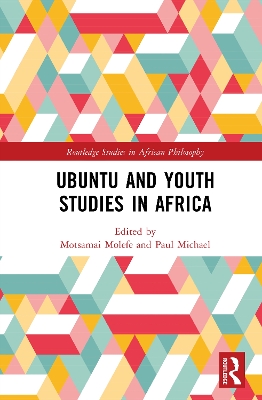
Ubuntu and Youth Studies in Africa [Kõva köide]

Edited by , Edited by
  • Formaat: Hardback, 218 pages, kõrgus x laius: 234x156 mm, 4 Tables, black and white; 3 Halftones, black and white; 3 Illustrations, black and white
  • Sari: Routledge Studies in African Philosophy
  • Ilmumisaeg: 18-Jun-2026
  • Kirjastus: Routledge
  • ISBN-10: 1041023782
  • ISBN-13: 9781041023784
  • Kõva köide
  • Hind: 159,19 €*
  • * hind on lõplik, st. muud allahindlused enam ei rakendu
  • Tavahind: 212,25 €
  • Säästad 25%
  • See raamat ei ole veel ilmunud. Raamatu kohalejõudmiseks kulub orienteeruvalt 3-4 nädalat peale raamatu väljaandmist.
  • Kogus:
  • Lisa ostukorvi
  • Tasuta tarne
  • Tellimisaeg 2-4 nädalat
  • Lisa soovinimekirja
  • Formaat: Hardback, 218 pages, kõrgus x laius: 234x156 mm, 4 Tables, black and white; 3 Halftones, black and white; 3 Illustrations, black and white
  • Sari: Routledge Studies in African Philosophy
  • Ilmumisaeg: 18-Jun-2026
  • Kirjastus: Routledge
  • ISBN-10: 1041023782
  • ISBN-13: 9781041023784
This book considers how the African philosophy of Ubuntu can contribute to the study of the youth in Africa.

Reports from the United Nations indicate that by 2050, more than a third of young people in the world will be in or from Africa. However, most existing youth studies remain framed by Global North paradigms, creating a risk of generalising or globally universalizing the stage of life between childhood and adulthood. This book challenges this imbalance by proposing an approach to youth studies that is grounded in Ubuntu, the philosophy that a person is a person through other persons. The book proposes an Ubuntu conception of youth as becoming: a relational and self-realizing approach to the stage of transition from childhood to morally fit personhood or adulthood. Moreover, the book seeks to imagine and engage issues affecting young people in Africa, covering topics ranging from education, development, migration, work, crime, politics, leadership, gangs, wars, technology, entrepreneurship, among many others.

This incisive and expansive African perspective on youth studies expands our metaphysical, epistemological, and axiological understanding of the field. It will be an important read for researchers across the fields of philosophy, youth studies, sociology, and African studies.
1: Introduction to Ubuntu and Youth in African Studies 2: An Ubuntu
Conception of Youth as Becoming 3: Bildung and Ubuntu in Youth Development:
Cultivating Relational Understanding Across Cultures 4: Youth
Instrumentalism, deficit of Agency and Ubuntu in Africa 5: Terrorism And
Youth Vulnerability in Nigeria: The Imperative of Ubuntu Philosophy 6: New
Youth Movements and the Rebirth of Ubuntu, Ujaama and Asuwada in Africa 7:
Ubuntu and Asuwada Initiatives in Africa: Youth Crisis and Hopeful Antidotes
8: Social Order as Role Definition, Ubuntu as Interconnectedness and the
Social Identity of the Youth as Nature or Nurture 9: Ubuntu, Youth
Employment, Capabilities and Vulnerabilities in the Dominant Liberal
Socio-Political Order 10: Young graduates embracing an ubuntu ethic through
giving back and leadership
Motsamai Molefe is an Associate Professor, University of South Africa, Graduate School of Business Leadership, South Africa, specialising in African philosophy, Ethics, and Governance. He serves as the Chair of Department: Intra-Africa Trade and Responsible Leadership.

Paul Michael is a Postdoctoral Research Fellow at the Higher Education and Human Development (HEHD) Research Group, University of the Free State, Bloemfontein, South Africa. He specialises in youth studies and their intersection with migration, education, cultural and decolonial studies from an African philosophical perspective.