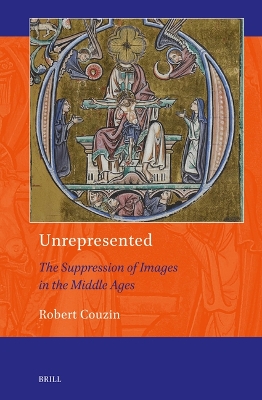
"The study of representational art traditionally focusses on what is represented rather than what is missing. Robert Couzin's Unrepresented: The Suppression of Images in the Middle Ages is a unique study of figures and attributes left out of the picture.Why avoid depicting the dead body of Christ, Muhammad, the reigning emperor or biblical text? What explains changes in the approach to representing heretics and Jews? Through a series of case studies, this book shows how omissions could reflect strategicdecisions based on political designs, social frameworks, religious practices, evolving mentalities and theological doctrines"--
While the study of representational art traditionally focusses on what is represented, Robert Couzin’s Unrepresented: The Suppression of Images in the Middle Ages,/i> looks behind the image to explore why some figures and attributes were left out of the picture.
List of Figures
Introduction
1 The Abrahamic God
1The Second Commandment and Jewish Art
2Islamic Rigour
3The Not-So-Invisible God of the Christians
4Jesus Christ in Jewish and Islamic Imagery
2 The Dead Christ
1Picturing the Crucifixion
2The Divine Corpse
3The Power of the Image
3 Absent Infidels
1Jews
2Heretics
3Muslims
4 Female Enemies of the Faith
1The Heretical Woman
2The Jewess
3The Saracen Princess and Her Evil Sister
4Conclusion
5 Popes, Kings and Queens
1Episcopal Self-Representation
2Kings and Emperors: Present, Past and Future
3And Queens: Picturing Medieval Power Women
4An Addendum on Pope Formosus
6 Books without Words
1Ellipsis in Pictured Scripture
2Pseudo-Latin
3Pseudo-Hebrew and Biblical Bilingualism
4Empty Gospels
Conclusions as Prolegomena
1Classes and Categories
2Motives, Purposes, Effects
Bibliography
Index
Robert Couzin, Ph.D. (2013), University of Toronto, is a second-career medieval art historian. He has published on a broad range of often unorthodox topics, including Right and Left in Early Christian and Medieval Art (Brill, 2021).