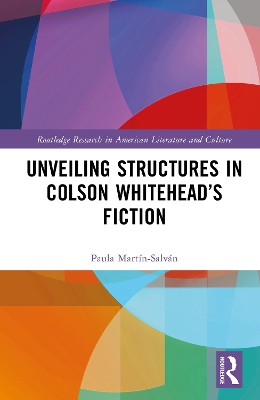
This book offers a comprehensive critical analysis of Colson Whitehead’s fiction, positioning him as a key figure in both African American literature and the global “turn to genre.” It explores how Whitehead employs conventions from popular genres—such as detective, zombie, and caper stories—not merely for entertainment, but as tools for ideological critique and narrative innovation. Central to the study is the concept of “narratives of unveiling,” in which information is revealed retrospectively, disrupting linear storytelling and reshaping ethical perspectives. These structures allow Whitehead to expose the systemic roots of racism and ideological conflict embedded in American society. The book situates his work within broader debates about canon formation, Afropessimist and postsoul aesthetics, and the politics of form. Through close readings of Whitehead’s novels, it demonstrates how Whitehead challenges racial myths and signifies genre expectations, offering narratives that performatively enact cultural critique.
This book critically examines Whitehead’s genre-driven fiction as a powerful intervention in debates on race, memory, and narrative form. It explores how his “unveiling” structures expose systemic racism and ethical conflict, establishing Whitehead as a central voice in contemporary African American literature and global genre fiction
ACKNOWLEDGEMENTS
INTRODUCTION: Unveiling Structures
CHAPTER 1: Detection and the Ethics of Attention in The Intuitionist, John
Henry Days and Apex Hides the Hurt
CHAPTER 2: Unveiling the Self: The Aporias of Autobiography in Sag Harbor
CHAPTER 3: Apocalypse, again? Revelation and the temporal structure of Zone
One
CHAPTER 4: Speaking the Unspeakable: The Unnarrated in The Underground
Railroad
CHAPTER 5: A jail within a jail: Concealment and Unveiling as Narrative
Structure in The Nickel Boys
CHAPTER 6: The Harlem Trilogy: Revealing the System, or the Bent Mans
Progress
EPILOGUE: Unveiling as Method
BIBLIOGRAPHY
INDEX
Paula Martķn-Salvįn is Professor of English and American Literature at the University of Córdoba, Spain. She has published monographs on Don DeLillo and Graham Greene, and has co-edited several collections of essays, including Community in Twentieth Century Fiction (2013), New Perspectives on Community and the Modernist Subject (2017) and The Politics of Transparency in Modern American Fiction: Fear, Secrecy and Exposure (2024). Her research focuses mainly on contemporary American literature, with a strong background in literary and critical theory, particularly in the fields of trauma studies, communitarian theory, secrecy studies, narratology and deconstruction. She currently leads a research project entitled The Poetics and Politics of Transparency in Contemporary Literature in English funded by the Spanish government, implemented by a research team from the Universities of Córdoba and Granada.