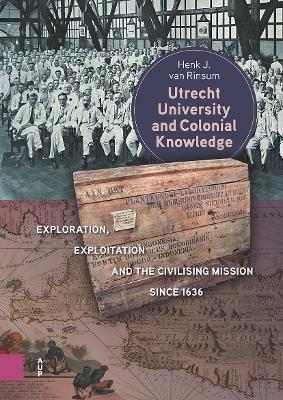
In this book, Henk van Rinsum provides an in-depth description of the colonial past of Utrecht University in the Netherlands, from its foundation in 1636. He describes the development of (scientific) knowledge and knowledge transfer about and in the Dutch colonies, especially in the Dutch East Indies. The central theme of his book is the idea of Western superiority – the assumption that we are ‘developed’ and therefore modern, while those in the colonies are ‘not (yet) developed’ and therefore primitive or traditional. This colonial past is also the framework in which Utrecht University became involved in slavery and its abolition.
Henk van Rinsum shows how the knowledge acquired in the colony also contributed significantly to the scientific development of the university, especially towards the end of the nineteenth century. Utrecht University and Colonial Knowledge is therefore an important contribution to both colonial and intellectual history.
Foreword - Henk Kummeling, Rector Magnificus Utrecht University
1.
Introduction: University, Knowledge & the Colonies
2. Confession & Conversion
(1636-...)
3. Exploration & Classification (c. 1636-1850)
4. Experimentation
& Exploitation (1850-1950)
5. Honorary Doctorates for (Colonial) Thinkers and
Doers 1815-1940
6. Utrecht University & Slavery
7. Training & Control
(1925-1950): The 'Oil Faculty'
8. Legacy of the 'Oil Faculty'
9. Education in
the Colony
10. Development Cooperation (1950-1990): Ethical Politics
Revisited?
11. In Retrospect: Knowledge, Power & Superiority
12. Looking
Ahead: Towards a Decolonised University? Notes, Literature, Image Credits,
Index of Persons, Index of Places and Things.
Henk van Rinsum, historian and anthropologist, worked for many years in university development cooperation at Utrecht University. He published on the history of Utrecht University's ties with South Africa.