Muutke küpsiste eelistusi

Visual Culture of al-Andalus in the Christian Kingdoms of Iberia: Ninth to Thirteenth Centuries [Pehme köide]

Edited by (Universidad Nacional de Educacion a Distancia, Spain)
  • Formaat: Paperback / softback, 242 pages, kõrgus x laius: 246x174 mm, 1 Line drawings, black and white; 20 Halftones, color; 43 Halftones, black and white; 20 Illustrations, color; 44 Illustrations, black and white
  • Sari: Routledge Research in Art History
  • Ilmumisaeg: 22-Jun-2026
  • Kirjastus: Routledge
  • ISBN-10: 1032786930
  • ISBN-13: 9781032786933
Teised raamatud teemal:
  • Pehme köide
  • Hind: 48,81 €*
  • * hind on lõplik, st. muud allahindlused enam ei rakendu
  • Tavahind: 65,09 €
  • Säästad 25%
  • See raamat ei ole veel ilmunud. Raamatu kohalejõudmiseks kulub orienteeruvalt 3-4 nädalat peale raamatu väljaandmist.
  • Kogus:
  • Lisa ostukorvi
  • Tasuta tarne
  • Tellimisaeg 2-4 nädalat
  • Lisa soovinimekirja
  • Formaat: Paperback / softback, 242 pages, kõrgus x laius: 246x174 mm, 1 Line drawings, black and white; 20 Halftones, color; 43 Halftones, black and white; 20 Illustrations, color; 44 Illustrations, black and white
  • Sari: Routledge Research in Art History
  • Ilmumisaeg: 22-Jun-2026
  • Kirjastus: Routledge
  • ISBN-10: 1032786930
  • ISBN-13: 9781032786933
Teised raamatud teemal:
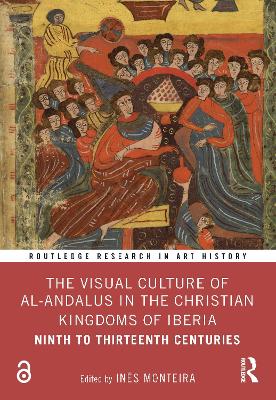
This book addresses the reception of Islamic visual culture by the northern Iberian kingdoms, by systematically comparing works of art from both sides and fleshing out their historical context.

This study includes figurative and iconographic motifs, architectural forms, and even the spolia from constructions and Arabic inscriptions that were embedded in Christian buildings. The Islamic visual culture of al-Andalus was often transformed as it was recreated by Christian hands, bringing to the fore various nuances in the relationship between the two religious communities. Artistic transfer was conditioned by social coexistence between Christians and Muslimsboth in the caliphate al-Andalus and in the northern realmsand military conflict. To approach the different ways in which Andalusi visual culture was received in the northern kingdoms, while embracing the vast diversity of case studies available, this book is divided into three thematic sections: Reinterpretation, Appropriation, and Artistic Transfers.

This book will be of interest to scholars working in art history, visual culture, and medieval studies.

Chapter 3 of this book is freely available as a downloadable Open Access PDF at http://www.taylorfrancis.com under a CC-BY-NC-ND 4.0 license.
Part 1 Reinterpretation
1. Anti-Islamic Elements in Tenth-Century Beatus
Manuscripts
2. Reimagining Relics and Reliquaries between al-Andalus and the
Northern Kingdoms in the Eleventh and Twelfth Centuries Part 2 Appropriation
3. Eagles and Peacocks in Tenth- to Twelfth-Century Iberian Art
4. Aesthetic
of Appropriation: Andalusi Spolia in Medieval Christian Iberia
5. A Sign of
Conquest and Continuity: Arabic Inscriptions on Christian Buildings from
Eleventh to Thirteenth Centuries Part 3 Artistic Transfer
6. Artistic
Connections between al-Andalus and Asturian Art in the Ninth and Tenth
Centuries
7. The Portal of the Church of San Pedro de Cervatos. Artistic
Transfers between al-Andalus and the Castilian Leonese Kingdom in the Twelfth
Century
8. The Urban Palaces of Andalusi Toledo: the Value of Local
Traditions in Shaping the Artistic Horizon of 1085
9. Artistic Transfers in
Medieval Iberian Architecture: Islamic Decoration in Context and its
Reception in Christian Kingdoms
Inés Monteira is Professor in the History of Art Department at Universidad Nacional de Educación a Distancia, UNED, Madrid.