Muutke küpsiste eelistusi

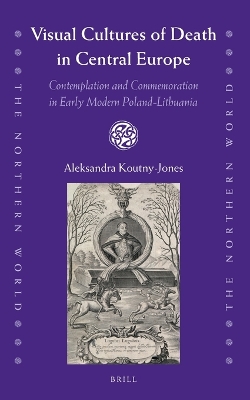
Visual Cultures of Death in Central Europe: Contemplation and Commemoration in Early Modern Poland-Lithuania [Kõva köide]

  • Formaat: Hardback, 276 pages, kõrgus x laius x paksus: 235x155x20 mm, kaal: 559 g
  • Sari: The Northern World 73
  • Ilmumisaeg: 17-Sep-2015
  • Kirjastus: Brill
  • ISBN-10: 9004305076
  • ISBN-13: 9789004305076
  • Kõva köide
  • Hind: 106,17 €*
  • * hind on lõplik, st. muud allahindlused enam ei rakendu
  • Tavahind: 132,71 €
  • Säästad 20%
  • Raamatu kohalejõudmiseks kirjastusest kulub orienteeruvalt 3-4 nädalat
  • Kogus:
  • Lisa ostukorvi
  • Tasuta tarne
  • Tellimisaeg 2-4 nädalat
  • Lisa soovinimekirja
  • Formaat: Hardback, 276 pages, kõrgus x laius x paksus: 235x155x20 mm, kaal: 559 g
  • Sari: The Northern World 73
  • Ilmumisaeg: 17-Sep-2015
  • Kirjastus: Brill
  • ISBN-10: 9004305076
  • ISBN-13: 9789004305076
In Visual Cultures of Death in Central Europe, Aleksandra Koutny-Jones explores the emergence of a remarkable cultural preoccupation with death in Poland-Lithuania (1569-1795). Examining why such interests resonated so strongly in the Baroque art of this Commonwealth, she argues that the printing revolution, the impact of the Counter-Reformation, and multiple afflictions suffered by Poland-Lithuania all contributed to a deep cultural concern with mortality. Introducing readers to a range of art, architecture and material culture, this study considers various visual evocations of death including 'Dance of Death' imagery, funerary decorations, coffin portraiture, tomb chapels and religious landscapes. These, Koutny-Jones argues, engaged with wider European cultures of contemplation and commemoration, while also being critically adapted to the specific context of Poland-Lithuania.

Arvustused

"..her book is the first comprehensive overview of many of the varied aspects of what [ the author] calls 'visual cultures of death'. [ ...] Koutny-Jones [ ...] points to unique or unfamiliar iconographical features of monuments or images that previously have been unduly ignored or neglected. [ ...] Her well informed study takes up the argument for considering alternatives to earlier models of cultural innovation and diffusion." Professor Thomas DaCosta Kaufmann, Princeton University, in Print Quarterly, XXXIV, 2017, 1

"As the author states, the goal of this monograph is to synthesise a diverse body of artistic material previously omitted from international scholarship (p. 13). It delivers handsomely on that promise. Making this material available to the English-speaking reader for the first time in such a comprehensive format, K.-J.s study will appeal to historians of Polish-Lithuanian art and visual culture, scholars of East Central Europe and specialists in death studies. Clear and informative, the book has the potential to become a standard English-language reference on the subject." Tomasz Grusiecki, in: Zeitschrift für Ostmitteleuropa-Forschung, 66 (2017).

Acknowledgements ix
A Note on Proper Names xii
List of Maps and Figures
xiii
Glossary xvi
Introduction: The Central European Age of Contemplation and Commemoration 1(15)
1 Frameworks for Visual Cultures of Death in Poland-Lithuania
16(38)
Artistic Patronage in Poland-Lithuania
18(5)
The Commonwealth and the Counter-Reformation
23(10)
The Central European Printing Revolution
33(7)
Plague and Warfare
40(12)
Conclusion
52(2)
2 Death Personified: The Skeleton and the Printed Image
54(37)
Anatomical Treatises and the Melancholy Death
56(9)
The Triumph of Death
65(10)
Allegories of Death: The Wheel of Death
75(12)
Conclusion
87(4)
3 The Dance of Death in Central Europe: Indigenous Variations on a Familiar Theme
91(30)
Dancing with Death in Medieval Western Europe and beyond
93(6)
Performing the Dance of Death in Medieval Poland: Master Polikarpus's Dialogue with Death
99(3)
Death and the Friars: The Role of the Observant Franciscans
102(15)
Conclusion
117(4)
4 Triumphant Funerals: Ceremonial, Coffin Portraits and Catafalques
121(46)
Processional Pomp: Heraldic Displays and the Theatre of Death
123(8)
Church Decorations and the Castrum Doloris
131(15)
Coffin Portraits: Images of the Spiritual body
146(8)
Commemoration in Context: The Burials of the Opalinski Magnate Family
154(10)
Conclusion
164(3)
5 Architectures and Landscapes of Death: Funerary Chapels and Jerusalem Sites
167(39)
The Introduction of the Domed Chapel to Poland and Lithuania: Genesis and Symbolism
169(6)
Central European Landscapes of Death: Jerusalem Sites
175(10)
Decorating the Seventeenth-century Funerary Chapel: Sculpting the Passion and Personalising the Dance of Death
185(18)
Conclusion
203(3)
Conclusion 206(7)
Appendix: The Krakow Taniec smierci (Dance of Death): Transcription and Translation of Textual Cartouches 213(4)
Bibliography 217(32)
Index 249
Aleksandra Koutny-Jones, Ph.D. (2007), University of Cambridge, is an art historian of early modern Central Europe. She has published on artistic and cultural transmission within Europe, dealing especially with macabre art, orientalising portraiture, and the impact of the printed image.