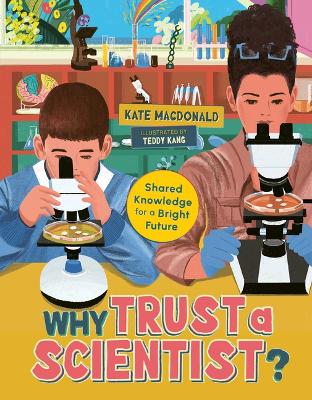
Part of the nonfiction Orca Think series for middle-grade readers, this illustrated book examines how and why trust in science benefits all of society.
Calling all future scientists!
Our world is changing quickly, and our shared challenges can seem overwhelming. We need scientists to tackle climate change, harness the power of artificial intelligence, produce vaccines and so much more. But what does a scientist do all day? How do they decide which of our shared problems to address? How does an idea come to be “scientifically proven”?
Biologist Kate MacDonald provides the inside scoop on the scientific method, where it came from and why its results are trustworthy and not just an interesting observation. Young readers will learn about the human side of research and the creativity and collaboration at the heart of every scientific endeavor. Trust in science—our future depends on it.
Key Selling Points
- This STEAM book examines the scientific revolution, the scientific method, how scientists work together, what scientists do, technology and science, accountability and threats to science and why trust in scientists and their work is imperative.
- This topic is timely as public trust in science is in crisis. According to the Pew Research Center, in 2024 only 26% of Americans had a “great deal” of trust in scientists to act in the best interests of the public, and levels of confidence are 13% lower than before the COVID-19 pandemic.
- This book encourages a civic mindset in young readers. It asks them to think critically about accountability and trust in science and how the scientific process helps everyone in society. It also introduces them to working scientists and the kinds of jobs that are available in the field.
- It has curriculum links and deals with key topics including the scientific revolution, the scientific method, critical thinking, inquiry-based learning, invention and discovery, technology, communication skills, public trust, objectivity, stereotypes, diversity, equity, inclusion and open science.
- Kate MacDonald is a cell biologist at Stanford University. She’s a science communicator and founded an outreach program for high school students called Zoom a Grad Student. The author offers firsthand examples throughout the text.