Muutke küpsiste eelistusi

William Blake and the Productions of Time [Pehme köide]

  • Formaat: Paperback / softback, 362 pages, kõrgus x laius: 234x156 mm, kaal: 700 g
  • Ilmumisaeg: 14-Oct-2024
  • Kirjastus: Routledge
  • ISBN-10: 1032921137
  • ISBN-13: 9781032921136
Teised raamatud teemal:
  • Pehme köide
  • Hind: 43,75 €*
  • * hind on lõplik, st. muud allahindlused enam ei rakendu
  • Tavahind: 58,34 €
  • Säästad 25%
  • Raamatu kohalejõudmiseks kirjastusest kulub orienteeruvalt 3-4 nädalat
  • Kogus:
  • Lisa ostukorvi
  • Tasuta tarne
  • Tellimisaeg 2-4 nädalat
  • Lisa soovinimekirja
  • Raamatukogudele
  • Formaat: Paperback / softback, 362 pages, kõrgus x laius: 234x156 mm, kaal: 700 g
  • Ilmumisaeg: 14-Oct-2024
  • Kirjastus: Routledge
  • ISBN-10: 1032921137
  • ISBN-13: 9781032921136
Teised raamatud teemal:
Challenging the idea that a writer’s work reflects his experiences in time and place, Cooper locates the action of William Blake’s major illuminated books in the ahistorical present, an impersonal spirit realm beyond the three-dimensional self. Historicist attempts to place Blake’s vision in perspective, Cooper argues, involve a self-contradictory

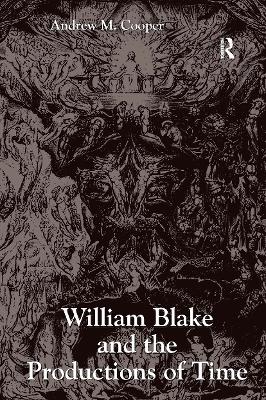
Challenging the idea that a writer’s work reflects his experiences in time and place, Andrew M. Cooper locates the action of William Blake’s major illuminated books in the ahistorical present, an impersonal spirit realm beyond the three-dimensional self. Blake, Cooper shows, was a formalist who exploited eighteenth-century scientific and philosophical research on vision, sense, and mind for spiritual purposes. Through irony, dialogism, two-way syntax, and synesthesia, Blake extended and refined the prophetic method Milton forged in Paradise Lost to bring the performativity of traditional oral song and storytelling into print. Cooper argues that historicist attempts to place Blake’s vision in perspective, as opposed to seeing it for oneself, involve a deeply self-contradictory denial of his performativity as a poet-artist. Rather, Blake’s expansion of linear reading into a space of creative, self-conscious collaboration laid the basis for his lifelong critique of dualism in religion and science, and anticipated the non-Euclidean geometrics of twentieth-century Modernism.

Arvustused

A Yankee Book Peddler US Core Title for 2013 A Baker & Taylor Literary Essentials Title '... fascinating readings ... strikingly fresh interpretations ... Cooper's study is an impressively learned and rewarding read...' Review of English Studies

Contents: Introduction; Blakes post-Enlightened anamnesis; Seeing
voices in Songs of Innocence; The skewed empiricism of Blakes early
tractates; Common sense in Visions of the Daughters of Albion; Storytelling
through the vortex of sense; Freedom from The Book of Urizen; The picture of
the mind in the vision of the Last Judgment; The physiology of vision in
Milton; Conclusion: 1804; Bibliography; Index.
Andrew M. Cooper recently retired as Associate Professor of English at the University of Texas at Austin, USA.