Muutke küpsiste eelistusi

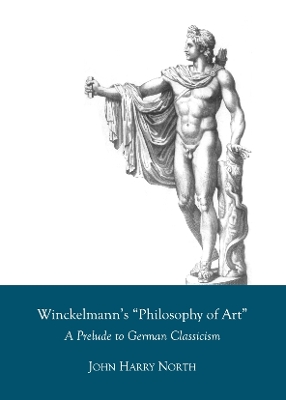
Winckelmanns Philosophy of Art: A Prelude to German Classicism Unabridged edition [Kõva köide]

  • Formaat: Hardback, 210 pages, kõrgus x laius: 212x148 mm
  • Ilmumisaeg: 13-Jul-2012
  • Kirjastus: Cambridge Scholars Publishing
  • ISBN-10: 1443840041
  • ISBN-13: 9781443840040
Teised raamatud teemal:
  • Kõva köide
  • Hind: 47,80 €*
  • * hind on lõplik, st. muud allahindlused enam ei rakendu
  • Tavahind: 63,74 €
  • Säästad 25%
  • Raamatu kohalejõudmiseks kirjastusest kulub orienteeruvalt 3-4 nädalat
  • Kogus:
  • Lisa ostukorvi
  • Tasuta tarne
  • Tellimisaeg 2-4 nädalat
  • Lisa soovinimekirja
  • Formaat: Hardback, 210 pages, kõrgus x laius: 212x148 mm
  • Ilmumisaeg: 13-Jul-2012
  • Kirjastus: Cambridge Scholars Publishing
  • ISBN-10: 1443840041
  • ISBN-13: 9781443840040
Teised raamatud teemal:
It is the aim of this work to examine the pivotal role of Johann Joachim Winckelmann (17171768) as a judge of classical sculpture and as a major contributor to German art criticism. John Harry North seeks to identify the key features of his treatment of classical beauty, particularly in his famous descriptions of large-scale classical sculpture. Five case studies are offered to demonstrate the academic classicism that formed the core of his philosophy of art. North aims to establish Winckelmann's place in the development of the German language. His prose contributed to a literary style that was suitable for the expression of an emotional response to visual experiences. His use of rhetoric in the assessment of classical art, however, make his judgements propagandist rather than analytical.The published works of Winckelmann, his draft essays and his collected private correspondence are advanced as criteria in the evaluation of his impact on the development of German classicism that culminated in the Weimar group of poets and writers. His Grecophile enthusiasm, however, led him to introduce stylistic categories in the development of classical marble sculpture that are no longer regarded as truly reflecting the evolution of Greco-Roman art. Thus his historicity and his classification of styles remain in doubt. Winckelmann proposed that the training of modern artists should concentrate on the observation and imitation of classical models instead of looking to nature as the source of inspiration. This plan succeeded to some extent in the generation that followed his untimely death. Throughout the succeeding century, artists and their sponsors did favour classical models and developed stylistic classicism in European freestanding sculpture, in painting and in architecture.
Abbreviations vii
Introduction 1(6)
Chapter One Winckelmann's Path to Recognition
7(16)
Chapter Two A Prelude to German Classicism
23(74)
2.1 `Hellenism' - A German Utopia
2.2 `Ideal Beauty' - The Essence of Art?
2.3 Winckelmann's Contribution to the German Language
2.4 Eroticism and Ambiguity
Chapter Three Narratives on Sculpture: Five Case-Studies
97(52)
3.1 The Apollo Belvedere
3.2 The Niobe Group
3.3 The Belvedere Antinous
3.4 The Laocoon Group
3.5 The Hercules Torso
Chapter Four Winckelmann's Profound Limitation
149(30)
4.1 His Narrow Perception of `Art'
4.2 Aesthetic Education - An Illusion?
4.3 Enigmas and Textual Contradictions
Chapter Five Conclusion
179(4)
Bibliography 183
John Harry North was born in 1918 and spent his childhood in his Jewish family home in a small town in Czechoslovakia. He passed the examinations at the Gymnasium at age 18 (Abitur). When Austria and the Sudetenland were occupied by the Germans (1938), North escaped to Holland and came to England as a student. When the air attacks on London began in 1940, he joined the Rescue Service of Bermondsey and two years later he joined the RAF as trainee pilot. He changed his name from Jan Neuburg to John North. At the end of the war, he travelled to Chile where he joined the British airline (BSAA) as Traffic Officer. He returned to England in 1958 and remained with BOAC-BA as Project Manager in the IT department. North studied at evening classes and gained a Diploma in Archaeology at London University in 1970. After retirement (1983), he studied Classical Civilisation at Birkbeck College in 1996 and obtained an MA. He continued studying Classics at Holloway University but changed to the Linguistics Department of Queen Mary, University of London where he gained his Doctorate in Philosophy.