Muutke küpsiste eelistusi

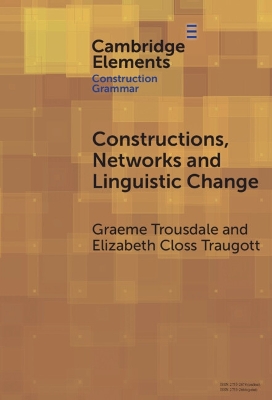
Constructions, Networks and Linguistic Change [Kõva köide]

(The University of Edinburgh), (Stanford University)
  • Formaat: Hardback, 75 pages, Worked examples or Exercises
  • Sari: Elements in Construction Grammar
  • Ilmumisaeg: 31-May-2026
  • Kirjastus: Cambridge University Press
  • ISBN-10: 1009523783
  • ISBN-13: 9781009523783
Teised raamatud teemal:
  • Kõva köide
  • Hind: 77,25 €
  • See raamat ei ole veel ilmunud. Raamatu kohalejõudmiseks kulub orienteeruvalt 3-4 nädalat peale raamatu väljaandmist.
  • Kogus:
  • Lisa ostukorvi
  • Tasuta tarne
  • Tellimisaeg 2-4 nädalat
  • Lisa soovinimekirja
  • Formaat: Hardback, 75 pages, Worked examples or Exercises
  • Sari: Elements in Construction Grammar
  • Ilmumisaeg: 31-May-2026
  • Kirjastus: Cambridge University Press
  • ISBN-10: 1009523783
  • ISBN-13: 9781009523783
Teised raamatud teemal:
The topic of linguistic networks unites different frameworks in cognitive linguistics. This Element explores two approaches to networks, specifically Construction Grammar of the Goldberg variety and Word Grammar as developed by Hudson, and how they inform work on language change. Both are usage-based theories, but while the basic units of Construction Grammar are conventionalized form-meaning pairings gathered in a construct-i-con, the basic units of Word Grammar are words in dependency and other relations. Construction Grammar allows for schematic, hierarchized abstract generalizations attributable to social groups, whereas Word Grammar focuses on relations at the micro-level and attributable primarily to individuals. Consequences of the differences are discussed with reference to perspectives on the diachronic development of causal connectives in English, especially because.

Muu info

The Element discusses different perspectives on the shape and nature of the language network using evidence from language change.
1. Introduction;
2. Overview;
3. A constructional approach to networks;
4. Words, constructions and network structure;
5. Language change and network
structure;
6. A case study: the rise of causal connectives in English;
7.
Concluding remarks; References.