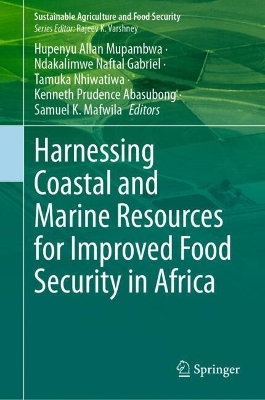
This book examines the role of coastal and marine ecosystems in ensuring food security across the African continent. It explores the vast potential of these resources, the challenges faced in their sustainable management, and the innovative solutions being implemented to overcome these challenges. Issues of climate change are paramount to the functioning and productivity of these coastal areas in food production and these are also highlighted in this book. Through detailed case studies and expert insights, this book provides an understanding of new economic opportunities related to marine resources, such as sustainable fisheries and marine-based agriculture integration. Other topics included are use of seaweed and other marine plants as food sources, and development of aquaponics system.
This book is a valuable resource for researchers, students, policy makers, non-governmental organizations, government workers in the field of aquaculture and mariculture.
Chapter
1. Promoting a solar-driven desalination for water and food
security in an arid environment: The case of the Namibian coastal regions.-
Chapter
2. Sustainable Mariculture Practices in Africa's Coastal Desert
Zones: A Pathway to Food Security and Economic Stability.
Chapter
3. The
role of organic amendments and marine-biomassderived resources in enhancing
the physico-chemical properties of horticultural growing media.
Chapter
4.
Impacts of Aquatic Pollution on Marine Food Resources.
Chapter
5. Unlocking
the potential of Namibias Small-Scale Coastal Marine Fisheries: Historical
Context, Socio-Economic Impact, and Sustainable Management.
Chapter
6.
Integrating coastal agriculture and mariculture for food and nutritional
security in Africa: Comparative insights from selected African case studies.-
Chapter
7. Examining the Marine Aquaculture's Contribution to Sub-Saharan
Africa's Food System Diversification and Nutritional Security.
Chapter
8.
Renewable Energy as an Enabler of Coastal and Marine Food Security: The Case
of Namibia.
Chapter
9. Bycatch in the Marine Capture Fishery, a potential
for food security: a case of Namibias hake bottom trawl fishery.
Chapter
10. Harnessing the potential of Seaweed as a renewable resource for Improved
Food Security in Africa.
Chapter
11. Harnessing the Food and Raw Material
Potential of Salicornia spp Species in Africa.
Chapter
12. Climate change
and the prevalence of parasitic diseases in coastal and marine fisheries:
risks to food security in Africa.
Chapter
13. Fish Exports and Economic
Growth nexus: Evidence from Namibia.
Chapter
14. Valorization of Marine
Fishery Waste for Sustainable Aquafeed Production in Africa.
Chapter
15.
Expanding Marine Fisheries and Aquaculture Supply Chains for Regional Food
Security in Africa.
Chapter
16. Soil fertility Status of the Lake Liambezi
maize farm and implication for sustainable cultivation.
Dr. Hupenyu A. Mupambwa is currently the head of the Sam Nujoma Marine and Coastal Resources Research Centre (SANUMARC) at the University of Namibia. He is also a senior researcher leading desert and coastal agriculture research at SANUMARC. He holds a PhD in soil science from the University of Fort Hare in South Africa, where he specialized in organic soil fertility management. His MSc research work focused on changes in soil physical properties in conservation agriculture systems. He also holds a BSc in crop science from the University of Zimbabwe. Dr. Hupenyu has published over 29 journal articles, 26 book chapters, and 3 edited books. His research focuses on waste beneficiation, vermicomposting, and organic soil fertility management to improve the with a drive towards improving soil quality among resource-poor farmers.
Dr. Ndakalimwe N. Gabriel is currently an associate professor in the Department of Fisheries and Ocean Sciences, School of Fisheries and Agriculture, University of Namibia (UNAM). He holds a PhD in fisheries and aquatic sciences from UNAM, and his postdoctoral studies were conducted at Kentucky State University's Aquaculture Research Center in the United States, as well as at the Asian Institute of Technology (AIT) in Thailand. Gabriel earned his MSc in aquaculture from Nanjing Agricultural University in Jiangsu, China, and his bachelor's degree in biological sciences from UNAM. Dr. Gabriel has over 10 years of experience working in the field of aquaculture as a researcher. He has published more than 40 research articles, including over 15 book chapters and three edited books.
Dr. Tamuka Nhiwatiwa is an associate professor of fisheries biology at the University of Namibia. He holds a PhD in biology from KU Leuven (Belgium); and MPhil degree in limnology from University of Zimbabwe, and a bachelors degree in biological sciences also from the University of Zimbabwe. Dr. Nhiwatiwa has over 20 years experience as an academic and researcher. His research focuses on freshwater and marine systems ecology, fisheries, aquaculture, and limnology. He also has experience in other disciplines of aquatic ecology that include water resources management, pollution control and biological monitoring, river and lake ecology, fish biodiversity and invertebrate biology. He has published 125+ research contributions (articles, book chapters) and is a highly rated researcher according to academic research metrics.
Dr. Kenneth Prudence Abasubong holds an MSc and PhD from Nanjing Agricultural University (NAU), China, specializing in aquaculture nutrition, particularly fish nutrient metabolism, excretion, immune pathways, feed science, and the eco-intensification of fish farming using recycled waste, fish health, and sustainable aquaculture development. He studied at the University of Uyo, Nigeria (PGD in aquatic environmental management) and at the University of Calabar for his bachelors degree in animal sciences. He has published over 35 articles, 11 book chapters, and two edited books. Currently, he is undergoing post-doctoral research training in the Faculty of Fisheries and Protection of Waters at the South Bohemian Research Center of Aquaculture and Biodiversity of Hydrocenoses, Institute of Aquaculture and Protection of Waters, Czech Republic. He has over ten years of experience as an animal and aquaculture nutrition researcher.
Prof Dr. Samuel Kakambi Mafwila is the Director for the Katima Mulilo Campus, University of Namibia. He holds a PhD in marine science and MSc in applied marine science from Zoology Department, University of Cape Town. He pursued his bachelor's degree in marine biology from Entomology and Zoology Department, Rhodes University, a Postgraduate Diploma in Education (Biology and Physical Science), and Bachelor of Science (Zoology and Geography), both from the University of Namibia. He has more than 25 years working experience in both public and private sector where he served in various capacities. He is the National Chairperson of Scientific Committee on Oceanic Research (SCOR). He has published more than 30 scientific papers and specialist technical reports.