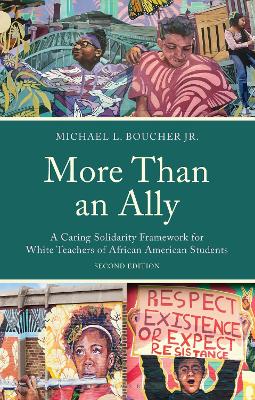
Division and acrimony have reached new heights that demand far-reaching structural solutions for White teachers committed to creating classrooms where all students thrive. The second edition of this inciteful and motivating book explores the Caring Solidarity framework with new, updated examples and, aspirational, descriptive guides for teachers and researchers. Plus, there are extensive revisions based on newly available research. This new edition includes new chapters on solidarity in the digital age and how to be in solidarity with communities when districts across the country are banning books and working to erase the identities of our students.
This powerful second edition offers White teachers a timely and research-driven Caring Solidarity framework-complete with updated examples and new chapters addressing digital-age solidarity and resisting identity erasure-to transform divided classrooms into inclusive spaces where every student can thrive.
Muu info
This powerful second edition offers White teachers a timely and research-driven Caring Solidarity frameworkcomplete with updated examples and new chapters addressing digital-age solidarity and resisting identity erasureto transform divided classrooms into inclusive spaces where every student can thrive.
Acknowledgments
Preface to the Second Edition
Chapter 1: Great Teachers Need a Framework to Talk About Race
Chapter 2: Race, White Supremacy, Whiteness, and Schools
Chapter 3: Gaps and the School-to-Prison Pipeline
Chapter 4: The Inadequacy of Multicultural Education as Implemented
Chapter 5: The Asset Pedagogies: Caring, Allyship, and Solidarity
Chapter 6: A New Framework: Caring Solidarity
Chapter 7: Crossing the First Boundary, Entering Solidarity
Chapter 8: Transference of Solidarity and Entering New Territories
Chapter 9: Caring Solidarity as an Advocate and Accomplice
Chapter 10: Teachers as Public Intellectuals in Solidarity With Students
Chapter 11: Refusing to Give In To Banning and Bullying
Chapter 12: Conclusion
References
Michael L. Boucher, Jr. is Associate Professor of Curriculum and Instruction at Texas A&M UniversitySan Antonio, and with 36 years of experience as a teacher, coordinator, and teacher educator, he has consistently worked at the intersection of race, power, and curriculum, with solidarity as a guiding principle. Whether writing about qualitative methods, preparing future teachers, or rethinking classroom practice, across his scholarship and teaching, he bridges theory and practice by offering educators and researchers ways to reflect on themselves, engage more fully with their students and communities, and envision schools rooted in equity, care, and shared purpose.