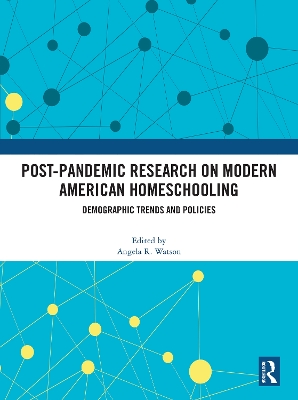
Homeschooling in the United States is expanding and diversifying, creating urgent demand for rigorous research to inform policy and practice. This volume responds to critiques that homeschool scholarship lacks rigour and is too often shaped by advocacy.
Homeschooling in the United States is expanding and diversifying, creating urgent demand for rigorous research to inform policy and practice. This first volume—one of two derived from a special issue of the Journal of School Choice—responds to long-standing critiques that homeschool scholarship lacks rigour and is too often shaped by advocacy.
Featuring research studies from 26 authors across 13 institutions, the collection offers empirically grounded insights into a rapidly evolving educational landscape. Several years after the COVID-19 pandemic prompted millions of families to reconsider traditional schooling, homeschooling participation remains elevated and continues to grow. The studies examine who is homeschooling, how families navigate in-and-out of public schools, and how increasingly diverse demographic groups shape varied approaches to the practice. Authors introduce innovative methods for estimating homeschool participation in data-limited states, situate U.S. homeschooling within an international research context, and share perspectives from a national policy summit. Together, these findings challenge persistent stereotypes and counter false narratives about who homeschools and why.
This volume will be of interest to education researchers, policymakers, school administrators, and homeschooling families seeking evidence-based insights into contemporary home education practices. The comprehensive, peer-reviewed foundation supports evidence-driven decisions that benefit all students and families, including those choosing homeschooling.