Muutke küpsiste eelistusi

Urban Deer Havens [Pehme köide]

, (Texas A&M University, College Station, USA)
  • Formaat: Paperback / softback, 164 pages, kõrgus x laius: 234x156 mm, kaal: 312 g, 21 Tables, black and white; 25 Illustrations, color; 50 Illustrations, black and white
  • Ilmumisaeg: 14-May-2020
  • Kirjastus: CRC Press
  • ISBN-10: 1138305073
  • ISBN-13: 9781138305076
Teised raamatud teemal:
  • Formaat: Paperback / softback, 164 pages, kõrgus x laius: 234x156 mm, kaal: 312 g, 21 Tables, black and white; 25 Illustrations, color; 50 Illustrations, black and white
  • Ilmumisaeg: 14-May-2020
  • Kirjastus: CRC Press
  • ISBN-10: 1138305073
  • ISBN-13: 9781138305076
Teised raamatud teemal:
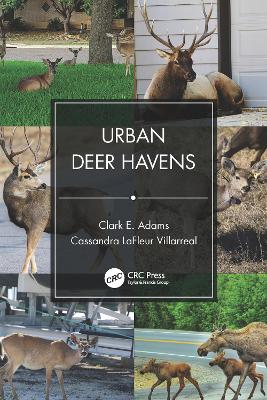
Urban Deer Havens consists of a thorough examination of selected cervid (deer) species that are known to inhabit urban communities in the United States. The deer species that are included in this presentation consisted of white-tailed (Odocoileus virginianus), Key deer (O. v. clavium), moose (Alces alces), elk (Cervus elaphus), mule (Odocoileus hemionus), and black-tailed deer (O. h. columbianus). This book is the first attempt to examine the similarities and differences in those factors that allow the selected cervids to exist and thrive in urban habitats. This information has never been collected, collated, reviewed, and published under one cover document. Yet, all five are known to inhabit urban communities within their geographic range.

The lack of information concerning several important examples of urban cervids in conjunction with a proliferation of information on white-tailed deer only is an incomplete and biased presentation. This book is the first comprehensive source of information on urban deer management, which includes a broad assemblage of urban cervids.

The overall objective of this book is to provide a more holistic examination of urban cervids. For example, it examines the similarities and differences of the environmental impacts, management strategies, and human dimensions considerations concerning urban cervids in general, and using specific examples.

Urban Deer Havens features four chapters that include:


Urban deer census techniques and population dynamics


Comprehensive tables that review urban community deer management plans


National and state-wide estimates the five selected cervids


Laws and regulations concerning urban deer


Lethal and nonlethal management options for managing deer


Steps for managing urban deer populations


Examples of urban deer management efforts
Preface xi
Acknowledgments xiii
Author Bios xv
Chapter 1 Urban Deer Introduction
1(32)
Sidebar 1.1 Deer Are a Mixed Blessing
2(2)
1.1 Terminology
4(2)
1.2 Bureau of Census Definition of Urban
6(2)
1.3 Ecological Definition of Urban
8(3)
1.4 Definition of Deer
11(11)
1.4.1 Taxonomy of Urban Deer
11(1)
1.4.1.1 Deer Characteristics That Identify Them as Mammals
12(3)
1.4.1.2 Deer Characteristics That Identify Them as Cervids
15(1)
1.4.1.3 Deer Characteristics That Identify Them as Different Species or Subspecies
15(7)
1.5 Contemporary Relevance of a Text on Urban Deer
22(11)
1.5.1 Urbanization: Collision of an Invasive Hyperkeystone Species with a Keystone
23(1)
1.5.1.1 Humans (Homo sapiens) Are the Invasive Species
23(1)
1.5.1.2 Humans as a Hyperkeystone Species
24(1)
1.5.1.3 Deer as a Keystone Species
25(1)
Case Study 1.1 Reviews of Published Literature
26(7)
Chapter 2 Urban Neighborhoods Guarantee Deer Occupation
33(30)
2.1 Factors That Contributed to Deer Abundance in Urban America
34(1)
2.2 Counting Deer
35(14)
2.2.1 Census Techniques
35(1)
2.2.2 The Census Process
36(3)
2.2.3 Direct Count
39(4)
2.2.3.1 Application of Direct Count as a Population Estimate Procedure
43(1)
2.2.3.2 Application of Trap/Mark/Re-sight as a Population Estimate Procedure
43(2)
2.2.3.3 Application of Distance Sampling as a Population Estimate Procedure
45(2)
2.2.4 Harvest Recommendations Based on Census Data
47(1)
2.2.5 Deer Population Estimates: Money Not Well Spent
48(1)
2.3 National and Statewide Estimates of Deer Numbers
49(14)
Chapter 3 Overabundant Urban Deer
63(42)
3.1 Deer Management in Urban Areas when Compared To Rural Areas
63(16)
3.1.1 Similarities
74(3)
3.1.2 Differences
77(2)
3.2 The Scope of the Problem
79(2)
Sidebar 3.1
79(2)
3.3 Population Dynamics
81(6)
3.3.1 How Populations Grow
82(1)
3.3.2 Population Growth Rate Patterns
82(5)
3.4 History of Deer Abundance
87(3)
3.5 Factors Leading to Deer Overabundance
90(1)
3.5.1 Biological Carrying Capacity
90(1)
3.6 Problems Associated with Deer Overabundance
91(1)
3.6.1 Deer-Vehicle Collisions
91(1)
3.6.2 Disease Transmission
91(1)
3.7 Ecological Impact of Urban Deer Overabundance
92(1)
3.8 Laws and Regulations Concerning Urban Deer
93(8)
3.8.1 Who's in Charge of Managing Urban Deer?
93(1)
3.8.2 Who's in Charge of Regulating Urban Deer?
93(1)
3.8.3 Management Options in Texas
94(6)
3.8.4 Laws Governing Trap, Transport, and Transplant (TTT) and/or Process (TTP)
100(1)
3.8.5 Hunting
100(1)
3.9 The Tale of Two Cities
101(4)
3.9.1 Background
101(1)
3.9.2 Need for Educational Program Development
102(3)
Chapter 4 Urban Deer Management Planning: Process, Progress, and Problems
105(16)
4.1 Steps for Managing Urban Deer Populations
105(1)
Step 1 Determine the Scope of the Problem
106(1)
Step 2 Form a Deer Management Action Committee
107(1)
Step 3 Have a Town Hall Meeting
107(1)
Step 4 Develop an Urban Deer Management Plan
107(2)
Step 5 Implement the Plan and Monitor Results
109(1)
4.2 Suburban White-tailed Deer Management
110(1)
4.3 Driving Factors
111(3)
4.4 Who Are You Going to Call?
114(3)
4.5 Commitment to Urban Deer Management
117(4)
Appendix 121(32)
References 153(8)
Index 161
Clark E. Adams was an Emeritus Professor in the Department of Wildlife and Fisheries Sciences (WFSC) at Texas A&M University in College Station, Texas. He received a B.S. in biology from Concordia Teachers College, Seward, Nebraska; an M.S. in biology from the University of Oregon; and a Ph.D. in Zoology from the University of Nebraska Lincoln. He chaired the Conservation Education Committee for The Wildlife Society (TWS), edited the newsletter for the Human Dimensions of Wildlife Study Group, was a member of the Urban Wildlife Management Working Group, and chaired many committees for the Texas Chapter of TWS. He was a past president of the Texas Chapter of TWS and TWS Southwest Section. Since 1981, he and his students conducted and published many national, regional, and statewide studies on the publics activities, attitudes, expectations, and knowledge concerning wildlife. He developed the degree option in urban wildlife and fisheries management for the WFSC, and developed and taught the senior-level urban wildlife management course. He was the senior author on two other books titled Texas Rattlesnake Roundups (Texas A&M Press, 2008) and Urban Wildlife Management 3rd (Taylor and Francis, CRC Press, 2016). He was the recipient of the 2015 Outstanding Achievement in Urban Wildlife Conservation award from the TWS Urban Wildlife Working Group. Adams completed a 51-year teaching and research career on August 31, 2015.

Cassandra LaFleur Villarreal has worked as an Environmental Specialist in the Dallas/Fort Worth area for over five years specializing in water quality. She received her B.S. in wildlife and fisheries sciences from Texas A&M University in 2014. Cassandra developed an interest in urban wildlife after taking an Urban Wildlife Management course in 2012. In 2013, she began working for Dr. Clark E. Adams as a student worker. While working for Dr. Adams, Cassandra contributed to Urban Wildlife Management, 3rd ed. She developed an alternative method of examining urban biodiversity using literature (peer-reviewed articles and field guides), rehabilitation center intake data, national data sets on bird species per state, and mapping methods such as Global Biodiversity Information Facility (GBIF). She conducted a meta-analysis of the relationship between a species resident by state(s) and observation of that species in an urban setting. This analysis included all native species of terrestrial herpetofauna, birds, and mammals known to exist in the United States. Her analysis and results let to the production of an entire new section and five new chapters in the third edition.