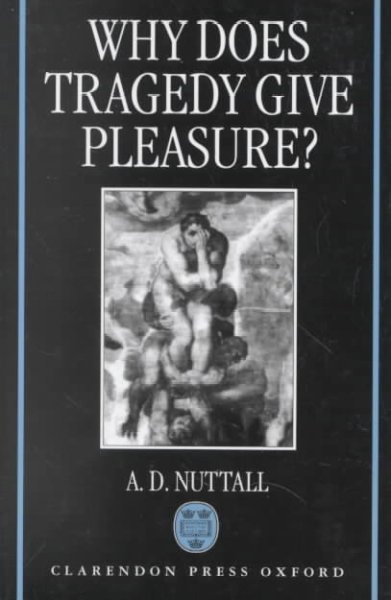
Why does tragedy give pleasure? Why do people who are neither wicked nor depraved enjoy watching plays about suffering and death? Is it because we see horrific matter controlled by majestic art? Or because tragedy actually reaches out to the dark side of human nature? A. D. Nuttall's wide-ranging, lively, and engaging book offers a new answer to this perennial question.
The classical answer to the question is rooted in Aristotle, and rests on the unreality of the tragic presentation: no one really dies; we are free to enjoy watching potentially horrible events controlled and disposed in majestic sequence by art. In the nineteenth century, Nietzsche dared to suggest that Greek tragedy is involved with darkness and unreason, and Freud asserted that we are all, at the unconscious level, quite wicked enough to rejoice in death. But the problem persists: how can the conscious mind assent to such enjoyment? Strenuous bodily exercise is pleasurable. Could we, when we respond to a tragedy, be exercising our emotions, preparing for real grief and fear? King Lear actually destroys an expected majestic sequence. Might the pleasure of tragedy have more to do with possible truth than 'splendid evasion'?
Why does tragedy give pleasure? Why do people who are neither wicked nor depraved enjoy watching plays about suffering and death? Is it because we see horrific matter controlled by majestic art? Or because tragedy actually reaches out to the dark side of human nature? Nuttall's wide-ranging, lively, and engaging book offers a new answer to this perennial question. Writers discussed include Aristotle, Shakespeare, Nietzsche, and Freud.
Why does tragedy give pleasure? Why do people who are neither wicked nor depraved enjoy watching plays about suffering and death? Is it because we see horrific matter controlled by majestic art? Or because tragedy actually reaches out to the dark side of human nature? Nuttall's wide-ranging,
lively, and engaging book offers a new answer to this perennial question. Writers discussed include Aristotle, Shakespeare, Nietzsche, and Freud.