Muutke küpsiste eelistusi

Enlightenment's Animals: Changing Conceptions of Animals in the Long Eighteenth Century [Pehme köide]

  • Formaat: Paperback / softback, 248 pages, kõrgus x laius: 234x156 mm, kaal: 460 g
  • Ilmumisaeg: 01-Dec-2025
  • Kirjastus: Routledge
  • ISBN-10: 1041187777
  • ISBN-13: 9781041187776
  • Pehme köide
  • Hind: 48,81 €*
  • * hind on lõplik, st. muud allahindlused enam ei rakendu
  • Tavahind: 65,09 €
  • Säästad 25%
  • Raamatu kohalejõudmiseks kirjastusest kulub orienteeruvalt 3-4 nädalat
  • Kogus:
  • Lisa ostukorvi
  • Tasuta tarne
  • Tellimisaeg 2-4 nädalat
  • Lisa soovinimekirja
  • Raamatukogudele
  • Formaat: Paperback / softback, 248 pages, kõrgus x laius: 234x156 mm, kaal: 460 g
  • Ilmumisaeg: 01-Dec-2025
  • Kirjastus: Routledge
  • ISBN-10: 1041187777
  • ISBN-13: 9781041187776
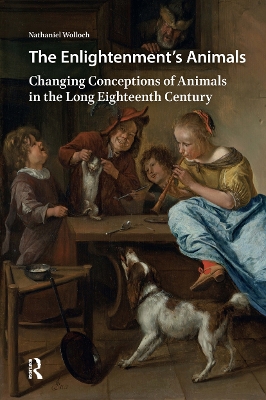
This book gives an overview of attitudes toward animals in the long eighteenth century from an interdisciplinary perspective combining intellectual history and art history, and presents a new interpretation of changing attitudes toward animals during this period.

In The Enlightenment's Animals Nathaniel Wolloch takes a broad view of changing conceptions of animals in European culture during the long eighteenth century. Combining discussions of intellectual history, the history of science, the history of historiography, the history of economic thought, and, not least, art history, this book describes how animals were discussed and conceived in different intellectual and artistic contexts underwent a dramatic shift during this period. While in the seventeenth century and the first half of the eighteenth century the main focus was on the sensory and cognitive characteristics of animals, during the late Enlightenment a new outlook emerged, emphasizing their conception as economic resources. Focusing particularly on seventeenth-century Dutch culture, and on the Scottish Enlightenment, Wolloch discusses developments in other countries as well, presenting a new look at a topic of increasing importance in modern scholarship.
List of Illustrations, Preface, Introduction, PART I ANIMAL
EXPERIMENTATION
1. Animal Experimentation and Ethics in the Early Modern Era
2. Christiaan Huygens and Animal Experimentation PART II FROM PHILOSOPHY TO
HISTORIOGRAPHY IN THE ENLIGHTENMENT
3. The Turkish Spy and Eighteenth-Century
British Theriophily
4. Rousseau and Animals
5. William Smellie and the
Enlightenment Critique of Anthropocentrism
6. John Gregory and Scottish
Enlightenment Views of Animals
7. Buffon, Crèvecoeur, and the Limits of
Enlightenment Sensitivity to Animal Suffering
8. Animals in Enlightenment
Historical Literature PART III ART AND ECONOMICS
9. Seventeenth-Century
Netherlandish Paintings of Dead Animals and Changing Perceptions of Animals
10. Adam Smith and the Economic Consideration of Animals
11. From Symbols to
Commodities: The Economization of Animals in the Transition to Modernity,
Bibliography.
Nathaniel Wolloch is an independent scholar from Israel.