Muutke küpsiste eelistusi

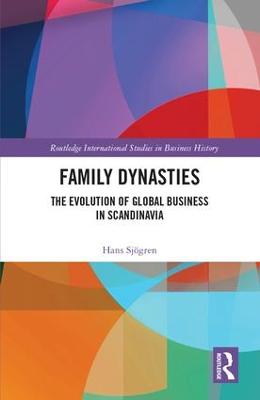
Family Dynasties: The Evolution of Global Business in Scandinavia [Kõva köide]

  • Kõva köide
  • Hind: 159,19 €*
  • * hind on lõplik, st. muud allahindlused enam ei rakendu
  • Tavahind: 212,25 €
  • Säästad 25%
  • Raamatu kohalejõudmiseks kirjastusest kulub orienteeruvalt 3-4 nädalat
  • Kogus:
  • Lisa ostukorvi
  • Tasuta tarne
  • Tellimisaeg 2-4 nädalat
  • Lisa soovinimekirja
A remarkable fifteen Nordic family businesses are among the 500 biggest companies in the world and the Nordic countries have more dynasties than most others per capita and in GDP terms. The willingness, often reluctant, of both the political system and labour movement to accept asset accumulation has helped these Nordic businesses survive. The top 1% of Swedes own close to 25% of the country's wealth, as opposed to 16.5% of Spaniards, where dynasties are also abundant. The pattern has held a firm grip on the Nordic countries since the Industrial Revolution and emergence of free enterprise. The trend is particularly pronounced in comparison with the Anglo-Saxon countries somewhat less so relative to places like Italy, Japan, Germany and South-Asian countries.

This book describes the factors and dynamics behind the ability of Nordic businesses to grow and thrive from one generation to the next in the process of becoming dynasties. Far from being commercial enterprises, they are a venue for power, philanthropy, passion, conflict, freedom and captivity. Like many other dynasties, the Nordic ones are a witch's brew of Machiavelli's Prince, Marx's belief in the potential of the meritocracy and Smith's baker who works to sustain his family. Topped by a spoonful of Weber's Protestant Ethic.

This book will be key readings for students and scholars of entrepreneurship, corporate governance, business history, Scandinavian history, family business and enterprises and the related disciplines.
1 Dynasties in the Age of Capitalism
1(10)
The Lucky Sperm Club
2(3)
Mature and Emerging Dynasties
5(2)
Nordic Dynasties
7(1)
Missions to Fulfil
8(3)
2 The Theory of Dynasty
11(12)
Personal, Family-Based and Managerial Capitalism
11(1)
Financial and Human Capital
12(1)
Dynastic Longings
13(2)
Churchill's Favourite Marmalade?
15(1)
Ants and Grasshoppers
15(2)
The Good Life Outside the Stock Market
17(1)
A Conceptual Model
18(2)
Relational Capital and Value Creation
20(1)
Historical Anchor
21(2)
3 New Industry Logic
23(24)
Nordic Dynastic Entrepreneurship in the Nineteenth Century
23(3)
Merchant Houses
26(3)
Banking and the Bourgeoisie
29(3)
Inter-War Dynasties
32(2)
Entrepreneurship in the Countryside of Jutland
34(2)
Post-War Dynasties
36(1)
Society Modernizes
37(2)
Family-Based Retailers
39(3)
Into the Digital Revolution
42(1)
Countryside Origins
43(4)
4 Strategy, Structure and Dynamics
47(12)
Stick to What You Know, or Not
47(1)
A Structural Evolutionary Pattern
48(1)
Conglomerates---a Blind Alley
49(1)
Business Groups
50(1)
Bonnier---Back to Basics
51(1)
The U-Turn of Lego
52(1)
Too Much Tradition Kills
53(1)
In the Wrong Industry at the Wrong Time
54(1)
Continuity and Discontinuity with Historical Roots
55(4)
5 Values and Credos
59(13)
Servant of the People---Kamprad's Will
60(2)
Renewal and the National Interest---the Wallenbergs
62(2)
Resolute Leadership
64(2)
Spotlight on Customers---the Perssons, Rausings and Kann Rasmussens
66(2)
The Devil Is in the Details
68(2)
Winning Strategies
70(2)
6 Blood Is Everything---Succession
72(29)
Family Do or Die
73(3)
Lonely Spouses and Cracks in the Glass Ceiling
76(1)
Changing Role of Women
77(3)
Shaky Promises for the Future
80(1)
Sibling Rivalry
81(2)
A Two-Man Show, or Maybe Not
83(2)
The Extended Family
85(4)
Sons-in-Law and Trials by Fire
89(1)
Culture of Leadership
90(3)
Frictionless Succession
93(2)
Passive Owners Without Day-to-Day Management Duties
95(1)
Kinship Triumphs
96(5)
7 Business, Politics and Culture
101(10)
Political Effort and Conservative Resistance
103(1)
To Ease the Tax Burdens
104(2)
Welfare System Alliances
106(1)
A Long Tradition of Mutual Benefit
107(2)
Give and Take---a Question of Culture
109(2)
8 Conclusion
111(6)
The Weight of Tradition
113(1)
The Future of Dynasties---Local Is Global
114(3)
Epilogue 117(2)
References 119(6)
Index of Companies, Foundations and Individuals 125
Hans Sjögren is a professor at Linköping University and Stockholm School of Economics, Sweden.