Muutke küpsiste eelistusi

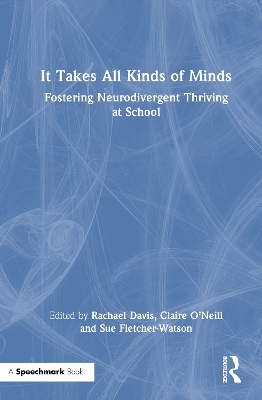
It Takes All Kinds of Minds: Fostering Neurodivergent Thriving at School [Kõva köide]

Edited by , Edited by (University of Edinburgh), Edited by
  • Formaat: Hardback, 270 pages, kõrgus x laius: 234x156 mm, kaal: 730 g, 18 Tables, black and white; 11 Line drawings, black and white; 11 Illustrations, black and white
  • Ilmumisaeg: 22-Dec-2025
  • Kirjastus: Routledge
  • ISBN-10: 1032796219
  • ISBN-13: 9781032796215
  • Kõva köide
  • Hind: 159,19 €*
  • * hind on lõplik, st. muud allahindlused enam ei rakendu
  • Tavahind: 212,25 €
  • Säästad 25%
  • Raamatu kohalejõudmiseks kirjastusest kulub orienteeruvalt 3-4 nädalat
  • Kogus:
  • Lisa ostukorvi
  • Tasuta tarne
  • Tellimisaeg 2-4 nädalat
  • Lisa soovinimekirja
  • Raamatukogudele
  • Formaat: Hardback, 270 pages, kõrgus x laius: 234x156 mm, kaal: 730 g, 18 Tables, black and white; 11 Line drawings, black and white; 11 Illustrations, black and white
  • Ilmumisaeg: 22-Dec-2025
  • Kirjastus: Routledge
  • ISBN-10: 1032796219
  • ISBN-13: 9781032796215

It Takes All Kinds of Minds provides an inspiring and accessible introduction to neurodiversity in educational settings, informed by research and real-world experience.

Drawing upon core principles that underpin the neurodiversity paradigm, the book offers a carefully curated collection of chapters exploring many different kinds of minds and how they can best learn and flourish at school. The book is divided into three main parts, classroom practice and pedagogy, the classroom environment, and relationships in and around school, with each chapter underpinned by core values of care, inclusion, celebration of difference and the collective power of diverse minds. Pioneering contributions help to realise a vision of environments, relational systems and pedagogical practices that are designed for all minds, learners and educators.

Placing a focus on amplifying neurodivergent voices and having a direct impact on practice, this book is essential reading for practitioners at all stages of teacher education and professional development, as well as clinicians and outside agencies that work in partnership with schools.


This book provides an accessible introduction to neurodiversity in educational settings, informed by research and real-world experience. Placing a focus on amplifying neurodivergent voices and having a direct impact on practice, this book is essential reading for practitioners at all stages of teacher education and professional development.

Arvustused

Clear, comprehensive, and brilliant; an indispensable resource for teachers, administrators, policymakers, and anyone interested in helping the next generation thrive. The sensible, practical strategies for inclusive education that the authors present in this marvellous book will support the wellbeing and scholastic success of every sort of young mind. - Nick Walker, Professor of Psychology, California Institute of Integral Studies

I love the whole book. It is such a nourishing and hopeful read. I think what has stood out to me most is that the book takes us forward. There is so much to complain about in education, but this put a fire in my belly. Kerry Murphy, Early Childhood Specialist

"This inspiring book offers practical, evidence-based strategies to help schools create environments where neurodivergent students feel they belong, can achieve, and will truly thrive. The UK governments desire to support all neurodivergent children makes this essential reading, but it is a powerful resource for everyone committed to inclusive education globally." - Professor Mark Mon-Williams, University of Leeds and Bradford Institute for Health Research

This is a brilliantly accessible book covering practical ways to implement neurodiversity-affirming approaches that will benefit all. Essential reading for practitioners. - Victoria Honeybourne, Neurodiversity Specialist and Author

"A much-needed book that offers excellent insight into what changes and adaptations neurodivergent children deserve at school. Powerful writing and powerful advocacy." - Pete Wharmby, Autistic Author and Speaker

"If this book were a food it would fulfil three vital requirements: incredibly delicious, utterly nutritious, and easy to digest. I would recommend it to anyone with an appetite for learning about neurodivergent-affirming practice within education. A brilliant read." - Dr Luke Beardon, The Autism Centre, Sheffield Hallam University

"The book is packed with valuable insights. I only wish something like this had been available when my son needed it. The range of perspectives brings real depth, with something for everyone to take away. I know some of the contributors personally, and they are well-deserving of being included, their voices add authenticity and meaning. Every institution should have a copy." - Dr Venessa Swaby, Autistic Speaker, Founder A2ndvoice CIC and AT Autism Associate

Editor Biographies

Contributors

Acknowledgements

Preface

Glossary

Introduction

Section Introduction: Environments

1. Using Outdoor Spaces to Support Neurodiversity-Affirmative Playtime in
Schools

Catherine Watson

2. Space to Be Myself: Getting Play and Breaktimes Right for Neurodivergent
Pupils

Jenny Gibson and Samantha Friedman

3. Understanding and Meeting the Sensory Needs of Neurodivergent Learners:
Implementing and Evaluating the Use of Flexible Seating in an Inclusive
Primary School

Heba Al-Jayoosi and Laura Crane

4. SPaRKs (Songwriting, Performance and Recording Kickstarter) Music Project
Informing Creative Learning and Skills for Neurodivergent Teenagers

Jane Macdonell, Sam Johnston, Devin Casson and David Calver

Section Introduction: Practice and Pedagogy

5. Creating Inclusive Learning Spaces for Neurodivergent Young People: A
Personal Journey, 30 Years in the Making

Gareth D. Morewood

6. Embracing Monotropism and Flow

Fergus Murray and Helen Edgar

7. Embedding a Humanising Compassionate Pedagogy for Collaborative Learning
in the Neurodiverse Classroom

Elaine McGreevy

8. Informing Educational Practice by Supporting, Listening to and Acting Upon
the Voices of Neurodivergent Learners

Craig Goodall

9. It Takes All Kinds of Minds (ITAKOM) and Intersectionality

Frances Akinde

10. Character Strengths: Changing the Language to Change Expectations

Clara OByrne

11. Universal Design for Learning in a Neurodiverse World

Margaret Flood

Section Introduction: Relationships in and Around School

12. The Learning About Neurodiversity at School (LEANS) programme in the
Context of Neurodiversity-Affirmative Practice

Alyssa M. Alcorn, Amy Nic Thaidhg and Alun Flynn

13. Empowering Neurodivergent Young People: Insights from a School-Based Peer
Support Initiative

Francesca Fotheringham, Katie Barrowman and Justine Young

14. Islands of Safety: The Importance of Non-Teacher Educators in Curating
Felt Safety for Autistic Children and Young People

Kieran Rose

15. The LISTEN Framework Fostering a Values-Led Neuroaffirmative Climate in
Schools

Paula Prendeville

Conclusion: A Shared Journey Forward

Index
Rachael Davis is a lecturer in Psychology and Education at Queen Margaret University, Edinburgh. Informed by her experiences as a teaching assistant, Rachels current research prioritises neurodivergence voices to inform best practice in educational settings. She is a strong advocate of public engagement and community outreach; ensuring that research is accessible for everyone.

Claire ONeill is an experienced teacher and teacher-educator, working in the areas of inclusion, neurodiversity and wellbeing. She is also a writer and researcher and shared her participatory autism research at the It Takes All Kinds of Minds conference in 2023. Claires lived experience as a neurodivergent parent of two neurodivergent children informs both her professional work and research.

Sue Fletcher-Watson is a Professor of Developmental Psychology at the University of Edinburgh and was Co-Chair of the It Takes All Kinds of Minds conference in March 2023. Her recent research has focused on investigations of the double empathy problem in cross-neurotype interactions, and on the application of the neurodiversity paradigm to methods of school support. Sue uses co-production methods in all her work and is an advocate for neurodivergent leadership in research. She is also a parent of two neurodivergent children.