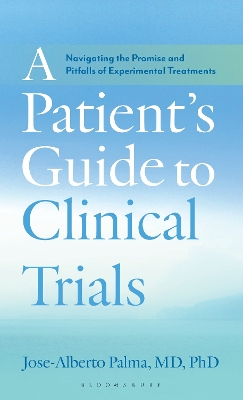
Every year, millions of people are diagnosed with life-threatening illnesses for which standard-of-care treatments are limited or nonexistent. In the United States alone, nearly 2 million people are diagnosed with cancer annually, with many facing grim odds as about 90% of these cancers remain incurable. Additionally, almost 6 million Americans are living with neurodegenerative diseases like Alzheimer's, Parkinson's, and amyotrophic lateral sclerosis (ALS) for which currently there is no cure. For the 30 million Americans with rare diseases, the lack of approved therapies is even more profound.
Despite the urgent need for new therapies, only a few patients participate in clinical trials, which are vital for advancing medical science. For example, only 8% of adult cancer patients participate in clinical trials, with even lower rates among Black and Hispanic populations. This gap is not merely due to a lack of interest; the clinical trial process can be daunting, with its complexities often leaving patients and their families uninformed and overwhelmed. While some resources offer basic information, they frequently overlook the comprehensive guidance needed to understand both the potential benefits and the risks involved.
This guide also serves as a valuable resource for healthcare providers, who may struggle to guide their patients through the intricate landscape of clinical trials due to their limited involvement in research. By using and recommending this book, doctors, nurses, and other medical professionals can better support their patients in making informed and balanced decisions about their treatment options.
With the growing emphasis on patient-centered care and the expanding landscape of clinical trials, A Patient's Guide to Clinical Trials offers a much-needed, balanced perspective. It provides essential guidance for navigating one of the most critical aspects of modern medicine, helping patients and caregivers weigh the promise of cutting-edge treatments against the challenges and risks they may face.
A balanced and realistic roadmap that empowers patients and caregivers with the knowledge and tools they need to make informed decisions about clinical trial participation.
Arvustused
Alberto Palma has written a terrific book. It speaks directly to clinical trial participants, but those of us conducting the studies will find it equally engaging and rewarding. To the point, well-organized, and full of valuable information. -- Horacio Kaufmann, MD, FAAN * Felicia B. Axelrod Professor of Dysautonomia Research, Department of Neurology, and Professor of Medicine and Pediatrics at New York University Grossman School of Medicine * A Patient's Guide to Clinical Trials provides a comprehensive description of the different aspects of clinical trials and provides an invaluable resource to patients. Its a significant contribution to our ability to have patients truly fully informed and, therefore, ethically enrolled in clinical trials. -- Italo Baggioni, MD * David Robertson Professor of Autonomic Disorders, and Professor of Medicine and Pharmacology, Division of Genetic Medicine and Clinical Pharmacology at Vanderbilt University * Dr. Palma combines the perspectives of an academic researcher, an industry stake-holder, and a patients family member to provide much needed guidebook to navigate the complex and ever-changing landscape of clinical trials. It is comprehensive, yet succinct and accessible to a lay person, with practical examples to illustrate points clearly. -- Un Kang * Founders Professor of Neurology, Department of Neurology at NYU Grossman School of Medicine *
Muu info
Every year, millions of people face life-threatening illnesses for which effective treatments are limited or nonexistent.
Why I Wrote This Book
Introduction
Chapter
1. Understanding Clinical Trials: A Primer
What is a Clinical Trial?
Overview of the Clinical Trial Phases
Must All Drugs Complete Every Phase?
Overview of the Drug Development Process
Who is Responsible and Pays for a Clinical Trial?
Who Oversees Clinical Trials?
Ten Clinical Trials Myths
Chapter 1 Highlights
Chapter
2. Should You Join a Clinical Trial?
The Good, The Bad, and The Ugly: Real-World Cases of Extreme Success or
Failure
Why People Participate in Clinical Trials
Understanding Potential Clinical Trial Risks and Burdens
Placebo, Blinding, Randomization, and Other Uncertainties
The Three Most Important Questions to Ask Yourself
How to Discuss Clinical Trials with Your Doctor
Chapter 2 Highlights
Chapter
3. Where to Start: Finding Clinical Trials
How to Search for Clinical Trials
A Step-by-Step Guide to Using ClinicalTrials.gov
Can Artificial Intelligence Chatbots Help to Find Clinical Trials?
Other Resources and Websites for Finding Trials
When No Trials Are Available
Is It a Clinical Trial or a Scam?
Chapter 3 Highlights
Chapter
4. Choosing the Right Clinical Trial
Key Questions Before Selecting a Trial
Ranking Clinical Trials: How To Prioritize Your Options
Learning More About the Experimental Therapy and Its Target
Becoming a Participant in a Clinical Trial
What Happens if a Trial is Delayed or Canceled?
Chapter 4 Highlights
Chapter
5. Inside the Clinical Trial: What to Expect
The Informed Consent Is the First Step of the Screening
Understanding Trial Criteria and Confirming Eligibility
What is a Screen Failure
After the Screening: Randomization and Additional Visits
Participants Responsibilities and Commitment
What Happens if You Want to Stop Your Participation in a Trial?
Chapter 5 Highlights
Chapter
6. Practical and Emotional Support During the Trial
Financial and Medical Insurance Implications
Travel and Logistics Planning
Balancing Work, Family, and Trial Commitments
How Caregivers Can Support Trial Participants
Building a Support Network
What to Do When Things Go Wrong
Chapter 6 Highlights
Chapter
7. After The Trial: What Comes Next
What Happens at the End of Study Visit?
Open-Label Extension
Pros and Cons of OLE Participation
What if an Open-Label Extension is Not Available?
Do Clinical Trial Participants Feel Valued?
Accessing Clinical Trial Data and Results
Handling Negative Clinical Trial Results
Integrating Trial Results into Your Healthcare
Support Systems After the Trial
Chapter 7 Highlights
Chapter
8. Addressing Unique Populations in Clinical Trials
Clinical Trials in Children
Clinical Trials in Other Vulnerable Populations
Clinical Trials for Rare Diseases
Increasing Representation in Clinical Trials
Chapter 8 Highlights
Chapter
9. The Future of Clinical Trials: Innovation and Empowerment
How Could Drug Development and Clinical Trials Be Improved?
Decentralized Clinical Trials: Clinical Trials at (or Near) Home
AI and Digital Technologies
Could We Ever Get Rid of Clinical Trials?
The Most Important Innovation: Empowered Participants
Chapter 9 Highlights
Epilogue. Considering Clinical Trials: A Leap of Hope
Acknowledgments
Resources for Further Information
Glossary
Bibliography
About the Author
Jose-Alberto Palma, MD, PhD, is a physician-scientist with more than fifteen years of experience in clinical trials and drug development. He is dedicated to advancing medical research and improving patient care. Dr. Palma currently serves as global clinical lead for neurodegeneration programs at Eli Lily, a role he formerly held at Novartis.