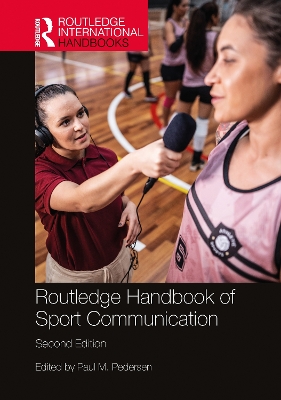
The Routledge Handbook of Sport Communication offers a comprehensive and in-depth survey of the contemporary discipline of sport communication.
Now in a fully revised and updated second edition, it explores communication within, through, and for sport in various theoretical, conceptual, cultural, behavioral, practical, and managerial aspects. Including contributions from leading sport communication scholars and professionals from around the world, the book is structured around four key themes: theoretical and conceptual foundations; mediated aspects of sport communication; sociological aspects; and organizational, technological, and managerial aspects. This new edition includes expanded coverage of important and emerging topics within sport communication including cross-cultural communication, rhetoric in sport, storytelling, the business of sports broadcasting, athlete activism, and communication within sports teams.
Taking stock of current research, new ideas, and key issues, this book is an essential reference for any advanced student, researcher, or practitioner with an interest in sport communication, sport business, sport management, sport marketing, communication theory, journalism, or media studies.
The Routledge Handbook of Sport Communication offers a comprehensive and in-depth survey of the contemporary discipline of sport communication.
Introduction, Part I: Theoretical and Conceptual Aspects of Sport
Communication,
1. Theories in Sport Communication Research,
2. Research
Methods in Sport Communication: A Broadening of the Field,
3. Critical
Discourse Analysis in Sport Communication,
4. Reflections on Sports in the
Media as Seen from a Play and Game Perspective: In a Different Game?,
5. The
Rhetoric of Sport,
6. The Storytelling Scheme and System of the Sports Media
Complex: Behind the Story,
7. Sport as a Communication System,
8. Social
Media and Sport Communication: Theoretical Beginnings, Current Assessments,
and Future Directions,
9. Intercultural, Cross-Cultural and Trans-Cultural
Sport Communication,
10. Exploring Concepts and Empirical Evidence of
Enjoyment in Mediated Sports, Part II: Mediated Aspects of Sport
Communication,
11. Chronicling Sport Culture, Branding Sport Media
Institutions: The Television Sports Documentary from Broadcast to Cable to
Streaming,
12. What the Olympic Games Communicates to the World:
Understanding the Biggest Show in Media,
13. Live Sports Productions
Philosophies,
14. Sports Reporting and Journalistic Principles,
15. Sport on
Short-form Video,
16. Changes in the Social Media Landscape,
17. Research
Methods in Social Media Sport Communication Scholarship,
18. Media Coverage
of International Sport,
19. International Perspectives on the State of Print
Sport Media, Part III: Sociological Aspects of Sport Communication,
20.
Gender and Sexualities in Sport Media,
21. Anti-Racism in Sport
Communication,
22. Youth Sport, Identity, and Media: The Centrality of Youth
Sport and the Student-Athlete Paradox,
23. Communication, Sport, and Family
Interactions,
24. Media Coverage of Athletes with Disabilities,
25. Feminist
Theories and Sport Communication: Understanding Media Representations of
Womens Sport,
26. Sport, Celebrity, and the Media,
27. Gendered Sport
Communication: Criticism, Diversity and Change in Complex Modernity,
28.
Women in Sports Journalism: Making Sense of the Fields Ongoing Gender
Disparity, Part IV: Organizational, Technological, and Managerial Aspects of
Sport Communication,
29. Communication within Sports Teams,
30. The
Disruptive Power of AI in Sport and Entertainment,
31. The Intersection of
Technology, Media, and Sport: Conceptualizing Digital Sport,
32. The Business
of Sports Broadcasting,
33. Sport, Analytics, and the Number as a
Communication Medium,
34. Advocacy, Activism, and Social Justice in Sport
Communication,
35. Gender, Branding, and Promotional Content: The Empowerment
Myth,
36. Training Sports Officials Communication: From a Toolbox of Skills
to Adapting Appropriately to Audience and Situation,
37. Stadium Performances
as Communication Endeavors,
38. Sports Gambling and the Media: Communicating
the Odds
Paul M. Pedersen is Professor of Sport Management in the School of Public Health at Indiana University Bloomington, USA. As an extension of his previous work as a sportswriter and sport business columnist, Pedersens primary areas of scholarly interest and research are the symbiotic relationship between sport and communication as well as the activities and practices of various sport organization personnel. A research fellow of the North American Society for Sport Management (NASSM), Pedersen has published over a dozen books and more than 125 articles. Founder and editor-in-chief of the International Journal of Sport Communication, he serves on the editorial board of seven journals.