Muutke küpsiste eelistusi

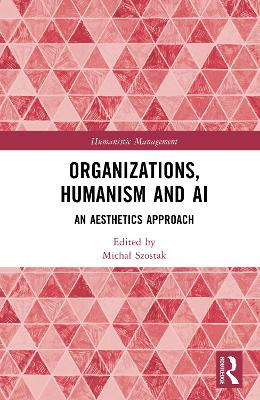
Organizations, Humanism and AI: An Aesthetics Approach [Kõva köide]

Edited by
  • Formaat: Hardback, 320 pages, kõrgus x laius: 229x152 mm, kaal: 780 g, 14 Tables, black and white; 5 Line drawings, black and white; 5 Illustrations, black and white
  • Sari: Humanistic Management
  • Ilmumisaeg: 26-Oct-2025
  • Kirjastus: Routledge
  • ISBN-10: 104112032X
  • ISBN-13: 9781041120322
  • Kõva köide
  • Hind: 159,19 €*
  • * hind on lõplik, st. muud allahindlused enam ei rakendu
  • Tavahind: 212,25 €
  • Säästad 25%
  • Raamatu kohalejõudmiseks kirjastusest kulub orienteeruvalt 3-4 nädalat
  • Kogus:
  • Lisa ostukorvi
  • Tasuta tarne
  • Tellimisaeg 2-4 nädalat
  • Lisa soovinimekirja
  • Raamatukogudele
  • Formaat: Hardback, 320 pages, kõrgus x laius: 229x152 mm, kaal: 780 g, 14 Tables, black and white; 5 Line drawings, black and white; 5 Illustrations, black and white
  • Sari: Humanistic Management
  • Ilmumisaeg: 26-Oct-2025
  • Kirjastus: Routledge
  • ISBN-10: 104112032X
  • ISBN-13: 9781041120322

This volume explores the role of the aesthetics of the synergy between humanism and AI on the level of institutions and organisations, influencing individuals’ well-being.


This volume explores the role of the aesthetics of the synergy between humanism and artificial intelligence (AI) on the level of institutions and organisations, influencing individuals’ well-being. Grounded in the principles of the humanistic management paradigm—emphasising sustainability, social organisations and entrepreneurship, conscious capitalism, and the protection of human dignity—it investigates how aesthetic principles (harmony, transparency, emotional resonance, cultural adaptability, or depth insights), applied between a human-centric approach and the use of AI-powered solutions, may help shape public perceptions, foster trust, and affect the quality of institutions within politics, governance, media, and social services. An aesthetic perspective becomes crucial as AI’s influence expands, shaping governance mechanisms, media, social interactions, and societal organisation. It enables a critical examination of the challenges, risks, and opportunities arising from this growing role, ensuring a responsible, conscious, and balanced approach to AI’s integration into public life. Through theoretical insights, conceptual frameworks, practical case studies, and empirical investigations, it highlights the transformative potential of aesthetics. This book follows a progressive analytical approach, beginning with macro-level institutional frameworks (politics and governance), moving through public discourse (media and perception), and concluding with micro-level applications (social care and well-being). This structured narrative presents a coherent examination of key aspects demonstrating how aesthetic considerations influence the synthesis between the humanistic approach and AI in different domains of societal life.

Introduction: Framing the aesthetic-humanistic foundations of using AI
in institutions
1. Aesthetics of humanism and AI in institutional governance:
Research perspectives Part I. Synergy of humanism and AI in politics and
governance: Toward better institutions
2. AI-driven solutions as pharmakon in
political decision-making: Depoliticisation, technocracy, and the aesthetic
dimensions of governance
3. Aesthetic dimensions of civic digital integrity:
Openness and order in AI-supported public administration
4. Aesthetic-ethical
AI governance: Harmony and balance in Islamic and Confucian traditions
5.
Aesthetic mediation of AI in civic education: Institutional trust,
engagement, and democratic resilience
6. Aesthetic leadership in AI-supported
change management: Models for public sector transformation Part II: Synergy
of humanism and AI in media and public perception: Toward better
communication
7. Positioning humanity in AI discourse: Media aesthetics and
narrative constructions across national contexts
8. Ethical competence and
aesthetic beauty in media: Dilemmas and challenges associated with AI-powered
solutions
9. Consequences of AI-enhanced communicative competence: Between
effectiveness, appropriateness and aesthetics
10. Political leaders and
AI-supported tools: The aesthetics of public image management Part III:
Synergy of Humanism and AI in care and social services: Toward an
individuals well-being
11. Aesthetics of care: AI-supported psychological
practice between empathy and alienation
12. AI-powered solutions in social
services for seniors: Well-being of care recipients or caregivers?
13.
Aesthetics of dialogue and encounter in human-centred migrants integration:
AI, ICT, and the well-being of individuals Conclusion: AI-human aesthetic
synergy as an institutional imperative
Micha Szostak (PhD, Doctor Habil.), is Associate Professor, Vice-Rector for Scientific Research and International Affairs, and Head of the Institute for Management Research at Civitas University.