Muutke küpsiste eelistusi

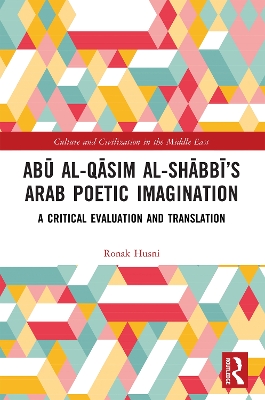
E-raamat: Abu al-Qasim al-Shabbi's Arab Poetic Imagination: A Critical Evaluation and Translation

  • Formaat - PDF+DRM
  • Hind: 59,79 €*
  • * hind on lõplik, st. muud allahindlused enam ei rakendu
  • Lisa ostukorvi
  • Lisa soovinimekirja
  • See e-raamat on mõeldud ainult isiklikuks kasutamiseks. E-raamatuid ei saa tagastada.
  • Raamatukogudele

DRM piirangud

  • Kopeerimine (copy/paste):

    ei ole lubatud

  • Printimine:

    ei ole lubatud

  • Kasutamine:

    Digitaalõiguste kaitse (DRM)
    Kirjastus on väljastanud selle e-raamatu krüpteeritud kujul, mis tähendab, et selle lugemiseks peate installeerima spetsiaalse tarkvara. Samuti peate looma endale  Adobe ID Rohkem infot siin. E-raamatut saab lugeda 1 kasutaja ning alla laadida kuni 6'de seadmesse (kõik autoriseeritud sama Adobe ID-ga).

    Vajalik tarkvara
    Mobiilsetes seadmetes (telefon või tahvelarvuti) lugemiseks peate installeerima selle tasuta rakenduse: PocketBook Reader (iOS / Android)

    PC või Mac seadmes lugemiseks peate installima Adobe Digital Editionsi (Seeon tasuta rakendus spetsiaalselt e-raamatute lugemiseks. Seda ei tohi segamini ajada Adober Reader'iga, mis tõenäoliselt on juba teie arvutisse installeeritud )

    Seda e-raamatut ei saa lugeda Amazon Kindle's. 

This timely book critically evaluates the life, work and milieu of the Tunisian poet, Abu al-Qasim al-Shabbi (1909-1934), providing translations and detailed commentaries around his seminal work “al-Khayal al-Shi ri ?inda al- Arab” (“Arabic Poetic Imagination").

The volume delves into the profound essence of one of Tunisia’s most iconic poets, a seminal figure in Arab literary modernism, celebrated for his fervent and transformative verses that continue to inspire audiences worldwide, far surpassing the boundaries of the Arab-speaking realm. This book not only presents meticulous translations of al-Shabbi’s significant poetic works, but also analyses the recurring themes and styles that define his oeuvre, offering insights into his lasting impact. The book contextualises al-Shabbi within the socio-political turbulence of early 20th century Tunisia, a period marked by profound changes that shaped his artistic outlook. It explores his deep engagement with both romantic and modernist motifs, seamlessly weaving together elements of nationalism, existentialist conflict, and a steadfast vision for a liberated Arab world. Furthermore, the critical commentaries in the book illuminate the array of poets and philosophical concepts that al-Shabbi references, directing readers to additional resources on both Arab and Western literary figures he discusses, enriching our appreciation of his intellectual interplay and deepening our understanding of his scholarly pursuits.

This volume will be of pivotal interest for scholars, students and academics of Modern and Classical Arabic Literature, as well as those with an interest in these topic areas more generally.


This timely book critically evaluates the life, work and milieu of the Tunisian poet, Abu al-Qasim al-Shabbi (1909-1934), providing translations and detailed commentaries around his seminal work “al-Khayal al-Shi ri ?inda al- Arab” (“Arabic Poetic Imagination").

Arvustused

Al-Shabbi lived his entire life (19091934) in French colonial Tunisia and died when the anti-colonial struggle for independence started to take shape both in intellectual cafes and party politics. His verses drew on the magical beauty of nature to underscore the sanctity of human life and incite revolt against colonial oppression. His legacy as a revolutionary icon has been acknowledged in the Tunisian anthem and cemented by the slogans drawn from his poetry during the Arab Uprisings (20102011). A rebel by nature, his earliest pamphlet constituted nothing less than a manifesto for rebellion against the obsolete Arab poetic regimes of the imagination. Ronak Husnis translation of Arab Poetic Imagination is a much-needed contribution to the repertoire of the Arabic library in English. Husni translates with grace and rigor and offers a thorough introduction to the life and work of Al-Shabbi. This is a must-read book for anyone interested in Arabic poetry, modern or premodern.

Nouri Gana, University of California, Los Angeles (UCLA).

With Ronak Husnis fluid and engaging translation, Abu al-Qasim al-Shabbis (190934) classic formulation of Arab Romanticism, The Arab Poetic Imagination, becomes available for the first time to the reader of English. Although the Western public was first alerted to al-Shabbi when his stirring ode Will to Life became the slogan of the 2011 Arab Spring, the great Tunisian Romantic poet and critic has long been renowned in literary circles. Husnis adept introduction provides a biography of the author, the literary and cultural context of the work, and its critical reception. The Arab Poetic Imagination can now take its due place in the critical re-evaluation of Arab Romanticism within a broad comparative context, whether in the academy or the classroom.

Suzanne Pinckney Stetkevych, Sultan Qaboos bin Said Professor of Arabic & Islamic Studies, emerita, Georgetown University.

Ronak Husnis first complete English translation of the Tunisian poet Abu al-Qasim al-Shabbis The Arab Poetic Imagination represents a major addition to the body of Arabic literary criticism available to the English-speaking reader. Students of the Romantic movement and of comparative literature will find much of interest in al-Shabbis work, which has long enjoyed a reputation in the Arab world as a seminal text of modern Arabic literary criticism. With the publication of Ronak Husnis translation, together with her comprehensive introduction to its literary context, this pioneering work now has an opportunity to find its way to a wider audience, enabling a fuller understanding of al-Shabbis place in the development of Arabic Romantic poetry and criticism in the early twentieth century.

Paul Starkey, Emeritus Professor, Durham University, UK.

Part
1. Introduction. Part
2. al-Khayl al-Shir inda al-Arab: The
Translation.
1. Imagination.
2. Poetic Imagination and Arabic Myths.
3.
Poetic Imagination and Nature in Arabic Literature.
4. Poetic Imagination and
Woman in Arabic Literature.
5. Poetic Imagination and Storytelling in Arabic
Literature.
6. A Broad Perspective on Arabic Literature.
7. The Arab Spirit.
References.
Ronak Husni is a distinguished scholar specializing in Arabic Language, Modern Arabic Literature, and Translation Studies. She earned her PhD in Comparative Literature from the University of St Andrews in Scotland. Dr. Husni has held teaching positions at various academic institutions in the UK, including Durham University and Heriot-Watt University, with a focus on Arabic Language, Modern Arabic literature, and Translation Studies. Currently, she is a Professor at the American University of Sharjah. Her notable works include co-authoring Muslim Women in Law and Society: Annotated Translation of al-Tahir al-Haddads Imratuna fi l-Sharia wa l-Mujtama, with an Introduction and Arabic-English-Arabic Translation: Issues and Strategies.