"Anthropologists have long explained social behaviour as if people always do what they think is best. But what if most of these explanations only work because they are premised upon ignoring what philosophers call 'akrasia' - that is, the possibility that people might act against their better judgment? The contributors to this volume turn an ethnographic lens upon situations in which people seem to act out of line with what they judge, desire and intend. The result is a robust examination of how people around the world experience weaknesses of will, which speaks to debates in both the anthropology of ethics and moral philosophy"--
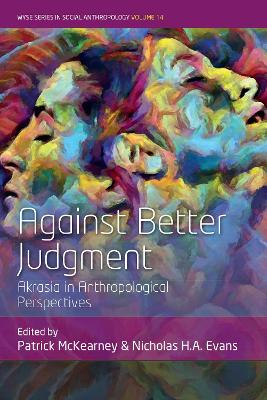
Anthropologists have long explained social behaviour as if people always do what they think is best. But what if most of these explanations only work because they are premised upon ignoring what philosophers call 'akrasia' – that is, the possibility that people might act against their better judgment? The contributors to this volume turn an ethnographic lens upon situations in which people seem to act out of line with what they judge, desire and intend. The result is a robust examination of how people around the world experience weaknesses of will, which speaks to debates in both the anthropology of ethics and moral philosophy.
Arvustused
These anthropological perspectives in akrasia do well to illustrate both the ubiquity of the phenomenon and the need to continue to collect cases of akratic human behaviour. Most normative approaches toward akrasia include aspiring toward its elimination, but collections like this give credence to the idea that akrasia is a mental phenomenon that greases the wheels of daily life. LSE Review of Books
This volume opens up the important subject of akrasia, one that any approach to the relationship between judgment and action needs to address. It is a very welcome addition to the literature. Michael Lambek, University of Toronto
Introduction
Patrick McKearney and Nicholas H.A. Evans
Chapter
1. Trigger Warnings: Danger, Desire, and Declensions of the Will in
Eating Disorders Treatment
Rebecca J. Lester
Chapter
2. Three Problems with the Addiction as Akrasia Thesis that
Ethnography Can Solve
Darin Weinberg
Chapter
3. To Live Like People: Drinking and Weakness of Will Among the
Runa of the Ecuadorian Amazon
Francesca Mezzenzana
Chapter
4. Prayer, Demons, and Akratic Sublation
Jon Bialecki
Chapter
5. Troubleshooting Humans: Modelling the Pathways to Inertia,
Backsliding, and Moral Transgression on Indonesias Hypnotherapy Circuit
Nicholas J. Long
Chapter
6. The Replication of Caste as a Form of Collective Akrasia
Ivan Deschenaux
Chapter
7. Is Grit Irrational for Akratic Agents?
Lubomira Radoilska
Chapter
8. Relational Akrasia: Care and the Distribution of Action
Patrick McKearney
Afterword
Richard Holton
Index
Patrick McKearney is an Assistant Professor at the University of Amsterdam conducting research in the UK, India, and Italy. His recent articles on disability, care, ethics, and religion include publications in Social Analysis, Ethnos, and JRAI. He has also edited two special issues on cognitive disability in The Cambridge Journal of Anthropology and Medical Anthropology.

 Lisainfo e-raamatute kohta