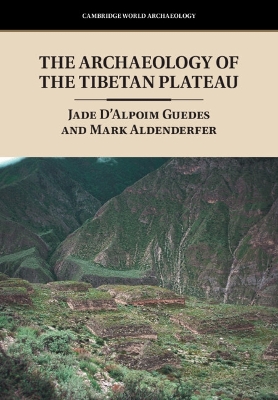
The Archaeology of the Tibetan Plateau offers a comprehensive survey of past and recent research on the prehistory of the plateau, from its early peopling to the eve of the foundation of the Tibetan Empire in the 7th C. The first English language book-length study of the Tibetan past, it is organized around eight chapters that describe modern and ancient environments, historical speculations about ancient Tibet by mystics, fascists, and contemporary scholars, evidence of the first peoples to live and thrive on the plateau, the arrival of the domesticated plants and animals that transformed the subsistence economy, and the emergence of early forms of status and prestige. The book concludes with a discussion of how the past informs environmental conservation and heritage preservation and explores how archaeological data are used by the Chinese state to create an alternative vision of the Tibetan past at odds with indigenous Tibetan perspectives.
Muu info
This book offers a comprehensive survey of past and recent research on the prehistory of the Tibetan plateau.
1. The plateau and its peoples;
2. History of research;
3. Peopling the
plateau;
4. Early Agricultural Incursions into Higher Elevation: spread of
Millet agriculture and Eastern Tibet (pre-1700 BCE);
5. Economic,
demographic, and subsistence transformations on the plateau (2000 BCE- CE);
6. Status, violence and burials on the eastern Tibetan plateau during the
pre-imperial period;
7. The Tibetan plateau on the eve of empire;
8. The
future of the past on the Tibetan plateau; Bibliography.
Jade D'Alpoim Guedes is Assistant Professor of anthropology at the University of Washington. She has worked on the Tibetan plateau for the past fifteen years, and co-directives international, collaborative community archaeological project in the Jiuzhaigou National Nature Reserve with speakers of Sharkog Tibetan. Mark Aldenderfer is Distinguished Professor Emeritus of Anthropology and Edward A. Dickson Emeriti Professorship Endowed Chair in the department of anthropology at the University of California, Merced. An archaeologist of high altitude cultural and biological adaptions, he has worked on the Ethiopian, Andean, and Tibetan plateaus. He is the author and co-editor of 11 monographs and over 150 scholarly papers.

 Lisainfo e-raamatute kohta