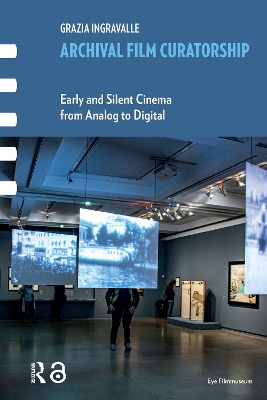
Archival Film Curatorship is the first book-length study that investigates film archives at the intersection of institutional histories, early and silent film historiography, and archival curatorship. It examines three institutions at the forefront of experimentation with film exhibition and curatorship. The Eye Film Museum in Amsterdam, the George Eastman Museum in Rochester, NY, and the National Fairground and Circus Archive in Sheffield, UK serve as exemplary sites of historical mediation between early and silent cinema and the digital age. A range of elements, from preservation protocols to technologies of display and from museum architectures to curatorial discourses in blogs, catalogs, and interviews, shape what the author innovatively theorizes as the archive’s hermeneutic dispositif. Archival Film Curatorship offers film and preservation scholars a unique take on the shifting definitions, histories, and uses of the medium of film by those tasked with preserving and presenting it to new digital-age audiences. 1. Museums of Cinema intervenes in the expanding but under-theorized field of archival film curatorship, examining film archives as sites of moving-image curation and historiographic mediation, shaped by specific institutional and cultural histories. It does so by advancing a new theory of the archive, inspired by Gadamer’s philosophical hermeneutics and White’s metahistory. 2. This book grounds its analysis of the film archive in the study of new primary sources (including film programs, exhibition catalogs, internal records, and administrative and policy documents), interviews with archivists and curators, and direct observation of professional practice. In doing so, Museums of Cinema aims to bridge the theory-practice divide between academic scholarship and the professional archival and museum sectors. 3. Museums of Cinema tells a different story of the so-called digital turn by focusing on the transformation of the archive in the transition to the digital moment. Such turn is defined here not by technological changes in film production, distribution and reception but instead by the shifting definitions and uses of the medium by those tasked with preserving and presenting it to new digital-age audiences.

 Lisainfo e-raamatute kohta