Muutke küpsiste eelistusi

E-raamat: Art of Joaquin Torres-Garcia: Constructive Universalism and the Inversion of Abstraction

  • Formaat: EPUB+DRM
  • Ilmumisaeg: 05-Aug-2016
  • Kirjastus: Routledge
  • Keel: eng
  • ISBN-13: 9781315527550
  • Formaat - EPUB+DRM
  • Hind: 59,79 €*
  • * hind on lõplik, st. muud allahindlused enam ei rakendu
  • Lisa ostukorvi
  • Lisa soovinimekirja
  • See e-raamat on mõeldud ainult isiklikuks kasutamiseks. E-raamatuid ei saa tagastada.
  • Formaat: EPUB+DRM
  • Ilmumisaeg: 05-Aug-2016
  • Kirjastus: Routledge
  • Keel: eng
  • ISBN-13: 9781315527550

DRM piirangud

  • Kopeerimine (copy/paste):

    ei ole lubatud

  • Printimine:

    ei ole lubatud

  • Kasutamine:

    Digitaalõiguste kaitse (DRM)
    Kirjastus on väljastanud selle e-raamatu krüpteeritud kujul, mis tähendab, et selle lugemiseks peate installeerima spetsiaalse tarkvara. Samuti peate looma endale  Adobe ID Rohkem infot siin. E-raamatut saab lugeda 1 kasutaja ning alla laadida kuni 6'de seadmesse (kõik autoriseeritud sama Adobe ID-ga).

    Vajalik tarkvara
    Mobiilsetes seadmetes (telefon või tahvelarvuti) lugemiseks peate installeerima selle tasuta rakenduse: PocketBook Reader (iOS / Android)

    PC või Mac seadmes lugemiseks peate installima Adobe Digital Editionsi (Seeon tasuta rakendus spetsiaalselt e-raamatute lugemiseks. Seda ei tohi segamini ajada Adober Reader'iga, mis tõenäoliselt on juba teie arvutisse installeeritud )

    Seda e-raamatut ei saa lugeda Amazon Kindle's. 

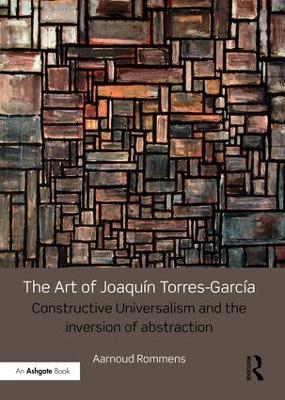
Intertwining art history, aesthetic theory, and Latin American studies, Aarnoud Rommens challenges contemporary Eurocentric revisions of the history of abstraction through this study of the Uruguayan artist Joaquín Torres-García. After studying and painting (for decades) in Europe, Torres-García returned in 1934 to his native home, Montevideo, with the dream of reawakening and revitalizing what he considered the true indigenous essence of Latin American art: "Abstract Spirit." Rommens rigorously analyses the paradoxes of the painter's aesthetic-philosophical doctrine of Constructive Universalism as it sought to adapt European geometric abstraction to the Americas. Whereas previous scholarship has dismissed Torres-García's theories as self-contradictory, Rommens seeks to recover their creative potential as well as their role in tracing the transatlantic routes of the avant-garde. Through the highly original method of reading Torres-García's artworks as a critique on the artist's own writings, Rommens reveals how Torres-García appropriates the colonial language of primitivism to construct the artificial image of "pure" pre-Columbian abstraction. Torres-García thereby inverts the history of art: this book teases out the important lessons of this gesture and the implications for our understanding of abstraction today.
List of figures
vi
1 Introduction: the routes to roots of Joaquin Torres-Garcia's South American abstraction
1(22)
2 Constructive Universalism's `Theoretical Eye': Vitalism, Arkhe-Tectonics and Grafismo
23(2)
Part I Torres-Garcia's anti-aesthetics: geometric vitalism and the artifice of arkhe-tectonics
25(17)
Part II Grafismo, or the esoteric fantasy of systematicity in exoteric times
42(128)
3 Tactics of a-semiosis
59(40)
4 Writing/drawing the universal by hand: abstraction's unruliness
99(18)
5 Emblematics, "The School of the South" and the inversion of maps
117(18)
6 Thick grids and the scrapbooking of the universal
135(35)
Conclusion: reverting South 170(7)
Bibliography 177(12)
Index 189
Aarnoud Rommens is BeIPD-COFUND/Marie Curie Post-Doctoral Fellow at Faculté de Philosophie et Lettres, University of Liège, Belgium.